
Amending a Tax Return: When It Makes Sense

Most people assume that the moment new information appears after filing a tax return, the next step is obvious:
“We need to amend the return.”
Maybe a 1099 arrives late. A K-1 gets updated. Partnership numbers change. An expense was categorized incorrectly. Income was reported differently than expected.
Suddenly, a return that felt complete no longer feels reliable.
What I often tell business owners is this: not every change automatically requires an amended tax return. In many cases, rushing to amend the return before understanding the bigger picture creates more complexity than the original issue itself.
At Straight Talk CPAs, we approach amendments strategically. The question is not simply whether information changed. The question is whether the change materially affects the return, creates future risk, or reveals a larger reporting issue that needs attention.
As I often explain to clients:
“An amended return should solve a meaningful issue not simply respond to every revised document or new number that appears after filing.”
Why Business Owners Panic After Filing
Once a return is submitted, many business owners start viewing it as final. So when new information surfaces afterward, the reaction is immediate:
- “Did we file something incorrectly?”
- “Could this create IRS problems later?”
- “Are we exposed?”
- “Do we need to fix this right now?”
That pressure often leads to rushed decisions.
We regularly see businesses amend returns before evaluating:
- whether the change actually affects tax liability
- whether the discrepancy is material
- whether the issue is timing-related
- or whether the amendment is masking a larger reporting problem
Because sometimes the amended return is not the real issue.
The real issue is discovering the financial reporting no longer reflects what is actually happening inside the business.
The Real Question Isn’t “Was Something Missed?”
The better question is:
“Does this new information meaningfully change the return or reveal a larger inconsistency?”
That distinction matters.
In many situations, the original return was accurate based on the information available at the time it was filed. What changes later often points to a breakdown somewhere in the financial process itself.
As businesses grow, financial systems become more complex. Reporting responsibilities spread across multiple entities, advisors, and internal teams. Over time, gaps start appearing:
- disconnected bookkeeping systems
- delayed reporting from outside entities
- inconsistent income recognition
- weak coordination between operations and tax reporting
As I often tell clients:
“Most amended returns are not caused by one bad number. They happen because the business outgrew the systems tracking the money.”
That’s why amendments should never be viewed in isolation. They need to be evaluated in the context of the business as a whole.
A Real Situation: “I Thought We Just Needed to Update One Number”
We worked with a business owner who received revised financial documents several weeks after filing their return.
At first, the issue seemed simple. One income figure had changed slightly, and the client assumed the solution would be straightforward:
“We’ll just amend the return and move on.”
But once we reviewed the broader picture, it became clear the updated number itself was not the main concern.
As the business had grown, reporting between entities, advisors, and internal systems had gradually become disconnected. Income was being recognized inconsistently, and financial reporting was no longer fully aligned with the day-to-day operation of the business.
At that point, simply filing an amended return would not have solved the underlying problem.
Before making any changes, we evaluated:
- whether the discrepancy materially affected tax liability
- whether future filings could also be impacted
- whether the issue reflected broader reporting weaknesses
- and what operational changes were necessary to prevent the same issue from repeating
Ultimately, the amended return became only one part of a much larger cleanup and alignment process.
What stood out most was something the client said afterward:
“What stressed me out wasn’t the number. It was realizing we didn’t fully trust the system behind it anymore.”
That’s an important realization.
A tax return can only be as reliable as the systems and reporting behind it.
When Filing an Amended Tax Return Actually Makes Sense
There are absolutely situations where filing an amended return is necessary.
From a strategic standpoint, amendments usually make sense when the correction:
- materially changes tax liability
- corrects reporting that could create future IRS complications
- aligns the return with how the business actually operated
- prevents inaccurate reporting from carrying forward into future years
- resolves material errors tied to income, deductions, ownership structure, or entity reporting
At the same time, there are situations where frequent amendments create unnecessary complexity without solving the underlying issue.
That’s why context matters more than panic.
The goal should not be to amend a return simply because new information appeared. The goal should be to determine whether the amendment improves accuracy, reduces future risk, and strengthens financial clarity moving forward.
Why Amended Returns Are Often a Business Systems Issue
One of the biggest misconceptions I see is treating amended tax returns purely as compliance events.
In reality, they are often operational warning signs.
They can signal:
- growth outpaced financial systems
- bookkeeping processes became inconsistent
- communication between advisors weakened
- reporting workflows stopped scaling with the business
As I often explain:
“Frequent amendments usually point to a deeper alignment problem inside the business — not just paperwork that needs updating.”
Smart business owners understand this. They do not just ask:
“Should we amend the return?”
They also ask:
“Why did the reporting process break down in the first place?”
That question usually leads to far more valuable long-term improvements.
Before You Rush to Amend a Return
Finding new information after filing does not automatically mean the return needs to be amended.
Sometimes the financial impact is significant. Sometimes future filings could be affected. And sometimes the issue is far less serious than it initially appears.
The key is understanding the difference before making reactive decisions.
At Straight Talk CPAs, we help business owners evaluate amended tax returns strategically not just from a compliance standpoint, but from a broader financial and operational perspective.
👉 Schedule a consultation to determine whether an amended return truly makes sense and whether the issue points to something larger that should be addressed before it creates bigger problems later.
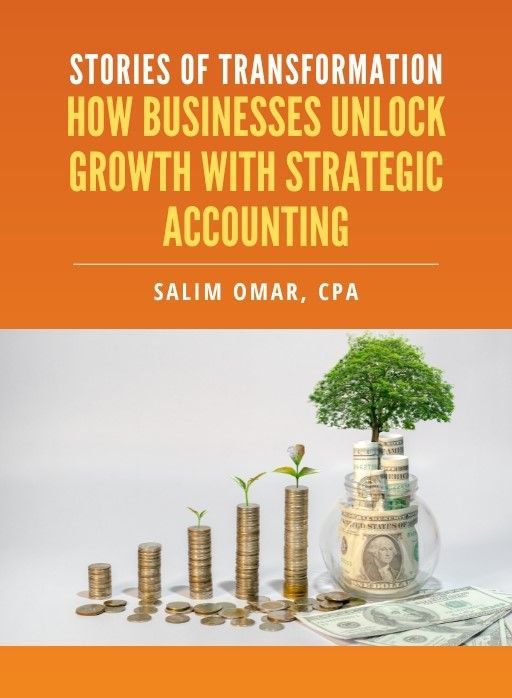
Free eBook:
Stories of Transformation

Salim is a straight-talking CPA with 30+ years of entrepreneurial and accounting experience. His professional background includes experience as a former Chief Financial Officer and, for the last twenty-five years, as a serial 7-Figure entrepreneur.
Recent Posts