
Budget vs. Forecast: Which Should Drive Business Decisions?
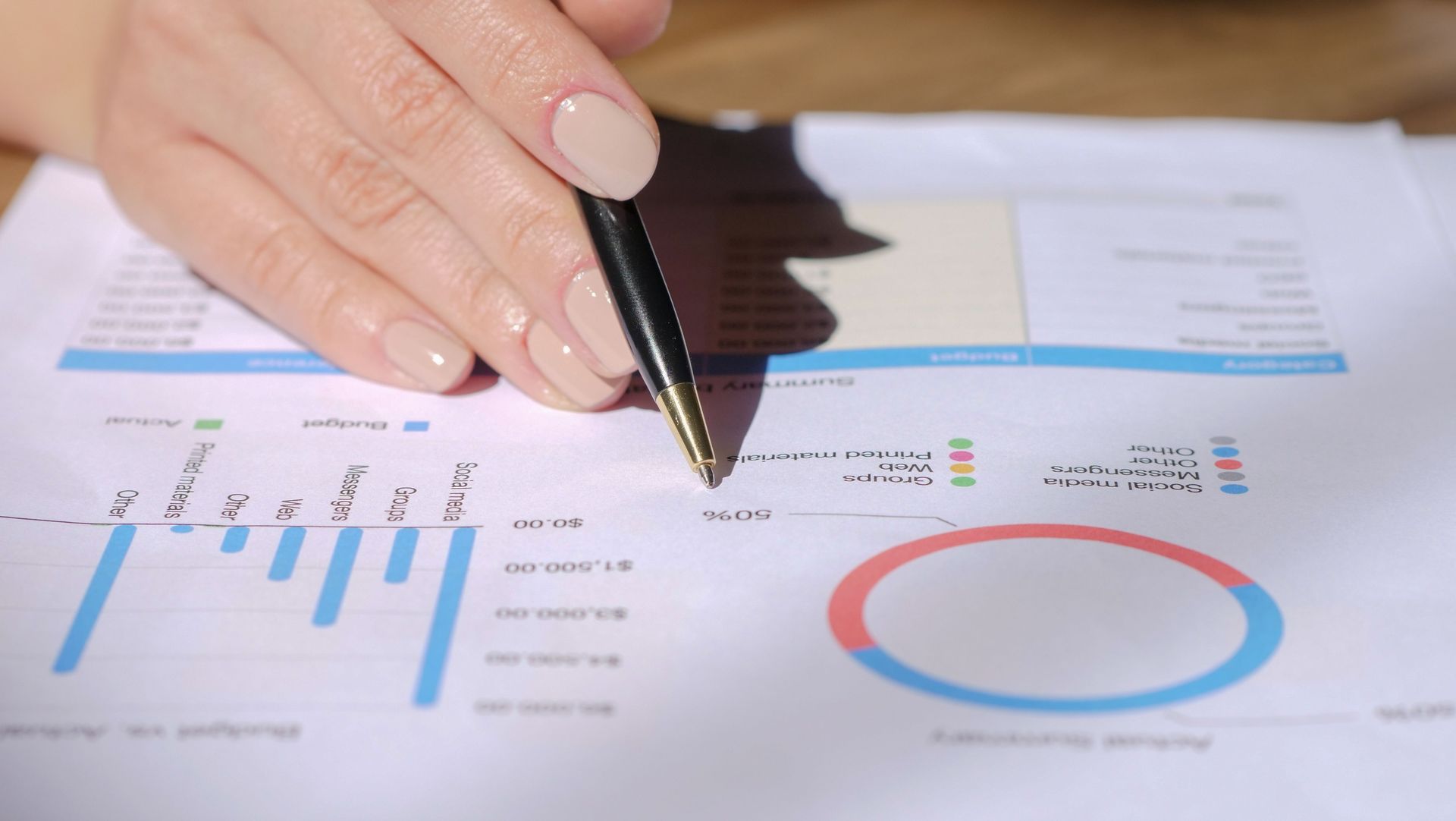
A business owner can look at two financial reports on the same day and get two completely different answers.
The budget says the company is on track. The forecast says it might not be.
So which number should drive the next decision?
This is where a lot of business owners get stuck, and understandably so. They start treating the budget and forecast as competing versions of the truth when they actually serve completely different purposes.
The budget tells you what you planned to happen. The forecast tells you what you currently expect to happen. When you're deciding what to do next, that distinction matters more than most people realize.
I'm Salim Omar, founder of Straight Talk CPAs, and this is one of the conversations I find myself having with business owners more than almost any other.
Your Budget Has a Job. It Just Isn't Predicting the Future.
A budget is valuable because it forces the business to make decisions before the year actually unfolds.
How much revenue are you targeting?
What can you afford to spend?
How much are you planning to put into people, marketing, equipment, or expansion?
Those decisions create a financial roadmap for the year ahead.
But once the year starts, reality begins producing information that simply wasn't available when the budget was built.
A customer leaves. Sales pick up faster than expected. Payroll grows. A major project gets pushed back. A new opportunity appears from nowhere.
The original budget doesn't become useless when those things happen. It becomes a benchmark and a way to see how the business is actually performing against the plan.
What you shouldn't do is mistake that original plan for your current financial outlook. Those are two different things.
The Forecast Should Move When the Business Moves
A forecast answers a different question entirely: based on what we know today, where are we actually likely to end up?
That means a forecast is supposed to change. If revenue is running below expectations, the forecast should reflect that. If margins are improving, it should reflect that too. If customers are taking longer to pay than expected, the cash outlook needs updating.
A forecast is useful precisely because it keeps absorbing new information. Rolling forecasts work especially well for businesses operating in conditions that keep shifting. Instead of locking the financial outlook to assumptions made in January, the business keeps updating its view using real performance data and current conditions.
This isn't about changing numbers to make things look better. It's about making the financial picture more honest.
When the Numbers Disagree, Pay Attention
Say the annual budget projected $3 million in revenue. By the end of June, the business has brought in $1.2 million.
The wrong question is how to get back to the budget.
The better question is what has changed since the budget was built.
Maybe two large contracts moved into the second half of the year. Maybe the pipeline softened. Maybe pricing shifted. Maybe one customer carried too much of the original assumption.
Each answer points toward a different decision.
I've seen situations where an owner initially read a revenue shortfall as a sales problem. When we looked more carefully, the real issue was that the revenue hadn't disappeared; several projects had just moved into later months. That distinction mattered because the business didn't need to cut spending. It needed to manage the cash gap that the timing had created.
The budget identified the variance. The forecast helped figure out what to do about it.
The Right Number Depends on the Decision
This is where the budget versus forecast conversation gets practical.
If you're setting annual targets, allocating resources, or establishing spending expectations, the budget matters. If you're deciding whether you can afford a new hire next month, the forecast matters more.
Thinking about expansion?
Look at the forecast and the assumptions sitting behind it. Planning a major equipment purchase?
Look at the expected cash position, not just the annual budgeted profit. Considering taking on debt?
You need to understand what the business is currently expected to generate and whether future cash flow can actually carry the obligation.
The closer a decision is to the present, the more important current financial information becomes.
That's why I don't think the right question is "should I use the budget or the forecast?" The better question is: what decision am I making, and which financial view gives me the clearest picture of the risk?
Don't Throw Away the Budget When the Forecast Changes
Once a forecast starts moving away from the budget, some owners stop looking at the budget altogether. I'd push back on that.
The gap between the two is often one of the most useful pieces of information you have.
If the original plan called for 20 percent growth and the latest forecast shows 11 percent, that 9-point difference deserves a real conversation. It might reveal something about demand, pricing, staffing, capacity, or the assumptions that drove the original growth strategy.
The goal isn't to make the forecast match the budget. The goal is to understand why they don't match. That's where financial reporting stops being a historical record and starts becoming a management tool.
Use Both But Don't Confuse Their Roles
A strong financial process doesn't have to be complicated.
Budget: Where do we want the business to go? Actual results: what has happened so far?
Forecast: Where are we likely to end up based on what we know right now? And then the most important step: what should we change because of what we're seeing?
That final step is where most businesses leave real value on the table. They run the reports, compare actuals to budget, and move on without translating any of it into an operational decision.
A forecast showing weakening cash flow might mean pushing back an expense. A margin trend might be pointing to a pricing problem. A revenue concentration issue might change how aggressively the business pursues new customers.
The financial information only becomes valuable when it actually changes how the business is managed.
The Forecast Should Influence the Next Move
Keep the budget as the reference point. It tells you what you set out to accomplish and gives you a baseline to measure performance against.
But when you're figuring out what to do next, the current forecast should carry more weight.
The practical takeaway: keep the budget, update the forecast regularly, dig into the differences, and make decisions based on the most current picture of the business.
That approach gives business owners something more valuable than a set of financial targets. It creates visibility into where the company is actually heading and what might need to change before a financial issue becomes an operational one.
At Straight Talk CPAs, that's exactly how we use financial data as a starting point for forward-looking guidance, not just a record of what already happened. The goal is always to help business owners understand the numbers, anticipate what's ahead, and make decisions with real clarity throughout the year.
Free eBook:
Stories of Transformation

Salim is a straight-talking CPA with 30+ years of entrepreneurial and accounting experience. His professional background includes experience as a former Chief Financial Officer and, for the last twenty-five years, as a serial 7-Figure entrepreneur.
Recent Posts