
Quarterly Taxes for Business Owners: What Changes After Filing

For many business owners, filing taxes feels like the end of the financial conversation for the year.
The return gets submitted, the deadline passes, and attention naturally shifts back to running the business.
Operations take over again. Hiring decisions, cash flow, client work, growth plans, and day-to-day responsibilities quickly move back to the forefront.
And in the process, quarterly taxes often return to being treated as something to revisit later.
From our perspective, that is usually a mistake.
Because the period immediately after filing is often the most valuable planning window a business owner will have all year.
At that point, the numbers are no longer estimates or assumptions. The return shows how the business actually performed. You can clearly see where profitability changed, where cash flow tightened, how distributions affected the business, and whether the previous quarterly tax strategy was truly aligned with reality.
As Salim Omar, CPA and founder of Straight Talk CPAs, often explains:
“The return doesn’t just close the year. It reveals how the business was actually operating underneath the surface.”
Why Quarterly Taxes Feel Different After Filing
Before filing, quarterly estimates are usually built around projections.
Projected income. Rough percentages. Prior-year comparisons. Assumptions about where the year is heading.
But once the return is complete, those assumptions become measurable.
Now you can clearly see:
- How income actually flowed through the business
- Where profitability changed during the year
- How owner distributions affected cash flow
- Where estimated payments aligned or failed to align with reality
That is why the quarter immediately after filing matters so much.
It is the first real opportunity to stop estimating blindly and start adjusting based on what the numbers are actually showing.
One of the biggest mistakes business owners make is treating tax filing as the finish line instead of using it as a reset point for better planning moving forward.
Most Businesses Continue Operating From an Older Version of Themselves
One of the most common issues we see is that quarterly estimates often stay tied to a version of the business that no longer exists.
Revenue changes. Margins evolve. Cash flow patterns shift. Operations become more complex.
But the quarterly tax approach often stays mostly untouched because technically, nothing feels broken yet.
As Omar puts it:
“Businesses usually grow faster than their tax systems evolve. That gap is where most quarterly tax problems begin.”
Over time, that gap starts creating pressure:
- underpayments
- inconsistent cash reserves
- surprise balances
- reactive financial decisions later in the year
Not because the business is struggling.
In many cases, the business is actually growing.
The issue is that the financial systems and tax planning never adjusted alongside that growth.
Many business owners do not realize there is a disconnect because revenue is still coming in and the company still appears profitable on the surface. But underneath, the numbers are gradually becoming harder to manage predictably.
A Real Situation We Recently Helped Resolve
We recently worked with a business owner whose company had expanded rapidly over 18 months.
Revenue had increased significantly, the team had grown, and operations looked successful from the outside. But shortly after filing, the owner realized something still did not feel right.
“We had our best year financially,” they told us, “but quarterly payments still feel random. I don’t feel like they reflect where the business is anymore.”
When we reviewed the numbers, the issue became clear fairly quickly.
The business had changed significantly, but the quarterly tax process had not evolved with it. Estimates were still being calculated using assumptions from an earlier stage of growth. Income timing had shifted. Profitability patterns had changed. Owner distributions had increased.
Yet the tax approach remained almost identical.
Nothing was technically wrong.
It was simply outdated.
So instead of only adjusting the payment amount, we stepped back and rebuilt the process around the current version of the business.
We aligned quarterly estimates with actual profitability trends, adjusted how cash reserves were being planned throughout the year, and created a structure that responded to real business activity instead of historical habits.
The difference was not only financial.
It was psychological.
“For the first time, quarterly taxes feel connected to what’s actually happening in the business,” the client later told us.
That clarity changed how financial decisions were being made moving forward.
What Smart Business Owners Reevaluate After Filing
The strongest businesses do not view quarterly taxes as isolated payments.
They view them as indicators.
Right after filing, they reassess:
- whether the estimates matched reality
- whether cash flow properly supported the tax strategy
- whether growth changed how taxes should be approached
- whether current systems still reflect how the business actually operates today
That process creates visibility before problems begin compounding.
Because quarterly taxes are rarely just about taxes.
In many cases, they are an early indicator of whether the financial structure behind the business is still aligned with the company’s current reality.
The Goal Isn’t Perfect Estimates
From our perspective, quarterly planning is not about predicting every number perfectly.
It is about reducing disconnection.
When estimates reflect:
- current profitability
- real operational patterns
- actual business movement throughout the year
…business owners stop reacting emotionally to tax obligations because the numbers become easier to understand and plan for.
And that changes decision-making throughout the business.
As Omar often explains:
“Quarterly taxes should evolve as the business evolves. If they don’t, eventually the numbers stop making sense together.”
Before the Next Quarter Starts
If your quarterly taxes still feel disconnected after filing season, the issue is usually not the payment itself.
In many cases, the business has changed while the tax approach stayed the same.
At Straight Talk CPAs, we help business owners reconnect those two things so quarterly taxes become part of a clearer financial strategy instead of a recurring surprise.
If your estimates no longer reflect how your business is actually performing, now is the time to adjust the system before the disconnect creates more pressure later in the year.
The earlier the numbers become clear again, the easier it becomes to make confident financial decisions moving forward.
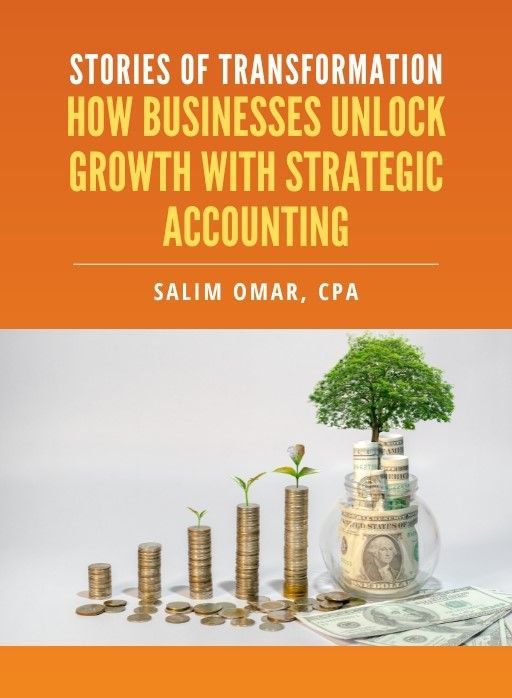
Free eBook:
Stories of Transformation

Salim is a straight-talking CPA with 30+ years of entrepreneurial and accounting experience. His professional background includes experience as a former Chief Financial Officer and, for the last twenty-five years, as a serial 7-Figure entrepreneur.
Recent Posts