
Tax Implications of House Flipping

Flipping houses can be an exciting venture, but it comes with its fair share of tax implications that every flipper needs to understand. Whether you’re a seasoned pro or just starting out, knowing how house flipping is taxed and strategies to manage your tax burden is crucial for maximizing profits. In this blog, we’ll dive into the nitty-gritty of house flipping taxes and share advanced strategies to help you keep more of your hard-earned money.
Understanding House Flipping Taxes
When it comes to house flipping, the IRS has specific rules that significantly impact your profits. The first thing to determine is whether you’re classified as a “dealer” or an “investor.”
- Dealer: Flipping houses regularly as a business often classifies you as a dealer. Profits are taxed as ordinary income rather than capital gains, typically resulting in a higher tax rate.
- Investor: Holding properties for over a year may allow you to qualify for long-term capital gains tax rates, which are lower than ordinary income tax rates.
Capital Gains Tax vs. Ordinary Income Tax
If you hold a property for more than a year, long-term capital gains rates (0%, 15%, or 20%) may apply. However, properties sold within a year are taxed at your ordinary income rate.
Example:
You buy a fixer-upper for $200,000 and sell it six months later for $300,000.
Dealer Status: The $100,000 profit is taxed as ordinary income (e.g., 24% = $24,000 tax).
Investor Status: Holding for over a year might allow for a 15% rate, saving $9,000 in taxes.
Strategies to Reduce Your Tax Burden
1. Entity Structuring
Setting up the right business entity can save you thousands:
- LLC: Provides liability protection and allows pass-through taxation, reporting profits on personal tax returns without self-employment taxes.
- S-Corp: Electing S-Corp status enables you to pay yourself a salary (subject to self-employment taxes) while taking additional profits as distributions, which aren’t subject to these taxes.
Advanced Tip: Evaluate your entity structure annually to ensure it aligns with your flipping volume and income levels for optimal tax efficiency.
2. Expense Tracking
Meticulous record-keeping is essential for maximizing deductions:
- Direct Costs: Materials and labor for renovations.
- Indirect Costs: Utilities and loan interest during renovations.
- Administrative Costs: Legal and accounting fees.
Example:
Renovation Costs: $10,000
Utilities: $2,000
Total Deduction: $12,000
Advanced Tip: Leverage accounting software to categorize expenses automatically and ensure no deductions are missed. Implement tax-loss harvesting strategies for properties with significant losses to offset other income.
3. Utilize Tax Deductions
- Home Office Deduction: Deduct expenses related to running your flipping business from home.
- Travel Expenses: Deduct costs for property inspections or meeting contractors.
- Section 179 Deduction: Deduct equipment and tools purchased for flipping immediately rather than depreciating over years.
- 1031 Exchange: While typically used for long-term holdings, it allows you to defer capital gains taxes by reinvesting in like-kind properties.
4. Consider Holding Periods
Whenever possible, hold properties longer than a year to qualify for long-term capital gains rates.
Advanced Tip: Incorporate income deferral strategies, spreading gains over multiple years to manage tax liabilities effectively.
5. Know Your Exclusions
If flipping your personal residence, you might qualify for the Section 121 exclusion:
- Exclude up to $250,000 in gains for single filers or $500,000 for married couples if you live in the property for at least two years.
Real-Life Example
Scenario: Alex flips houses full-time and operates through an LLC with S-Corp status.
- Purchase Price: $300,000
- Sale Price (6 months later): $450,000
- Expenses:
- Renovations: $40,000
- Utilities: $5,000
- Total Taxable Profit: $150,000 - $45,000 = $105,000
Tax Calculations:
- Dealer Classification (ordinary income):
- Tax Rate: 24%
- Tax Owed: $105,000 × 24% = $25,200
- Investor Classification (long-term capital gains):
- Tax Rate: 15%
- Tax Owed: $105,000 × 15% = $15,750
- Savings: Nearly $9,450
Conclusion
Navigating house flipping taxes doesn’t have to be overwhelming. By understanding IRS rules and implementing strategies like entity structuring, expense tracking, Section 179 deductions, and holding properties longer, flippers can significantly reduce their tax burdens while maximizing profits.
At
Straight Talk CPAs, we’re here to ensure every aspect of your house flipping venture is optimized for success. Whether you're just starting out or looking to refine your strategies, reach out for tailored guidance today!
Free eBook:
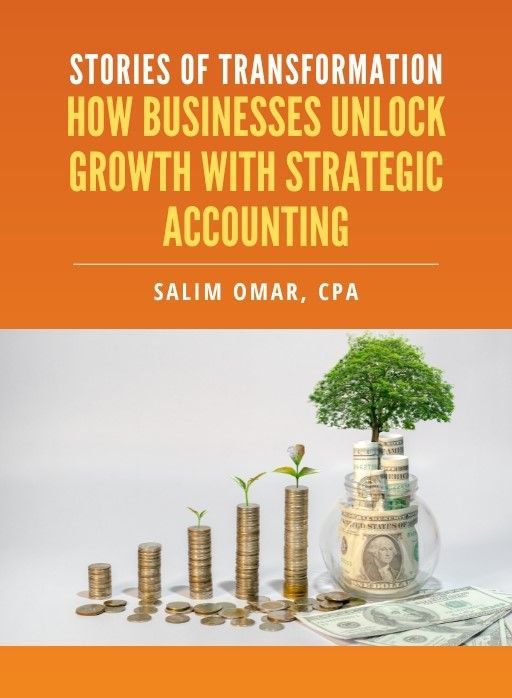
Stories of Transformation

Salim is a straight-talking CPA with 30+ years of entrepreneurial and accounting experience. His professional background includes experience as a former Chief Financial Officer and, for the last twenty-five years, as a serial 7-Figure entrepreneur.
Recent Posts