
The One Q4 Number Most Business Owners Never Check

As the fourth quarter gets underway, most business owners are locked in on the same things. Revenue. Sales targets. Year-end tax projections. Cash in the bank.
Those numbers matter. But after nearly three decades working with growing businesses, there's one number I keep coming back to that tells a far more honest story about where a business is actually headed.
Gross margin.
Running Straight Talk CPAs for as long as I have puts you across the table from a lot of business owners in the same uncomfortable position. Sales up 20 percent, team working harder than ever, revenue at levels they'd been chasing for years, and yet something still felt off. Profits hadn't moved the way the top line had. The business was bigger, but it didn't feel proportionally better.
The problem almost never turned out to be a lack of sales. It was that nobody had stopped to ask what those sales were actually producing.
Revenue Tells You What Came In. Gross Margin Tells You What You Kept.
Gross margin is what's left after covering the direct costs of delivering your product or service. That remaining amount has to stretch across payroll, rent, marketing, technology, debt payments, and taxes and eventually produce an actual profit.
When margins start shrinking, strong revenue can create a false sense of security. A growing business with declining margins gets progressively harder to run because every new sale demands more effort without delivering the same return. You end up working more and keeping less.
That's why I push owners to look closely at gross margin before the year closes, not after the financial statements are already done and the decisions are behind you.
Q4 Changes the Numbers More Than Most Owners Realize
The final quarter brings pressures that simply don't show up earlier in the year.
Discounts get more aggressive. Shipping and fulfillment costs climb. Temporary labor gets added. Suppliers adjust pricing. Businesses take on work they'd normally pass on just to finish the year with a revenue number worth talking about.
None of those moves look significant in isolation. Together, they can quietly pull gross margin down even while the top line keeps going up. Without keeping an eye on that trend, it's easy to walk into January feeling good about the year when the underlying economics actually got weaker.
A Familiar Conversation
One business owner I worked with finished the year celebrating record revenue. On paper, it looked exceptional.
But when we got into the numbers together, something unexpected came out. Several of the fastest-growing service lines were carrying margins well below the company's established offerings. Subcontractor costs had risen, and pricing decisions made earlier in the year had been quietly eroding profitability; the higher sales volume had just kept it hidden.
If they'd looked only at revenue, they almost certainly would have leaned even harder into those same services the following year.
Instead, they adjusted pricing, refocused on the work that was actually performing well, and started the new year with healthier margins and stronger cash flow. Revenue didn't change dramatically. The quality of it did.
One Number Can Improve Dozens of Decisions
Gross margin isn't just an accounting figure. It's a decision-making tool.
When margins start moving, they tend to raise questions worth sitting with.
Are prices keeping pace with rising costs?
Which products or services are actually driving the most profit?
Have discounts quietly gone further than anyone intended?
Has the cost structure shifted in ways that haven't been looked at closely?
Is growth genuinely improving the business or just adding more activity to manage?
Those answers reach into hiring, budgeting, forecasting, inventory planning, and expansion decisions in ways that revenue alone never will. Financial reports become genuinely useful when they explain why performance is changing, not just record that it did.
Before the Year Ends, Ask Yourself Three Questions
Before Q4 wraps up, take another honest look at the financials and sit with three questions.
Is gross margin stronger, weaker, or roughly where it was at this point last year?
Which products, services, or customers are behind that change?
And if this trend carries into next year, what decisions should be made differently right now while there's still time to make them?
Those questions tend to surface opportunities long before they show up on the bottom line.
The businesses heading into a new year with the most confidence usually aren't the ones with the highest revenue. They're the ones who understood the story behind their numbers while there was still a chance to do something about it.
That's the perspective we bring at Straight Talk CPAs. Financial reports shouldn't just explain what already happened. They should give business owners enough clarity to make better decisions before the next chapter begins.
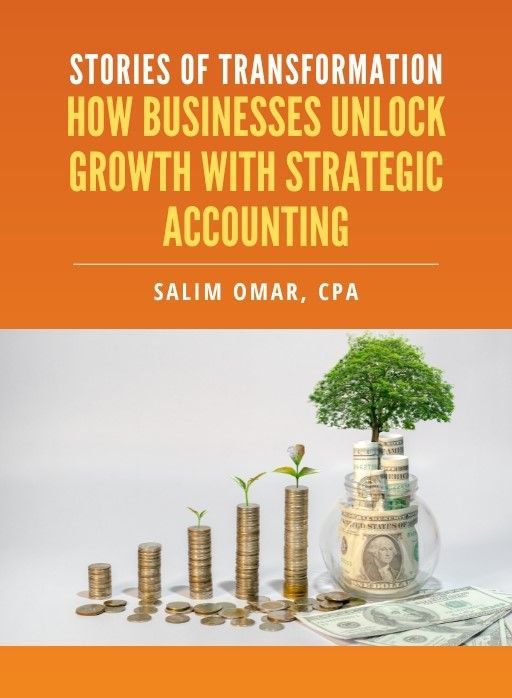
Free eBook:
Stories of Transformation

Salim is a straight-talking CPA with 30+ years of entrepreneurial and accounting experience. His professional background includes experience as a former Chief Financial Officer and, for the last twenty-five years, as a serial 7-Figure entrepreneur.
Recent Posts