
What to Clean Up in Your Books Before the Second Half of the Year

I've seen businesses enter the second half of the year convinced they're on track, only to discover months later that cash flow problems, profitability concerns, or hidden financial risks had been sitting in their books the whole time.
I'm Salim Omar, founder of Straight Talk CPAs, and that's exactly why I view mid-year as more than a bookkeeping checkpoint. It's a reality check.
By now you've made six months of decisions, generated six months of financial activity, and built out plans for the rest of the year. The real question is whether your financial records actually support those plans.
A lot of business owners tell themselves they'll deal with bookkeeping cleanup after year-end. The problem with that is you end up making some of your most important decisions using incomplete information. Before you focus on growth, hiring, expansion, or new investments, it's worth making sure your books actually reflect what's happening inside the business right now.
Clean Up the Financial Clutter That Hides Important Signals
One of the first things I look for is unresolved activity that's been quietly building up in the background.
Old bank transactions waiting to be categorized. Duplicate entries. Unreconciled credit card balances. Customer payments sitting in holding accounts. Expenses that were never properly assigned.
None of these feel particularly dangerous on their own. The problem is what they stop you from seeing.
When unresolved transactions pile up, spotting spending trends gets harder, evaluating profitability becomes less reliable, and understanding how much cash is truly available turns into guesswork. Important financial signals get buried underneath bookkeeping noise.
A financial report should help you make decisions. If the data underneath it is cluttered, the report becomes less useful no matter how clean it looks on the surface.
Find the Money That's Stuck Outside Your Bank Account
Most business owners keep a close eye on sales. Far fewer spend much time looking at outstanding receivables. That's often exactly where cash flow problems start.
Revenue doesn't do anything for cash flow until the payment is actually collected. Every unpaid invoice is essentially your business financing someone else's operations with your own money.
Mid-year is a good time to go through aging receivables and find the accounts that have been sitting longer than they should. The longer an invoice goes unpaid, the harder collecting it tends to get.
I've worked with companies that looked perfectly healthy on paper while quietly running short on cash because too much money was tied up in invoices that hadn't been paid. Before you forecast the second half of the year, make sure the cash flow you're expecting is based on realistic collections, not just what's been billed.
Remove Expenses That Are Distorting Profitability
When business owners tell me profitability feels off compared to what the reports are showing, expenses are usually one of the first places worth looking at.
Unused subscriptions. Duplicate vendor charges. Personal expenses recorded as business costs. One-time purchases that are skewing month-to-month comparisons.
These don't just create accounting inaccuracies. They distort the decisions being made on top of them.
I've seen owners spend months trying to improve margins when the real issue had nothing to do with operations. The financial reports simply weren't giving them an accurate picture to work from.
If you're evaluating pricing, hiring, marketing, or expansion in the second half of the year, the profitability data behind those decisions needs to reflect reality. Otherwise even a well-thought-out decision is being built on bad information.
Pay Attention to the Part of the Financial Statements Most Owners Ignore
Most business owners spend their time looking at revenue and profit. Far fewer regularly look at the balance sheet. That's a problem because some of the most important issues never show up on the income statement at all.
Old deposits. Inventory discrepancies. Unresolved loan balances. Asset accounts that haven't been touched in months. Liabilities that no longer reflect what's actually owed.
I've seen balance sheet accounts hide forgotten obligations, overstated assets, and reporting errors that made a business look far stronger than it actually was.
A clean balance sheet doesn't just improve accounting accuracy. It gives you a more complete and honest picture of where the business actually stands.
Compare Your Reports to Reality
One of the most valuable mid-year exercises has nothing to do with bookkeeping software.
Ask yourself a simple question:
Do your financial reports match what you're experiencing in the business?
If your reports say you're having a strong year but cash constantly feels tight, something deserves attention.
If revenue is growing but margins seem weaker, find out why.
If business appears healthy on paper but you're hesitant to hire, invest, or expand, there may be gaps in the information you're relying on.
When financial reports and day-to-day reality feel disconnected, one of those signals is usually wrong.
The goal isn't to ignore the reports.
The goal is to uncover what's causing the disconnect before it affects future decisions.
A Mid-Year Discovery That Changed the Plan
Not long ago we worked with a growing service business that was gearing up for an aggressive second-half expansion. Sales were ahead of expectations and the owner was ready to bring on additional staff and push into new growth initiatives.
At first glance the numbers looked encouraging.
But when we went through things more carefully, several months of unpaid customer invoices turned up, along with inconsistently categorized expenses and balance sheet accounts that hadn't been reconciled in nearly a year.
Nothing was catastrophic. But once the books were cleaned up, the financial picture looked quite different. Cash flow was tighter than expected. Profit margins were lower than management had believed. Expansion was still on the table, but the timeline needed to shift.
Because those issues came to light mid-year instead of in December, the owner had time to make informed decisions rather than reactive ones. That's a very different position to be in.
What You're Really Cleaning Up
Most people think of bookkeeping cleanup as an organization exercise. In reality it's about confidence.
Clean books show you where cash is actually going, which parts of the business are generating real profit, where risks are starting to build, and what opportunities are actually worth pursuing.
The second half of the year will show pretty quickly whether your plans are backed by facts or assumptions. Accurate financial records won't guarantee success, but they give you something every business owner genuinely needs: reliable information when it matters most.
If you're not sure whether your financial reports reflect what's actually happening inside your business, now is the right time to find out.
At Straight Talk CPAs, we help business owners understand what their numbers are really saying so they can address problems earlier, plan more effectively, and move forward with greater certainty.
Free eBook:
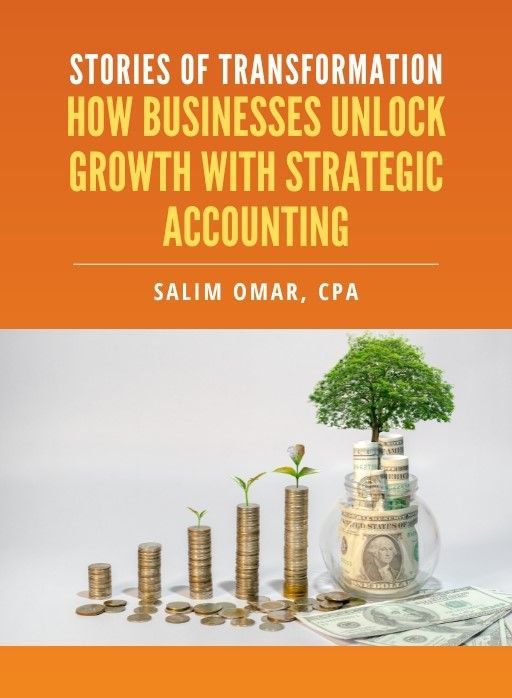
Stories of Transformation

Salim is a straight-talking CPA with 30+ years of entrepreneurial and accounting experience. His professional background includes experience as a former Chief Financial Officer and, for the last twenty-five years, as a serial 7-Figure entrepreneur.
Recent Posts