
What Your Q3 Numbers Are Already Telling You About Q4

By the time October arrives, most business owners are already thinking about how they'll finish the year.
They want stronger sales. Better cash flow. A profitable fourth quarter. A solid foundation for next year.
What many don't realize is that the business has already been leaving clues about how Q4 is likely to unfold.
I'm Salim Omar, founder of Straight Talk CPAs, and one of the biggest misconceptions I see is that Q4 somehow starts fresh. It doesn't.
In my experience, the fourth quarter usually magnifies the financial trends that were already developing during Q3.
That's why I rarely look at third-quarter numbers as a report card.
I look at them as a forecast.
If Cash Flow Tightened in Q3, Q4 Probably Won't Fix It
Many businesses finish the third quarter with respectable revenue while quietly feeling more pressure on cash.
Receivables are taking longer to collect.
Operating costs have crept higher.
Inventory has grown.
None of those issues usually become easier during Q4.
In fact, year-end bonuses, seasonal spending, inventory purchases, and delayed customer payments often increase the pressure.
When I see cash tightening in Q3, I don't assume Q4 will solve it.
I assume it's time to strengthen collections, review spending, and improve visibility before those pressures accelerate.
If Margins Have Been Slipping, More Sales May Not Help
Revenue has a way of attracting attention.
Margins tell a much more important story.
If gross margin has been gradually shrinking throughout Q3, every new sale could be contributing less profit than the one before it.
I've worked with businesses that celebrated record sales only to discover the additional revenue wasn't producing stronger financial results because pricing, labor costs, or product mix had quietly changed.
That's not a sales problem.
It's a profitability signal.
And Q3 usually gives you enough time to address it before the year closes.
If Small Delays Are Becoming a Pattern, Expect Bigger Ones
Business owners often dismiss individual late payments or rising expenses because each one seems manageable on its own.
The problem isn't one delayed payment.
It's the pattern.
One supplier increasing prices may not change much.
Several suppliers doing it over three months probably will.
One customer paying late isn't unusual.
Half your largest customers paying ten days later than they used to tells a different story.
The trends that repeat during Q3 often become the challenges everyone notices during Q4.
A Conversation That Changed the Rest of the Year
One business owner came into our meeting excited about expanding operations before year-end.
Revenue had been growing consistently, and demand showed no signs of slowing.
But when we looked beyond the sales figures, the story changed.
Gross margin had declined each month throughout Q3. Overtime costs were increasing. Accounts receivable were slowly stretching beyond normal payment cycles.
Nothing looked urgent on its own.
Together, those numbers were pointing in the same direction.
The business wasn't becoming stronger.
It was becoming more expensive to operate.
Instead of hiring immediately, the owner adjusted pricing, improved collections, and focused on higher-margin work.
By the end of Q4, the business had stronger cash flow and healthier profits, not because revenue suddenly increased, but because the decisions improved.
The Best Forecast Is Often Sitting in Last Quarter's Numbers
One lesson I've learned over the years is that businesses are rarely surprised by completely new financial problems.
They're surprised because they didn't recognize the signals early enough.
Your Q3 financials already contain valuable information about pricing, profitability, cash flow, customer behavior, and operational capacity.
The question isn't whether those signals exist.
It's whether anyone is paying attention to them while there's still time to respond.
Before Q4 gains momentum, spend less time asking whether the numbers look good and more time asking what they're trying to tell you. That's often where the most valuable business decisions begin.
At Straight Talk CPAs, that's how we approach financial reporting. The numbers aren't there simply to explain where your business has been. They're there to help you understand where it's heading, so you can make better decisions before the outcome is already determined.
Free eBook:
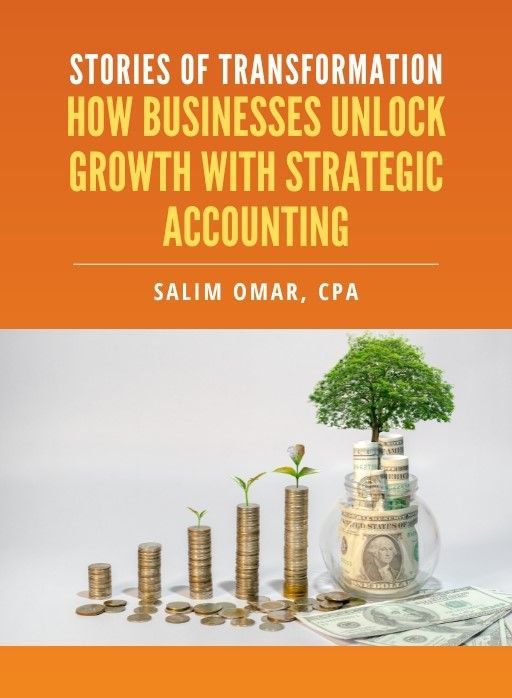
Stories of Transformation

Salim is a straight-talking CPA with 30+ years of entrepreneurial and accounting experience. His professional background includes experience as a former Chief Financial Officer and, for the last twenty-five years, as a serial 7-Figure entrepreneur.
Recent Posts