Why DIY Tax Software Isn’t Enough for Business Owners in 2025

Let’s not sugarcoat it—running a business in 2025 means wearing too many hats. Marketing. Operations. Sales. Now throw in taxes. That’s where most business owners freeze. Enter DIY tax software—marketed as a “quick and easy fix.” Just plug in your numbers and voilà, your taxes are done! But here’s the hard truth: that shiny tax tool? It’s not built for business growth. It’s built for basic returns.
So, why exactly is DIY tax software falling short in 2025? Let’s unpack the blind spots.
Tax Software Was Designed for Simplicity, Not Strategy
Most DIY tax tools do a decent job of handling personal returns or sole proprietors with little complexity. But once a business has payroll, multiple revenue streams, contractors, or even inventory—things get messy, fast. And these tools don’t adapt to nuance.
A software platform can’t:
- Understand your business goals
- Recommend whether to elect S-Corp status
- Tell you if your vehicle expense method is hurting your bottom line
- Warn you about a potential audit trigger
Those are strategy-level decisions. And those decisions need a CPA’s eye—not a dropdown menu.
Missing Deductions Is Like Leaving Money on the Table
One of the biggest selling points of tax software is "finding all your deductions." But here’s the kicker—it only finds what you know to enter. If you don’t realize your home office setup qualifies, or that your business retreat last summer could have been partially deductible, the software won’t magically detect that.
Straight Talk CPAs often uncovers thousands in missed
deductions that clients didn’t even know were options. Here’s a quick story: a creative agency switched from DIY software to working with our team. We restructured their contractor payments, adjusted how their marketing spend was categorized, and unlocked an additional $18,930 in deductions. That’s not software magic—it’s human insight.
Compliance Isn’t Optional (And Software Won’t Cover You)
In 2025, the IRS has ramped up its digital audit systems. More returns are being flagged—especially from businesses that file inconsistently or with red flags like large expense ratios or contractor-heavy payrolls. DIY software doesn’t warn you about potential audit triggers. It just helps you file.
When you’re working with Straight Talk CPAs, part of our job is to keep your business off the radar in the first place. And if you ever do face an audit? We represent you, talk to the IRS, and fight to protect your deductions. Tax software doesn’t show up to defend you—it just emails a confirmation.
Tax Software Doesn’t Offer Long-Term Planning
Let’s say you’re profitable this year—great news! But do you know what that means for your 2026 taxes? Or how a new investment will hit your return next April?
CPAs don’t just file taxes—they
plan ahead. Our team builds forward-thinking strategies based on your business’s current numbers, growth trajectory, and personal financial goals. Want to open a second location? Start hiring W-2 employees? Explore retirement contributions that also reduce taxable income? You’ll want a CPA’s guidance to map that out correctly.
Real Advice Is Personal, Not Pre-Programmed
Every business is unique. A retail store has different tax concerns than a freelance web developer or a property manager. DIY software doesn’t ask the right questions—or offer context that actually fits your business model.
- Working with Straight Talk CPAs means:
- Customized advice for your industry
- Timely insights on changing tax laws (and yes, 2025 brought a few curveballs)
- A real human to call when you’re not sure if that new piece of equipment qualifies for Section 179
Tax software offers a digital experience. We offer actual expertise.
Peace of Mind Isn’t in a Dropdown Menu
One of the most underappreciated benefits of having a CPA? Confidence.
No second-guessing what box to check. No worrying if your numbers are "probably right." Just clean books, sound strategies, and the knowledge that someone’s got your back.
It’s not just about numbers. It’s about peace of mind—something that’s hard to put a price on, but easy to feel once you have it.
The Bottom Line
In 2025, automation is everywhere—but nuance still matters. DIY tax tools have improved, sure, but they can’t replace the strategic thinking, experience, and hands-on support of a CPA.
Straight Talk CPAs bridges the gap between tax preparation and business growth. We don’t just file your taxes—we build a long-term financial partnership that evolves with your business. Because growing your business shouldn’t mean growing your tax stress.
If you're ready to leave the software behind and get real advice that moves the needle,
let’s talk.
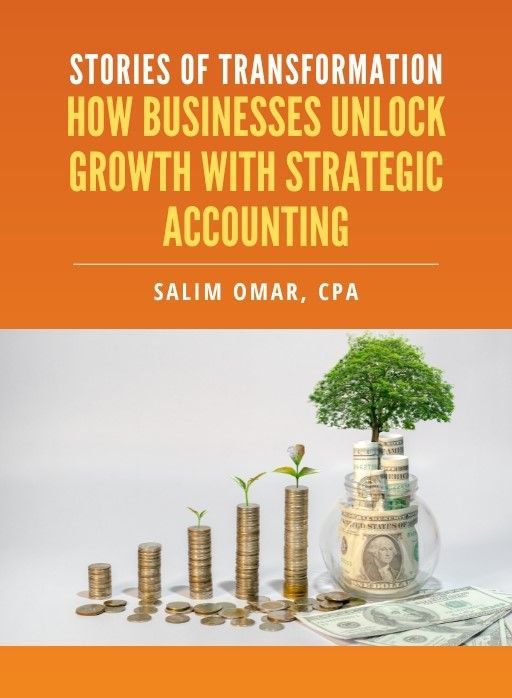
Free eBook:
Stories of Transformation

Salim is a straight-talking CPA with 30+ years of entrepreneurial and accounting experience. His professional background includes experience as a former Chief Financial Officer and, for the last twenty-five years, as a serial 7-Figure entrepreneur.
Recent Posts