
You're Making Sales—So Why Is Cash Still Tight?

Revenue is up. Customers are buying. New projects keep coming in.
On paper, everything looks healthy.
And yet a lot of business owners find themselves asking the same frustrating question: why does it still feel like we're running out of cash?
I'm Salim Omar, founder of Straight Talk CPAs, and I've seen this more times than I can count. Some of the businesses that feel the most cash pressure aren't struggling businesses at all. They're growing.
This is where a lot of owners fall into a trap. They assume cash flow problems mean sales need to go up. In my experience, the real issue usually has very little to do with sales.
More Revenue Doesn't Automatically Mean More Cash
One of the most common misconceptions I run into is the idea that revenue and cash move together.
They don't.
A business can put up strong sales numbers and still feel financially squeezed. That's because revenue measures what you've earned.
Cash reflects what has actually landed in your account and what's leaving it. The gap between those two numbers is exactly where most owners get caught off guard.
A growing business is typically adding customers, bringing on employees, buying inventory, investing in equipment, expanding operations. Every one of those decisions needs cash long before the financial benefits show up. Growth creates financial demands that simply don't appear in the top-line revenue number.
The Warning Signs Often Appear Before the Problem
Most cash flow problems don't arrive out of nowhere. They build up gradually through signals that are easy to brush past.
Vendor balances start creeping up. Accounts receivable takes a little longer to collect each month. The credit line starts feeling like a normal part of operations rather than a backup. Payroll periods feel more stressful than they should. Big decisions keep getting pushed back because nobody feels certain about what's in the reserves.
Owners tend to focus on sales reports because they're straightforward to read. Meanwhile the numbers that actually affect liquidity don't get nearly as much attention.
This is why I often tell owners that what looks like a cash flow problem is really a visibility problem. If you can't clearly see where cash is coming from, where it's going, and what obligations are coming up, you're making decisions with pieces of the picture missing.
When Growth Creates Cash Flow Pressure
One client comes to mind.
Revenue had grown significantly over the previous year and by most measures the business looked successful. But the owner was constantly feeling pressure around cash and couldn't quite explain why.
When we got into the numbers the issue wasn't profitability. The business had started taking on larger projects that required paying for labor and materials upfront.
Customer payments, though, were arriving much later. Growth was widening the gap between when money was going out and when it was coming back in.
The business wasn't running out of opportunities. It was running ahead of its own cash cycle.
Once we identified the timing problem we were able to tighten up collections, adjust how projects were billed, and build cash flow forecasts that actually reflected reality. The pressure started to ease because the owner could finally see what was happening underneath the revenue numbers.
The Numbers That Matter More Than Sales
Sales will always matter. But if you're trying to get a real read on financial health, sales alone don't cut it.
The numbers worth watching regularly are cash flow trends, gross profit margins, how long receivables are sitting unpaid, inventory levels, operating expenses, cash reserves, and what financial commitments are coming up in the next few months.
Together those metrics show whether growth is creating real value or quietly creating strain. A business can look strong from the outside while financial pressure keeps building underneath the surface.
Better Decisions Start With Better Visibility
The businesses that handle cash flow well aren't necessarily the ones with the highest revenue. They're the ones that can see potential problems before those problems show up in the bank account.
That kind of visibility creates options. It lets owners make hiring decisions with confidence, plan investments without second-guessing themselves, and grow without constantly wondering whether the cash will be there when it needs to be.
The goal was never just more sales. It was turning those sales into healthy margins, predictable cash flow, and a business that gets stronger over time.
If revenue is growing but cash still feels tight, the answer is rarely to sell more. Start by looking at what's happening behind the sales number. The real story is almost always in there somewhere.
At
Straight Talk CPAs, we help business owners build that visibility so they can make decisions with real confidence, not just during tax season, but all year long.
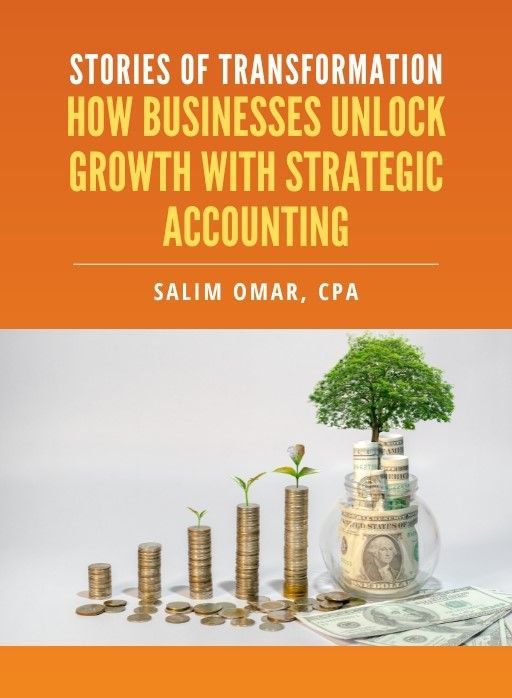
Free eBook:
Stories of Transformation

Salim is a straight-talking CPA with 30+ years of entrepreneurial and accounting experience. His professional background includes experience as a former Chief Financial Officer and, for the last twenty-five years, as a serial 7-Figure entrepreneur.
Recent Posts