Your Business Is Growing. Has Your Tax Strategy Kept Up?

When a business grows, we usually track it the same way: sales are up, there are more people on payroll, more customers, bigger opportunities. Almost nobody tracks the tax strategy.
So you end up with a company that looks nothing like it did two or three years ago, still running on the same tax setup. Same entity. Same salary the owner set years back. Estimated payments calculated off old numbers. Tax planning, if you can call it that, happens when the preparer starts working on the return.
That's fine when you're small. Once you're not, it's worth a second look.
Revenue Isn't The Whole Story
When I sit down with a growing business, the first thing I want to know is whether the money decisions still fit the company as it is today.
A business doing $800,000 a year isn't just a bigger version of one doing $300,000. Margins have probably shifted. Payroll is heavier. The owner is likely pulling out more. Maybe there's new equipment on the books, or talk of opening a second location. Every one of those things touches your taxes.
That's why I don't like starting with "How do we lower this year's bill?" I'd rather ask what's changed in the business and what that means for the money.
Look At Profit, Not Just Sales
Rising sales can make things feel better than they are. I've seen owners nearly double revenue while their margins shrank, because payroll, overhead, or loan payments grew faster than anyone planned for.
Year-to-date profit tells you much more. It shows whether your estimated payments are still close, whether you should hold back cash, and whether a purchase you're considering would move the numbers in a big way. This is where a current P&L earns its keep. It's not much use sitting in a folder. It's useful when it helps you decide what to do next.
What This Looks Like In Practice
A client of mine grew quickly over a short stretch. On the surface, everything looked great: strong sales, solid profits, and the owner was putting money back into the business.
But the decisions were still being made the way they were when the company was half the size. When we went through the current numbers, a few things stood out. Profit had shifted. The owner's pay needed a conversation. And there were some real tax and cash-flow decisions coming before December 31.
The owner hadn't done anything wrong. The business had simply moved faster than the financial plan around it, which happens a lot at this stage.
Four Signs It's Time To Revisit Your Approach
You don't have to wait until tax season to find out. Ask yourself these:
Has your profit changed a lot, up or down? Either way, it can throw off your estimated payments and change what's worth doing before year-end.
Has the way you pay yourself changed? As profits climb, your salary and distributions shouldn't just sit on autopilot.
Does your entity still fit? What worked in year one may not work now, especially if ownership, income, or your goals have changed.
Are you about to make a big move?
Hiring, buying equipment, adding a location, putting more into
retirement, or taking on debt all have tax consequences. Better to think about those before you act than to find out afterward.
Don't Let The Tax Return Be The First Time You Hear The News
Preparing a return looks backward. It reports what already happened. Planning looks ahead.
At Straight Talk CPAs, that's where I think the useful conversation starts. We look at where the business is right now and where it's headed, then use the numbers we have to spot decisions that need attention before the year closes.
If you want a simple place to start, set your current situation next to the assumptions behind your existing strategy.
Check year-to-date profit, your pay, estimated payments, big purchases, planned investments, and anything else that's changed. If those look quite different from a year or two ago, your strategy probably needs to catch up.
You don't need to hunt for every deduction. You just want your financial strategy to keep pace with the business. When it does, the next decision gets a lot easier to make with confidence.
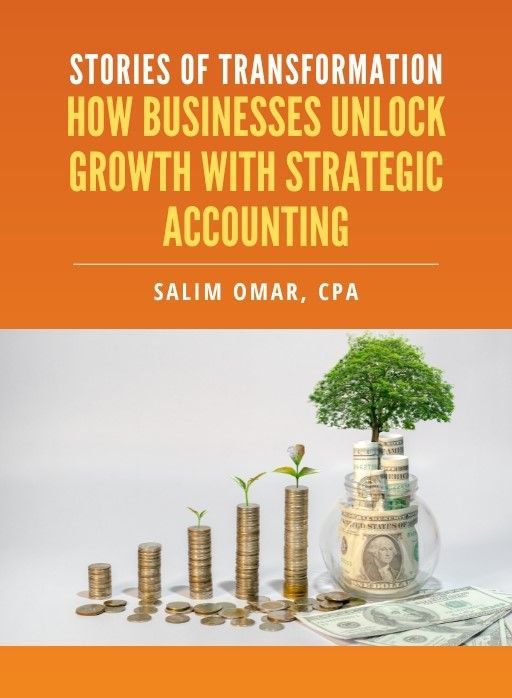
Free eBook:
Stories of Transformation

Salim is a straight-talking CPA with 30+ years of entrepreneurial and accounting experience. His professional background includes experience as a former Chief Financial Officer and, for the last twenty-five years, as a serial 7-Figure entrepreneur.
Recent Posts