
How to Use Your Tax Refund Without Creating Future Problems

For many business owners, a tax refund feels like relief.
After a year of managing cash flow, payroll, rising costs, and financial uncertainty, finally receiving money back can feel like breathing room again.
That reaction makes sense.
But the most important question usually is not:
“How should I spend this refund?”
It’s:
“What does this refund reveal about how my financial system has been operating all year?”
As Salim Omar often explains:
“A refund doesn’t automatically mean you’re financially ahead. Sometimes it simply means money was sitting in the wrong place while pressure was building somewhere else.”
That distinction matters more than most people realize.
Why Tax Refunds Feel Different From Normal Money
One reason refunds are treated emotionally is that they feel separate from normal business income.
Most revenue already has a job attached to it before it even arrives. It goes toward payroll, operating expenses, vendor payments, debt obligations, and taxes.
A refund feels different.
It feels available.
Flexible.
Easy to use.
That’s why many business owners immediately start thinking about:
- catching up on delayed purchases
- paying off short-term pressure points
- upgrading equipment
- reinvesting quickly
- rewarding themselves after a difficult year
None of those decisions is automatically wrong.
The problem starts when the refund becomes a temporary solution to underlying financial patterns that were never properly addressed.
Because in many cases, the refund itself is not the real financial win.
A Large Refund Is Not Always a Sign Things Are Working Well
One of the biggest misconceptions we see at Straight Talk CPAs is the assumption that a large refund automatically means the business is financially well-managed.
Sometimes it does.
But often, the refund is simply the result of:
- overpaying quarterly taxes
- inaccurate estimates
- inconsistent cash flow visibility
- withholding adjustments
- operating conservatively because future tax obligations felt unclear
In other words, the refund may actually be exposing inefficiencies in the financial structure of the business.
We regularly work with business owners who generate strong revenue but still feel financial pressure throughout the year, only to later receive a large refund.
Once we review the numbers more closely, the issue usually becomes clear.
Many business owners overpay taxes because they never feel fully confident about what they actually owe. Their mindset becomes: “Pay extra just to stay safe.”
But while they are trying to avoid tax surprises, they are often creating pressure somewhere else.
Cash that could have supported operations, reserves, hiring, or growth ends up sitting outside the business unnecessarily for most of the year.
That changes how you should look at the refund entirely.
“It Felt Like Bonus Money”
One business owner we worked with received a significantly larger refund than expected after a strong financial year.
Naturally, the refund created excitement.
The client told us:
“It honestly felt like bonus money. I finally felt like I could move forward on things we’d been delaying.”
But once we stepped back and reviewed the broader financial picture, the real issue became obvious.
Throughout the year, the business owner had been operating conservatively because future tax obligations felt unpredictable. To avoid getting caught off guard, quarterly payments were consistently overestimated.
Meanwhile:
- Cash flow felt tighter than necessary
- Operational decisions became more stressful
- Growth planning stayed cautious
- Financial confidence never fully improved
The refund was not solving the problem.
It was exposing it.
The issue was not the size of the refund itself. The issue was that money had become disconnected from the overall financial strategy of the business.
Once we improved the tax planning structure and created better visibility around future obligations, the business owner stopped operating in constant financial reaction mode.
And that changed the way decisions were made throughout the business.
Later, the client said something that captured the situation perfectly:
“I realized the refund wasn’t the solution. The solution was understanding where the pressure was actually coming from.”
The Best Use of a Tax Refund Is Not Always the Most Emotional One
A refund can absolutely create opportunity.
But the strongest financial decisions are usually the ones that improve long-term stability instead of simply creating short-term relief.
Depending on the situation, a refund may be better used for:
- Strengthening cash reserves
- Reducing high-pressure debt
- Improving working capital flexibility
- Preparing for upcoming tax obligations
- Addressing operational bottlenecks
- Creating stability before slower business cycles
- Supporting future growth intentionally
The right decision depends on the broader financial picture.
Because long-term financial stability is rarely built through one isolated decision. It comes from alignment between:
- Cash flow management
- Tax planning
- Operational decisions
- Long-term business strategy
That alignment matters far more than any single refund amount.
The Bigger Risk Most Business Owners Miss
One of the more dangerous patterns we see is when tax refunds quietly become part of the business survival cycle.
For example:
- Using refunds every year to catch up on cash flow shortages
- Relying on overpayments because the estimates feel uncertain
- Treating tax season like a correction process instead of a planning process
- Operating reactively because financial visibility is limited throughout the year
Those patterns create temporary relief.
But they also delay the greater financial improvements that create long-term stability and confidence.
As Omar often says:
“Financial clarity starts when money stops feeling random. Your tax strategy, cash flow, and long-term planning should all work together.”
That is usually the point where business owners stop feeling like they are constantly recovering financially, even during profitable years.
Before You Automatically Spend the Refund
A tax refund can absolutely be useful.
But before you rush to spend it, it is worth asking a bigger question:
Did this refund come from an intentional financial strategy…
Or from uncertainty that quietly built up throughout the year?
That answer matters.
Because long-term financial stability is not created through one good tax season decision. It is created through a financial system that works consistently throughout the year.
At Straight Talk CPAs, we help business owners and high-income earners connect tax planning, cash flow strategy, and long-term financial decision-making so short-term relief does not quietly turn into future financial pressure.
If your business consistently feels financially tight despite solid revenue, it may be time to look deeper at the system behind the numbers.
Free eBook:
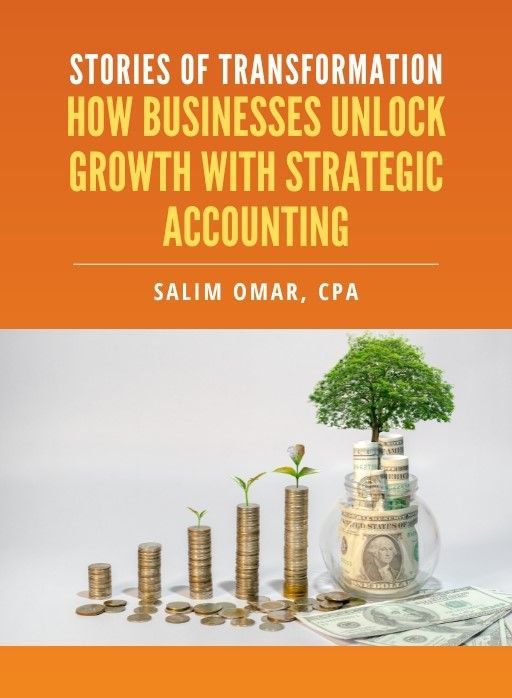
Stories of Transformation

Salim is a straight-talking CPA with 30+ years of entrepreneurial and accounting experience. His professional background includes experience as a former Chief Financial Officer and, for the last twenty-five years, as a serial 7-Figure entrepreneur.
Recent Posts