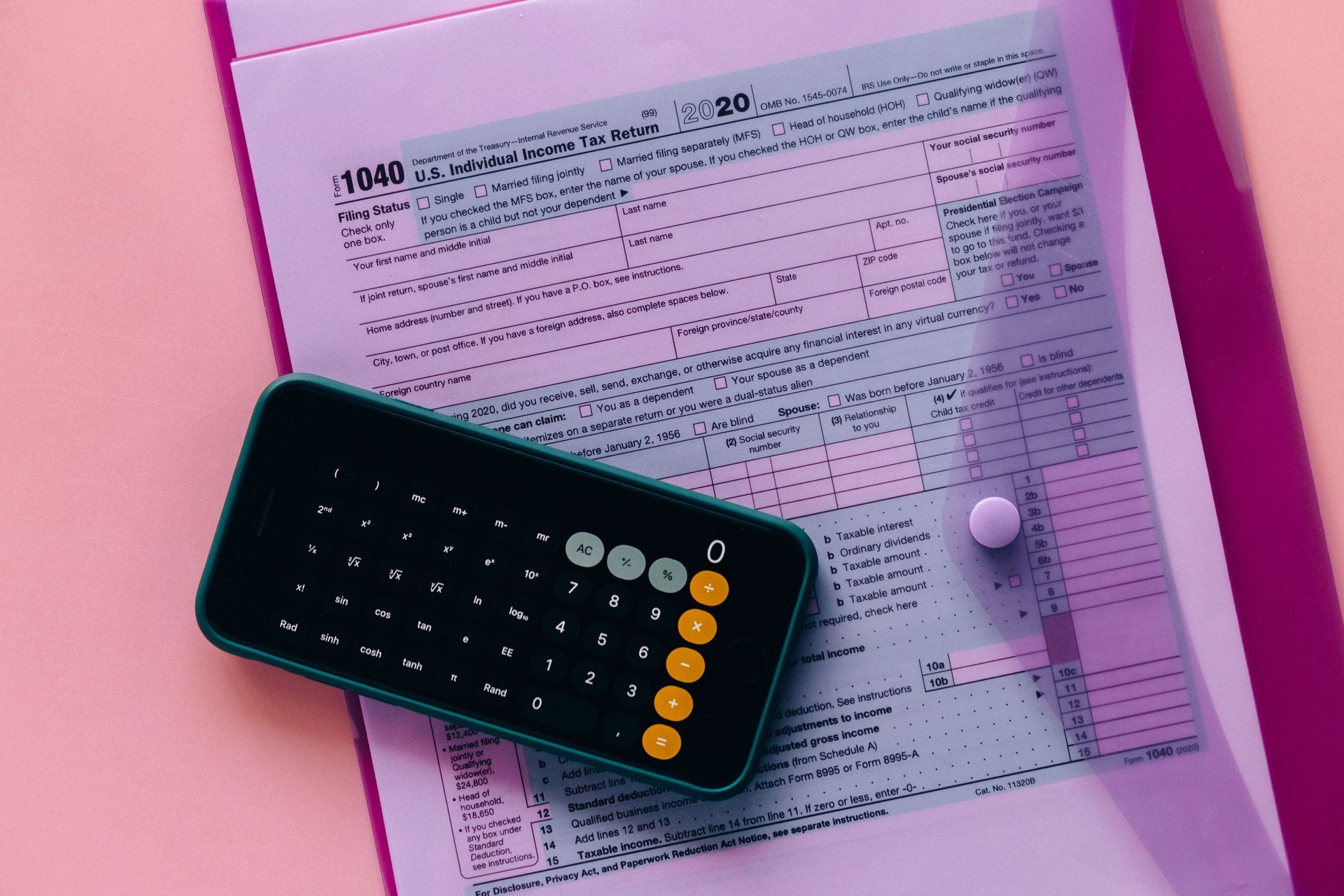
Late Filing vs. Late Payment: What's the Difference?

A business can file its tax return late. It can pay its tax late. Or it can do both.
From the outside, those situations can look identical. But the distinction matters because a business can stay on top of one obligation while falling behind on the other, and the consequences aren't the same.
I've worked with business owners who were so focused on the amount they owed that they never stopped to consider the separate cost of filing late. Others held off on filing because the cash wasn't there to cover the balance, not realizing that filing and paying are two entirely separate actions.
Understanding the difference puts you in a better position to manage both.
Filing and Paying Are Two Different Obligations
Late filing means the return wasn't submitted by the applicable deadline, including any valid extension.
Late payment means the tax wasn't paid by the date it was due.
The IRS treats these as separate penalties. For many returns, the failure-to-file penalty runs at roughly 5% of unpaid tax for each month or partial month the return is late, up to a 25% ceiling. The failure-to-pay penalty runs at 0.5% of unpaid tax per month, also capped at 25%.
The exact mechanics vary by return type, so the same calculation doesn't apply across every entity.
The core point is simple: filing the return and paying the tax are connected but they are not the same obligation.
You Can File on Time and Still Pay Late
This distinction matters most when cash flow is the issue.
Say the return is complete but the business doesn't have enough available cash to cover the full balance. Filing on time can still be the right call.
Interest and a late-payment penalty may continue building on the unpaid amount but filing on time prevents a separate late-filing problem from developing alongside it. The IRS advises taxpayers who can't pay in full to file the return anyway and pay whatever they can, rather than holding off on filing. Payment arrangements may also be available.
That's a meaningful distinction when the decision is really about protecting the business's cash position while working through a tax liability.
You Can Also Pay and Still File Late
The reverse situation is less obvious and often overlooked.
A business may have covered most of its liability through estimated payments and still fail to file the required return on time. Paying the tax doesn't eliminate the filing requirement, and it doesn't necessarily prevent a late-filing penalty either.
This is particularly significant for entities like partnerships and S corporations, where late-filing penalties can scale with the number of partners or shareholders and how long the delay runs. For returns due after December 31, 2025, the IRS lists a $255 monthly base penalty for Forms 1065 and 1120-S, multiplied by the applicable number of partners or shareholders.
"We already paid the tax" and "we filed everything we needed to file" are two different statements and conflating them can be costly.
What Happens When Both Problems Occur?
This is where the distinction becomes especially consequential.
When a business both files late and pays late, both penalties can apply. For many returns, the IRS reduces the failure-to-file penalty by the failure-to-pay penalty for the same month rather than stacking both at full rates. The combined monthly impact can generally reach 5%, with the failure-to-file component adjusted when the failure-to-pay penalty is also running.
The math matters less than the principle: letting both problems sit unresolved compounds the cost while the underlying tax obligation keeps accumulating.
The Cash Flow Decision Matters Too
I've sat with business owners who looked at a tax balance and immediately zeroed in on one question: how do we come up with the money?
The better question is usually: what does paying this balance today actually do to the rest of the business?
If writing that check would leave the company stretched thin on payroll, vendor obligations, or other near-term commitments, the decision needs to be made with the full cash picture in view — not just the tax notice sitting on the desk.
That's not the same as ignoring the liability. It means evaluating it alongside cash on hand, expected collections, upcoming expenses, and whatever payment options might be available.
A tax bill is a financial obligation. It shouldn't be looked at in isolation from everything else the business needs to keep running.
An Extension Doesn't Solve the Payment Problem
A common misconception is that filing an extension moves both deadlines.
Generally, it doesn't.
An extension gives more time to file. It doesn't extend the original payment deadline, and interest can continue accruing on unpaid tax from the original due date forward.
This is exactly why tax planning needs to happen before the filing deadline becomes the first moment an owner sees the real financial impact. By then, the business should already have a working picture of its expected liability and whether the cash will actually be there to cover it.
Look at Why the Business Fell Behind
When a business repeatedly ends up filing late, paying late, or scrambling for cash at deadline time, the problem usually isn't the deadline itself.
The more useful place to look is what happened before the deadline arrived.
Are the books current?
Are estimated payments being reviewed throughout the year?
Does the owner have a reliable sense of upcoming tax obligations?
Is cash flow being projected far enough ahead to account for large payments before they come due?
Those questions reveal far more about the financial health of the business than any penalty notice does.
At Straight Talk CPAs, we help business owners connect tax obligations with the broader financial picture — understanding what's owed, how it affects cash flow, and what the numbers suggest about decisions that need attention throughout the year.
If the situation involves late filing, late payment, or both separate the two problems first. Get the return filed, get clear on the amount owed, assess the cash flow impact, and then look honestly at the process that allowed it to develop in the first place.
Free eBook:
Stories of Transformation

Salim is a straight-talking CPA with 30+ years of entrepreneurial and accounting experience. His professional background includes experience as a former Chief Financial Officer and, for the last twenty-five years, as a serial 7-Figure entrepreneur.
Recent Posts