
Separating Business and Personal Finances After Filing Season

The Hidden Financial Blind Spot That Makes Business Decisions Harder
Tax filing season has a way of creating a false sense of completion.
The returns are filed. The deadlines are met. The paperwork is finally off your desk.
For most business owners, that feels like the finish line. In reality, it's often the beginning of a different conversation.
As founder of Straight Talk CPAs, I've spent nearly three decades helping business owners make better financial decisions. One pattern that consistently shows up after filing season is the mixing of personal and business finances, often without realizing how much it affects profitability, cash flow visibility, and growth planning.
Most owners think of it as a bookkeeping issue. I see it as a business visibility issue.
What makes filing season valuable is that it often exposes financial habits that stay hidden during the rest of the year. Personal purchases show up in business accounts. Business expenses are paid from personal cards. Transfers lack documentation. What seemed manageable throughout the year suddenly creates confusion when accurate reporting matters most.
That's why the weeks immediately after filing season are often the best time to establish clearer financial boundaries and build better systems moving forward.
Filing Season Often Reveals the Real Problem
Many business owners don't realize how intertwined their finances have become until tax preparation begins.
A transaction that seemed insignificant months ago suddenly requires explanation. Personal expenses have to be separated from business activity. Account balances need additional review. Financial reports become harder to trust because the underlying information isn't as clean as it should be.
The issue isn't simply that tax preparation becomes more complicated. The bigger concern is what those mixed transactions are doing to the quality of your financial information throughout the year.
If your records require extensive cleanup during filing season, there's a good chance your financial reports haven't been telling the full story either.
That's why I encourage business owners to view filing season as more than a compliance exercise. It's an opportunity to identify where financial visibility is breaking down and fix it before those issues affect future decisions.
When the Numbers Stop Telling the Truth
Every important business decision runs on financial information. Hiring, buying equipment, planning for taxes, and evaluating growth all depend on having reliable numbers behind them.
When personal expenses flow through business accounts, or business expenses get paid personally and tracked inconsistently, the financial picture starts to blur. Profitability can look stronger than it is. Cash flow can appear healthier than reality. Forecasts become less reliable.
I've seen owners hold back on growth because their reports made cash look tighter than it actually was. I've also seen businesses push forward aggressively because the numbers created a false sense of strength. In both cases, the problem wasn't the business itself. The problem was a lack of clarity.
We spend a lot of time asking whether the business is making money. An equally important question is whether we can clearly see where that money is going and what it's producing. Without that visibility, confidence in the numbers begins to erode. And when confidence disappears, decision-making often suffers as well.
Why It Gets Harder as the Business Grows
In the early days, keeping personal and business finances separate doesn't always feel urgent. You're moving fast, wearing every hat, and using whatever account is convenient. It feels harmless because at that stage, it mostly is.
The problem is that what seems manageable early on often becomes a significant obstacle later.
As revenue grows, owners start asking bigger questions. Can I afford to bring on another employee? Is cash flow keeping pace with growth? What are my actual profit margins? How much should I be setting aside for taxes? Which parts of the business are generating the strongest return?
These aren't questions you can answer with rough estimates. They require reliable financial information. And if personal and business activity are still tangled together, getting accurate answers becomes far more difficult than it should be.
What This Looks Like in Practice
Not long ago I worked with a business owner whose revenue had been climbing for over a year. Things looked good on paper. But every single month ended with the same frustration: where is all the cash going?
When we sat down and went through the financials together, the picture became familiar pretty quickly. Personal expenses were showing up in business accounts. Business purchases were going out on personal cards. The same type of transaction was being categorized three different ways depending on the month.
Nothing dishonest was happening. There was just no real system keeping the two worlds apart.
Once we separated the accounts and got the reporting cleaned up, it was like the fog lifted. The owner could finally see which expenses were actually tied to running the business, where cash was disappearing each month, and which parts of the operation were worth investing more into. Decisions that used to feel like guesswork started having real numbers behind them.
The business hadn't changed. The owner's ability to see it clearly had.
Clean Numbers Make Forecasting Worth Doing
Most owners don't realize how much cleaner finances change the quality of their planning.
Forecasting isn't really about predicting the future. It's about having enough clarity to make smart calls before problems show up and enough confidence to move on opportunities when they do. When everything is mixed together, that clarity just isn't there. Patterns are hard to spot. Cash flow is hard to predict. Planning becomes a reaction to whatever just happened instead of a real strategy.
Clean numbers change that. Trends become visible. Seasonal shifts become something you can actually prepare for. And instead of constantly putting out fires, you start getting ahead of them.
Why It Pays Off All Year
Most conversations about this topic focus on cleaner records and easier tax prep. Those are real benefits. But they're not the main reason I push owners to fix this.
The real payoff is knowing how your business is actually doing.
When your reports reflect what's truly happening, problems show up earlier, cash flow becomes easier to manage, and decisions stop being based on gut feel. Over time that adds up. Better information leads to better planning.
Better planning leads to better results.
The businesses I've seen make the best decisions over the years weren't always the most profitable ones. They were the ones who could clearly see what their numbers were telling them.
The Takeaway
Filing season does more than close out the year. It tends to surface the financial habits that shape how the business runs the other eleven months.
If the filing process showed you places where personal and business finances have gotten mixed up, now is the right time to deal with it. The sooner those boundaries are in place, the easier everything else becomes: understanding profitability, managing cash flow, planning ahead, and making decisions without second-guessing yourself.
At Straight Talk CPAs, we help business owners get past compliance and build a clearer picture of what their numbers are actually saying.
Through proactive tax planning, bookkeeping, financial reporting, and advisory support, we help create the financial clarity needed to improve profitability, strengthen cash flow, and make better business decisions throughout the year.
Free eBook:
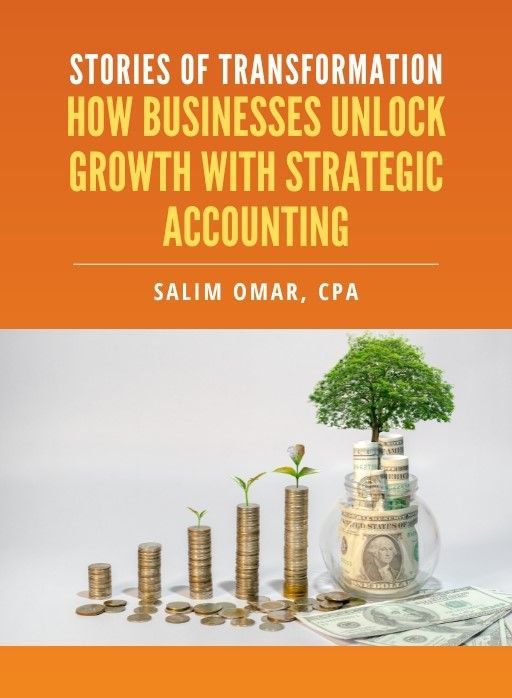
Stories of Transformation

Salim is a straight-talking CPA with 30+ years of entrepreneurial and accounting experience. His professional background includes experience as a former Chief Financial Officer and, for the last twenty-five years, as a serial 7-Figure entrepreneur.
Recent Posts