
The Financial Decisions That Matter Most Before Q4

How to Set Your Business Up for a Strong Q4 Before It Arrives
The final quarter has a funny way of surfacing everything that got quietly pushed aside during the first three.
Businesses that felt fine in the spring start feeling cash pressure. Growth plans that seemed reasonable in January get shelved because the numbers don't support them anymore. Owners who expected to finish strong end up spending most of Q4 putting out fires instead of executing.
Being the founder of Straight Talk CPAs, I have spent nearly three decades watching this play out. My take on it hasn't changed much over the years: Q4 doesn't usually create the problem. It just makes the problem impossible to ignore any longer.
The delayed decisions, the assumptions nobody stopped to question, the opportunities that never got properly evaluated, they all show up at once when the pressure is highest.
Which is exactly why the weeks before Q4 matter more than most owners realize.
Know Whether the Cash Is Actually There
Most businesses heading into Q4 have plans that look reasonable on paper. More inventory. Seasonal hiring. A marketing push. Maybe an equipment purchase that keeps getting pushed back.
The real question isn't whether those plans make sense. It's whether the cash will actually be there when those commitments come due.
Revenue projections don't cover payroll. A strong sales month doesn't automatically mean the cash has landed yet. Before locking in any major commitment, it's worth mapping out when money is expected to come in and when it's going out, not as a rough estimate but as a real picture.
I've watched business owners pass on opportunities they genuinely wanted to pursue because a cash gap showed up at the worst possible moment. Most of those gaps were predictable. They just weren't looked at early enough.
Figure Out What's Actually Pulling Its Weight
By this point in the year, the numbers have a story to tell if you're willing to look past the top line.
Some products are quietly outperforming everything else. Certain services carry margins that make everything else look thin by comparison. A few customers are probably generating more value than the rest of the book combined, while others are consuming time and resources that the revenue doesn't come close to justifying.
Before Q4 starts, it's worth sitting with one honest question: if we had to grow from here using only what we already have, where would we put our energy?
Most of the time, that answer doesn't show up in a summary report. You have to dig a level deeper to find it.
Stop Evaluating Investments by Price Alone
Year-end has a way of triggering purchase decisions. Equipment. Technology. A new hire. An expansion that's been on the table for months.
The instinct is to look at the cost and decide whether it fits the budget.
A better question is whether the investment actually moves the business in a direction that matters for next year. Does it take something off leadership's plate?
Does it reduce a cost that keeps coming back?
Does it create the capacity the business is going to need?
The cheapest option and the right option aren't always the same thing.
Ask Whether Your Reports Are Actually Helping You Decide Anything
This is a conversation I find myself having more than you'd expect.
Not about numbers, specifically about whether the financial information people are looking at actually helps them make calls. A report that tells you what happened last month isn't the same as a report that tells you what to do next.
A while back, I worked with a company heading into what was supposed to be their biggest quarter of the year. Revenue looked healthy. But nobody on the leadership team could explain why profit hadn't kept pace.
When we broke things down by service line, the answer was right there. A handful of lower-margin projects were pulling in a disproportionate amount of resources without anyone really tracking it. Shifting focus before Q4 rather than during it gave the team room to concentrate on the work that was actually worth doing.
The business didn't change. The picture of it did. And that made all the difference in how the quarter went.
Pick Two or Three Priorities and Actually Stick to Them
There's a version of Q4 prep that looks like a long list of everything the business should improve before December. Profitability. Expenses. Revenue. Hiring. Expansion. A new initiative that's been sitting in someone's notebook since February.
That list rarely produces results.
What tends to work better is narrowing it down to the two or three things that will genuinely move the needle over the next few months and making sure everyone leading the business is working from the same short list. Decisions get faster. Execution gets cleaner. Things actually get done.
Adding more to the list rarely creates momentum. Cutting it down almost always does.
Strong Finishes Get Built Before Q4, Not During It
The businesses that close the year out well usually aren't the ones that scrambled hardest in the final stretch.
They're the ones that came into Q4 already knowing where cash was heading, which parts of the business deserved more attention, and where the risks were sitting before those risks had a chance to become urgent.
If you're getting ready for Q4, the most useful question probably isn't how to finish the year strong.
It's whether the financial picture in front of you right now is clear enough to make good decisions before the quarter even begins.
At Straight Talk CPAs, our job isn't just explaining what the numbers say. It's helping business owners understand what the numbers mean for the decisions sitting right in front of them, so Q4 becomes something you execute with confidence rather than survive.
Free eBook:
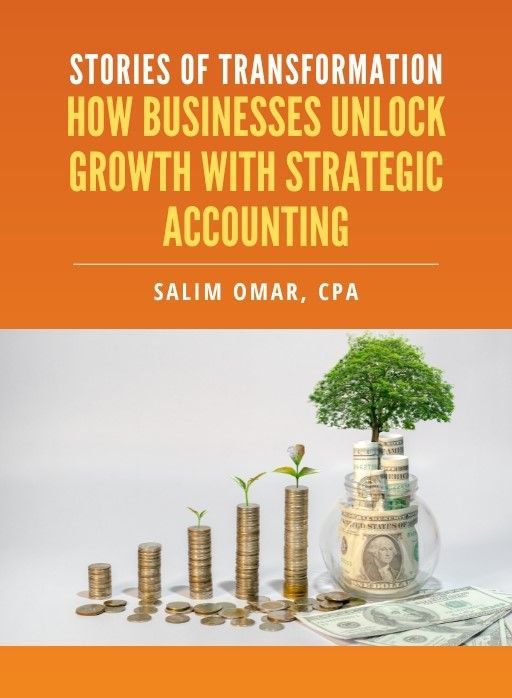
Stories of Transformation

Salim is a straight-talking CPA with 30+ years of entrepreneurial and accounting experience. His professional background includes experience as a former Chief Financial Officer and, for the last twenty-five years, as a serial 7-Figure entrepreneur.
Recent Posts