
The Financial Habits That Create Year-Round Cash Flow Stress

I've worked with business owners who were growing revenue year after year and still asking the same question every single month:
"Where did all the cash go?"
In nearly thirty years of working with business owners, I've been asked that question more times than I can remember. I'm Salim Omar, founder of Straight Talk CPAs, and what strikes me every time is how similar the situation looks.
Sales are strong, customers are paying, the business appears healthy from the outside yet every large expense feels stressful, every hiring decision feels like a gamble, and every unexpected bill creates pressure that just shouldn't be there.
Cash flow stress rarely starts when money gets tight. That's usually just when it becomes impossible to ignore. The real cause builds slowly through everyday financial habits that reduce visibility and delay action and by the time the pressure shows up, the warning signs have typically been sitting in the numbers for months.
The businesses that handle cash flow well aren't always the ones generating the most revenue. They're the ones making better decisions long before problems have a chance to show up.
Running the Business Off the Bank Balance
One of the most common habits I see is using the bank balance as the main measure of financial health.
It feels logical. Money in the account means things are fine.
But the bank balance only tells you where things stand right now. It doesn't show upcoming tax obligations, slowing customer payments, future payroll, or expenses that haven't hit the account yet. A healthy balance can create false confidence. A temporary dip can create unnecessary panic. Neither one tells the full story.
Your bank balance tells you what already happened. It doesn't tell you what to do.
Only Looking at the Numbers When Something Feels Wrong
A lot of businesses only review financial performance when tax season rolls around or when cash gets unusually tight.
The problem is that cash flow issues almost never show up all at once. Margins shrink a little. Expenses inch up. Customer payments start taking a few extra days. Inventory builds faster than sales. Each change feels manageable on its own. Together they quietly reshape the financial picture.
The businesses I've seen handle cash flow best don't wait for problems to force the conversation. They review performance consistently.
Financial visibility creates options. Delayed visibility takes them away.
Treating Every Dollar of Revenue the Same
Not all revenue is created equal and this is something a lot of owners don't think about until it becomes a problem.
Some customers consistently pay late. Some projects eat up far more time than they should. Some services look impressive on a sales report but contribute very little profit once labor, materials, and overhead are factored in.
The customer generating the most revenue isn't always the one creating the healthiest cash flow. When you understand which work is actually strengthening the business, pricing becomes more confident, capacity gets easier to manage, and growth stops feeling like a guessing game.
Making Growth Decisions Without Looking Ahead
Hiring, buying equipment, opening a new location, expanding inventory, these are exciting moves. They're also financial commitments that deserve more than optimism behind them.
A cash flow forecast won't predict the future perfectly. But it helps you ask the right questions before money goes out the door. What happens if your biggest customer pays 30 days late? How would a slower month affect this investment? Will the cash be there before the new expenses arrive?
The goal isn't to predict every outcome. It's to go into big decisions with your eyes open instead of crossing your fingers.
A Pattern I See More Often Than You'd Expect
Not long ago I worked with a business owner whose revenue had grown steadily for over a year. Every month still ended the same way.
"We're selling more than ever. Why does cash still feel so tight?"
Nothing obvious stood out at first. But when we got into the numbers together the picture became clear. Customer payment cycles had quietly stretched from around 30 days to nearly 60. At the same time inventory purchases had grown to support the business, but the cash flow planning had never been updated to reflect any of it.
Revenue wasn't the problem. The timing of how cash moved through the business had shifted but the financial habits hadn't moved with it.
Once regular reporting and short-term forecasting became part of the monthly routine, the owner stopped reacting to cash shortages and started seeing them coming weeks in advance. That one shift changed the quality of every financial decision that followed.
The Bottom Line
Year-round cash flow stress rarely comes from one bad month or one unexpected event. It's usually the result of small financial habits playing out over and over again.
The good news is habits can change.
Better visibility leads to better decisions. Better decisions strengthen cash flow. And stronger cash flow gives you the confidence to invest, grow, and handle what comes up without constantly wondering what's waiting around the corner.
That's how we work at Straight Talk CPAs. We help business owners understand what their numbers are actually saying, not just where the business has been, but where it's heading so they can make smarter calls, strengthen cash flow, and build something built to last.
Free eBook:
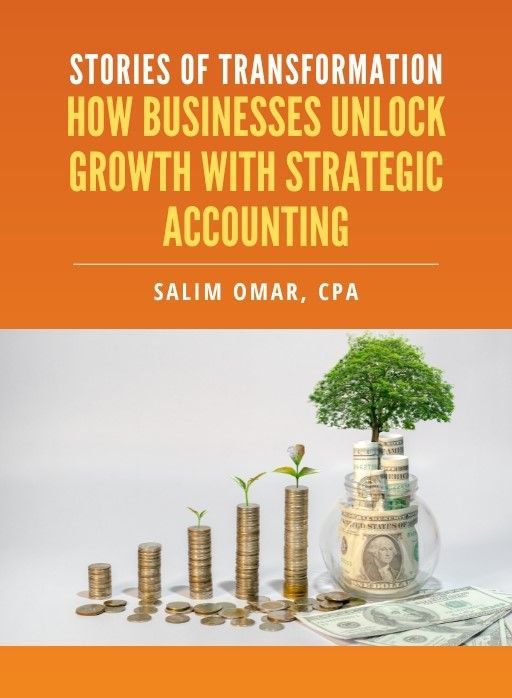
Stories of Transformation

Salim is a straight-talking CPA with 30+ years of entrepreneurial and accounting experience. His professional background includes experience as a former Chief Financial Officer and, for the last twenty-five years, as a serial 7-Figure entrepreneur.
Recent Posts