The Hidden Cost of DIY Tax Prep for Growing Businesses

Running a growing business feels empowering. Revenue is increasing. Clients are expanding. Systems are improving. So when tax season arrives, many business owners think:
“I can handle this. It’s just numbers.”
And on the surface, DIY tax prep seems logical. Software is affordable. Tutorials are everywhere. Filing is a task you can check off.
But here’s the uncomfortable truth: for growing businesses, DIY tax preparation often costs far more than hiring the right expert.
At Straight Talk CPAs, we’ve worked with business owners who came to us after discovering expensive mistakes, missed deductions, and compliance issues they didn’t even know existed. The pattern is clear: growth changes your tax complexity, even if you don’t notice it yet.
The hidden cost of DIY tax prep for growing businesses often shows up as missed deductions, poor planning decisions, compliance risks, and lost time that could be spent scaling the company.
Let’s break down what’s really at stake.
Why DIY Tax Prep Feels Like the Smart Move
Before diving into the risks, let’s acknowledge why business owners choose this route.
- It seems cheaper upfront.
- Software promises simplicity.
- You already understand your business.
- You want control over finances.
- You’ve filed your own taxes in earlier years.
For a solo freelancer or brand-new startup, this might work temporarily.
But as revenue grows, the tax landscape changes dramatically.
Hidden Cost #1: Missed Deductions That Add Up
Growing businesses have more moving parts:
- Equipment purchases
- Contractors and payroll
- Marketing spend
- Travel and client meals
- Software subscriptions
- Home office allocations
- Vehicle usage
Tax software can input numbers. It cannot strategize.
Many business owners miss:
- Proper depreciation strategies
- Section 179 deductions
- R&D credits
- Qualified Business Income (QBI) optimization
- Entity-based tax advantages
Missing even one major deduction can cost thousands annually.
And unlike overpaying a vendor, you don’t see this loss. It quietly disappears.
Hidden Cost #2: Poor Entity Planning
One of the biggest mistakes growing businesses make?
Staying in the wrong business structure for too long.
Sole proprietorship.
Single-member LLC.
Partnership.
S-Corp election.
Each has different tax implications.
DIY filing rarely answers the bigger question:
“Is this still the most tax-efficient structure for my growth stage?”
A CPA doesn’t just file taxes. They analyze whether your entity choice aligns with:
- Profit levels
- Owner compensation
- Long-term expansion plans
- Liability protection
The wrong structure can mean overpaying taxes year after year.
Hidden Cost #3: Audit Risk & Compliance Errors
Growth increases visibility.
More revenue = more scrutiny.
Common DIY mistakes include:
- Misclassifying employees vs contractors
- Incorrect payroll filings
- Inconsistent revenue reporting
- Overstated deductions
- Multi-state filing errors
Even small inconsistencies can trigger notices.
An audit doesn’t just cost money. It costs:
- Time
- Stress
- Reputation
- Focus
When you’re building a company, distraction is expensive.
Hidden Cost #4: No Forward-Looking Strategy
Here’s a question many business owners don’t ask:
“Am I making tax decisions today that hurt me next year?”
DIY tax prep is reactive. It looks backward.
Professional tax planning is proactive. It looks forward.
Examples:
- Should you accelerate expenses this year?
- Defer income?
- Adjust estimated payments?
- Change payroll distributions?
- Invest in equipment before year-end?
Without planning, you’re always surprised by your tax bill.
And surprises are rarely pleasant.
Hidden Cost #5: Opportunity Cost of Your Time
Let’s talk about something practical.
How many hours do you spend preparing taxes?
10?
20?
40+?
Now multiply that by your hourly revenue potential.
If your business generates $200/hour and you spend 25 hours on tax prep, that’s $5,000 in opportunity cost, not including mistakes.
Growing businesses thrive when owners focus on:
- Sales
- Strategy
- Leadership
- Innovation
Not decoding tax forms.
Hidden Cost #6: Cash Flow Mismanagement
Many DIY filers calculate taxes once per year.
But fast-growing businesses need:
- Quarterly planning
- Estimated payment adjustments
- Cash reserve forecasting
- Profit allocation strategy
Without it, you risk:
- Underpaying taxes (penalties)
- Overpaying and starving cash flow
- Surprise year-end liabilities
Strategic tax planning protects liquidity, which fuels growth.
When Does DIY Stop Making Sense?
If any of these apply, it’s time to reconsider:
- Revenue consistently above six figures
- Employees or contractors involved
- Multiple income streams
- Inventory management
- Multi-state operations
- Plans to scale aggressively
- Considering S-Corp election
- Recent large asset purchases
Growth equals complexity.
Complexity requires strategy.
Why Growing Businesses Trust Straight Talk CPAs
At Straight Talk CPAs, we understand something simple:
Business owners don’t need more jargon.
They need clarity.
We’ve worked with growing companies that started with DIY filing and later realized they were:
- Overpaying taxes
- Underplanning cash flow
- Missing strategic opportunities
- Exposing themselves to compliance risk
Our approach is different.
We explain.
We strategize.
We align tax planning with growth.
And most importantly, we speak your language.
Growing businesses don’t just need compliance.
They need a partnership.
When you’re scaling, expanding, hiring, and investing, you deserve more than software prompts and generic advice.
You deserve a team that sees the full picture.
That’s why so many business owners rely on Straight Talk CPAs not just during tax season, but throughout the year to ensure growth doesn’t quietly turn into an unnecessary tax burden.
Final Thoughts: Cheap Upfront Can Be Expensive Long-Term
DIY tax prep feels cost-effective.
But for growing businesses, the real cost often shows up later:
- In missed deductions
- In structural inefficiencies
- In compliance errors
- In lost time
- In avoidable stress
The question isn’t “Can I file this myself?”
The real question is:
“Is DIY helping my business grow or quietly holding it back?”
If you’re serious about building a business that scales sustainably, partnering with professionals who understand both compliance and growth strategy isn’t a luxury.
It’s leverage.
And that’s exactly what
Straight Talk CPAs was built to provide.
Free eBook:
Stories of Transformation
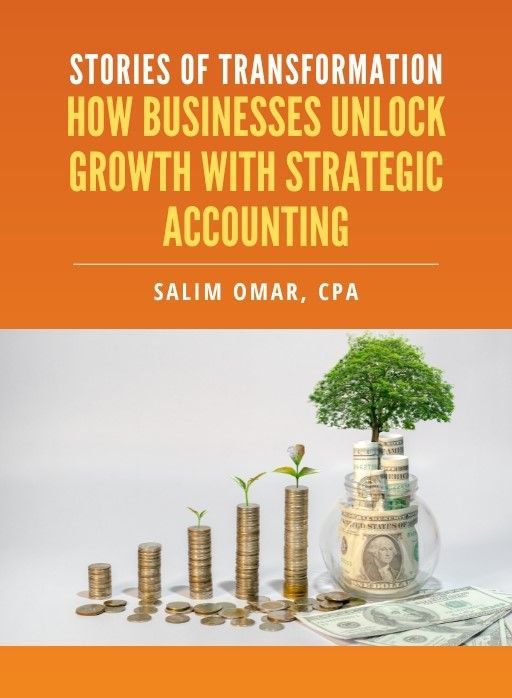

Salim is a straight-talking CPA with 30+ years of entrepreneurial and accounting experience. His professional background includes experience as a former Chief Financial Officer and, for the last twenty-five years, as a serial 7-Figure entrepreneur.
Recent Posts