
What Successful Business Owners Review at Mid-Year That Others Don't

Most business owners review what happened.
The most successful ones review what happens next.
That's one of the biggest differences I've observed after decades of working with entrepreneurial businesses.
By the middle of the year, every owner has access to the same financial statements. They can all see revenue, expenses, and bank balances. Yet some businesses use that information to make smarter decisions while others simply use it to confirm what already happened.
The difference usually isn't effort or intelligence.
It's where they're looking.
As founder of Straight Talk CPAs, I've spent decades helping business owners navigate growth, expansion, cash flow challenges, and major financial decisions. One pattern shows up repeatedly: the strongest businesses don't use mid-year as a reporting exercise. They use it as a strategic planning opportunity.
They're not asking, "How did we do?"
They're asking, "What do these numbers tell us about where we're headed?"
They Review Future Cash Flow, Not Just Historical Results
Many business owners spend considerable time reviewing last quarter.
The best operators spend just as much time reviewing the next two.
Cash flow problems rarely appear overnight. Most leave clues months in advance.
Upcoming inventory purchases. Hiring plans. Debt obligations. Equipment investments. Seasonal fluctuations.
Successful owners use mid-year to understand whether future cash flow can support the decisions they want to make.
In my experience, forecasting isn't about predicting the future perfectly. It's about identifying pressure points early enough to respond intelligently.
The goal is fewer surprises and more options.
They Separate Revenue Growth From Profit Growth
One of the most overlooked mid-year reviews involves profitability.
Not overall profitability.
Profitability by revenue stream.
I've seen businesses proudly report record sales while one service line quietly produced little profit. I've also seen companies discover that a smaller offering was generating significantly stronger margins than their flagship product.
Successful owners want to know:
- Which services create the most profit?
- Which customers create the most value?
- Which activities consume resources without producing meaningful returns?
Growth becomes far more effective when resources are directed toward what is actually driving profitability.
They Revisit the Assumptions Behind Their Growth Plans
January plans are built on January information.
By July, some of those assumptions are no longer true.
Costs change.
Markets shift.
Customer behavior evolves.
New opportunities appear.
The strongest business owners are willing to challenge their own plans.
They don't view changing course as failure. They view it as good leadership.
One of the most valuable mid-year conversations is often surprisingly simple:
If we were building this year's plan today, knowing what we know now, would we make the same decisions?
The answer is often revealing.
They Review Whether Their Next Big Decision Still Makes Sense
One thing I rarely see successful business owners do is make major decisions on instinct alone.
By mid-year, they're reviewing the financial realities behind the decisions they planned to make.
Can the business actually support another hire right now?
Is this the right moment to open a second location?
Will that equipment purchase move the needle on profitability or just add to overhead?
Should growth be funded from cash flow, through debt, or some combination of both?
These aren't questions your accountant can answer by looking at last quarter's numbers. They're business decisions that need real financial context behind them.
The owners I've seen make good calls consistently aren't necessarily the smartest people in the room. They just tend to understand what a decision will actually cost the business before they make it.
Mid-year is usually the best window to work through those questions. The year is real enough that the numbers mean something, but there's still enough time left to change course if needed.
They Review Risks Most Businesses Miss Until It's Too Late
This is where many businesses get caught off guard.
Growth can hide problems.
Revenue can disguise shrinking margins.
Busy teams can mask inefficient processes.
Strong sales can conceal cash flow weaknesses.
Some of the most important things to catch at mid-year aren't the obvious problems. They're the ones hiding underneath a surface that looks perfectly fine.
A business can be growing and still be quietly becoming more fragile, pricing that hasn't kept up, collections that have gotten sloppy, processes that worked at half the current size but are starting to crack. These things rarely announce themselves.
The owners who build businesses that hold up over time tend to look for weak spots when things are going well. That's when there's room to fix them.
A Mid-Year Discovery That Changed the Conversation
A business owner we worked with recently came into a review focused entirely on growth.
Revenue was ahead of expectations, demand was strong, and the company was considering adding staff.
At first glance, everything looked positive.
But after reviewing the financials more closely, a different concern emerged.
The business was becoming increasingly dependent on a small number of large customers. Revenue growth was strong, but concentration risk was growing alongside it.
That shifted the conversation completely.
Instead of focusing exclusively on expansion, the owner began prioritizing customer diversification and strengthening recurring revenue.
The company didn't have a growth problem.
It had a risk management problem disguised as success.
Those are exactly the kinds of insights that often emerge from a thoughtful mid-year review.
The Most Valuable Question to Ask Before Year-End
The most successful business owners don't wait until December to evaluate performance.
They use the middle of the year to create clarity.
Before the second half begins, take time to review:
- Future cash flow, not just historical results
- Profitability by revenue source
- The assumptions behind your growth plans
- Whether your next major business decisions still make financial sense
- Risks that may be hidden beneath positive performance
Financial reports tell you where you've been.
A thoughtful review helps determine where you're going.
At Straight Talk CPAs, those are the conversations we value most. Helping business owners move beyond reporting, gain meaningful financial visibility, and make confident decisions while there's still time for those decisions to influence the outcome.
Free eBook:
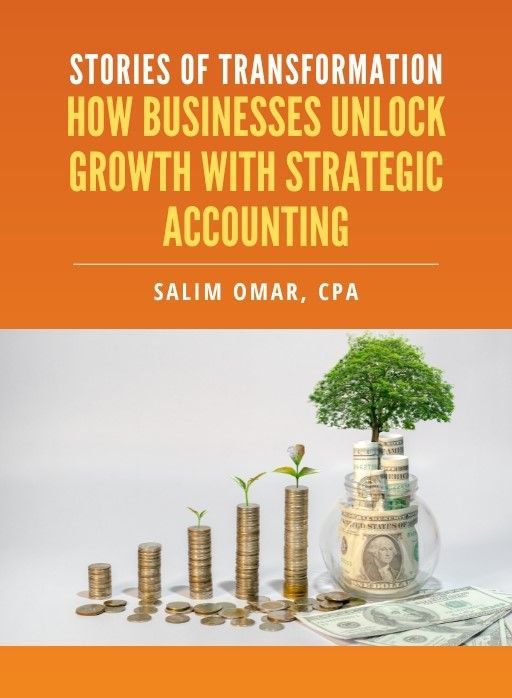
Stories of Transformation

Salim is a straight-talking CPA with 30+ years of entrepreneurial and accounting experience. His professional background includes experience as a former Chief Financial Officer and, for the last twenty-five years, as a serial 7-Figure entrepreneur.
Recent Posts