
What Your Profit and Loss Statement Is Trying to Tell You

Most business owners glance at their profit and loss statement once a month, confirm the business made money, and move on.
That's understandable. But it's also leaving a lot on the table.
After nearly three decades working with growing businesses, I've seen the same pattern play out more times than I can count. An owner doubles revenue and still can't figure out why cash feels tight. A profitable company keeps struggling to fund the growth it's ready for. Someone chases new sales for months before realizing the real problem was never about revenue to begin with.
I'm Salim Omar, founder of Straight Talk CPAs, and in almost every one of those situations, the answers were already there, sitting inside the profit and loss statement, waiting for someone to ask the right questions.
The numbers weren't the problem. The way the report was being read was. Most owners treat a P&L like a scorecard. A final grade for the month. But that's not what it's for. Read it right, and it stops explaining the past and starts helping you shape what comes next.
Revenue Can Grow While Your Business Gets Weaker
Revenue is usually the first number owners look at, and that makes sense. Growing sales feel like progress.
But revenue by itself doesn't tell you whether the business is actually getting healthier.
I've seen companies celebrate record sales while margins quietly shrank, operating costs climbed, and owners worked harder than ever for the same profit or less. When revenue goes up, but profitability doesn't, the business is sending a signal worth paying attention to.
Maybe pricing hasn't kept pace with rising costs. Maybe certain services are consuming far more time than they're worth. Maybe expenses have been creeping up for months without anyone stopping to ask whether they're actually producing results.
The top line tells you how much business you're doing. Your profit tells you whether that business is worth doing. That's a much more important conversation.
Every Expense Has a Job
Every dollar that leaves the business should be doing something useful.
Some expenses build capacity, improve efficiency, or support real long-term growth. Others slowly become part of the monthly routine without anyone questioning whether they're still earning their place.
Your profit and loss statement helps you separate the two, but only if you're asking the right questions.
Instead of asking whether expenses went up, ask why.
- Did payroll grow because the team became more productive, or because inefficiencies crept in?
- Did marketing spend bring in profitable customers or just higher costs?
- Have software subscriptions accumulated to the point where nobody can remember what half of them actually do?
These aren't accounting questions. They're management decisions. And the financial reports usually point directly to where those conversations need to happen.
Look for Patterns, Not Surprises
One month rarely tells the full story.
A seasonal dip, a large one-time purchase, or the timing of a customer payment can skew results in ways that don't mean much on their own. That's why looking at trends across several months is almost always more useful than reacting to any single report.
Three consecutive months of shrinking gross margins deserve a real conversation. Gradually rising overhead often means growth is becoming less efficient. Stable revenue paired with declining net income usually means costs are climbing faster than the business itself.
A single report tells you where things stand today. A series of reports starts telling you where things are headed. That's the difference between reacting to your numbers and actually staying ahead of them.
When the Numbers Changed the Decision
Not long ago, a business owner came to us convinced the company needed more customers. Sales had slowed, profits had flattened, and chasing new business felt like the obvious answer.
But after going through several months of profit and loss statements together, a different picture came out.
Revenue was actually holding up fine. The real issue was that the work had gradually shifted toward lower-margin projects requiring significantly more staff time, while overhead had quietly grown alongside the business.
The answer wasn't more sales. There were better sales.
The company adjusted pricing, got more deliberate about which projects it took on, and aligned resources more closely with the work that actually paid off. Revenue barely moved. Profitability improved significantly.
That's what happens when a financial report stops being a historical document and starts being something you actually make decisions with.
Five Questions Your Profit and Loss Statement Should Answer Every Month
Instead of asking, "Did we make money?", ask:
- Which products or services are generating the strongest margins?
- Are expenses growing faster than revenue?
- What trends are improving—or weakening—our profitability?
- Which costs deserve a closer look before they become bigger problems?
- If these trends continue, where will the business be six months from now?
These questions move the conversation beyond bookkeeping.
They help you think like the owner of a growing business.
The Best Financial Reports Change Decisions
I've never thought financial reports exist simply because businesses are required to have them.
Their real purpose is to help owners make better calls.
A profit and loss statement shouldn't just explain where the business has been. It should give you enough clarity to feel confident about where it's going.
When you learn to read the story behind the numbers, not just the numbers themselves, you start catching opportunities earlier, addressing problems before they compound, and making decisions based on real insight instead of gut feel.
That's what we focus on at
Straight Talk CPAs. Helping business owners turn financial reports into practical guidance so they can lead with more clarity, make more confident decisions, and build something stronger all year long.
Free eBook:
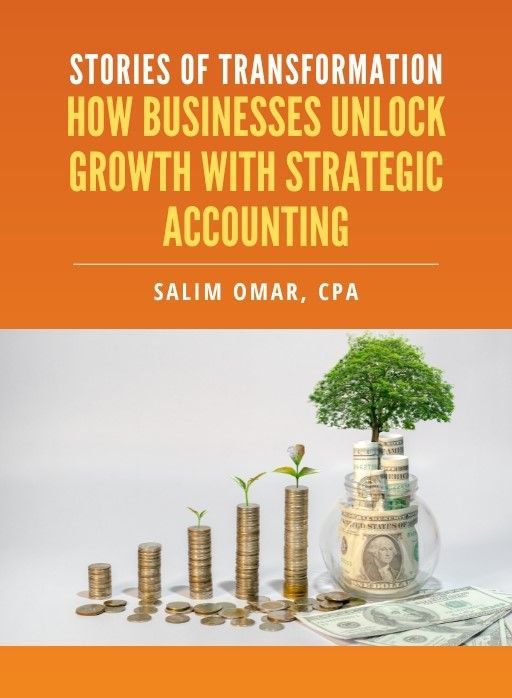
Stories of Transformation

Salim is a straight-talking CPA with 30+ years of entrepreneurial and accounting experience. His professional background includes experience as a former Chief Financial Officer and, for the last twenty-five years, as a serial 7-Figure entrepreneur.
Recent Posts