
Why Tax Problems Usually Start With Messy Books (Not Filing Errors)

At Straight Talk CPAs, one pattern shows up year after year.
When tax problems surface, filing errors usually take the blame.
A missed form.
A wrong number.
A deadline that came too fast.
But in practice, most tax issues don’t begin at filing.
They begin months earlier—quietly—inside the books.
By the time a return is prepared, the problem isn’t new. It’s already embedded in how transactions were tracked, categorized, and reconciled throughout the year.
This article explains why messy books—not filing mistakes—are the real source of most tax problems, and why clean accounting is the difference between control and constant correction.
The Filing Myth Most Business Owners Believe
There’s a common assumption that tax filing is where things go wrong.
In truth, filing is mostly mechanical:
- Numbers are pulled
- Rules are applied
- Forms are submitted
When a CPA prepares a return, they’re working with what already exists. Filing doesn’t create problems—it exposes them.
What “Messy Books” Actually Means
Messy books don’t always look chaotic.
Often, they look like:
- Expenses categorized inconsistently
- Income recorded without clear sources
- Accounts that were never fully reconciled
- Personal and business transactions are mixed
- Year-end cleanups done in a rush
Nothing appears “broken.”
But nothing is fully reliable either.
That gray area is where tax problems begin.
Why Bookkeeping Errors Create Tax Risk
Taxes are calculated on classifications, timing, and documentation—not just totals.
When books are messy:
- Deductions become harder to defend
- Income can be double-counted or misreported
- The timing of elections is missed
- CPA judgment becomes conservative
- Filing positions lose flexibility
Most CPAs won’t aggressively interpret unclear records. They default to safety. That protects compliance—but often increases tax cost.
The result isn’t an incorrect return.
It’s a
more expensive one.
The Hidden Cost of Year-End Cleanups
Many businesses treat bookkeeping as something to “fix later.”
The problem is that later usually means:
- Reconstructing months of activity
- Making assumptions instead of decisions
- Losing context behind transactions
- Locking in suboptimal treatment
By the time books are cleaned up at year-end, strategic options are already gone. Filing becomes a reporting exercise instead of a planning outcome.
This is why tax season often feels reactive—even when nothing technically goes wrong.
Filing Errors Are Rare. Structural Issues Aren’t.
Actual filing errors—math mistakes, missing signatures, wrong forms—are far less common than people think.
Modern software and professional review catch most of those.
What they don’t fix:
- Misclassified expenses
- Unsupported deductions
- Poor documentation trails
- Inconsistent treatment year over year
Those issues don’t trigger immediate alarms. They surface later as notices, adjustments, audits, or higher-than-expected tax bills.
And by then, the trail is cold.
Why Clean Books Change the Entire Tax Conversation
When books are clean and current:
- Income and expenses are clearly defined
- Transactions make sense in context
- Documentation supports positions naturally
- Planning opportunities stay open longer
- Filing becomes predictable
Instead of asking,
“Can we fix this?”
The conversation becomes,
“How do we want this treated?”
That shift—from repair to control—is where better outcomes come from.
The CPA Perspective Most Clients Never See
From a CPA’s standpoint, messy books create constraints.
They limit:
- How aggressively can deductions be taken
- Whether elections make sense
- How confidently can positions be defended?
- How much strategy can be layered in
Clean books, on the other hand, expand options.
That’s why firms like
Straight Talk CPAs treat bookkeeping accuracy as a strategic input—not a back-office task. Filing quality improves automatically when the underlying data is sound.
The Real Source of “Tax Surprises”
Most tax surprises aren’t surprises at all.
They’re the delayed outcome of:
- Incomplete records
- Inconsistent tracking
- Late cleanup
- Reactive filing
The filing didn’t fail.
The system feeding it did.
The Bottom Line
Tax problems rarely start with filing errors.
They start when bookkeeping is treated as an afterthought instead of a foundation.
At Straight Talk CPAs, clean books are viewed as a strategic input—not a back-office task. When the underlying records are accurate and intentional, filing becomes confirmation, not correction.
And that’s how tax issues stay small, predictable, and manageable—year after year.
Free eBook:
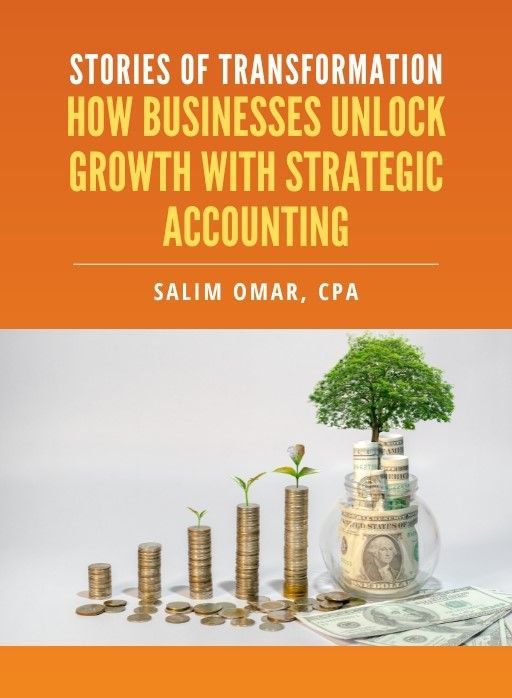
Stories of Transformation

Salim is a straight-talking CPA with 30+ years of entrepreneurial and accounting experience. His professional background includes experience as a former Chief Financial Officer and, for the last twenty-five years, as a serial 7-Figure entrepreneur.
Recent Posts