
Closing the Books Without Headaches: Tips for Business Owners

Closing your books shouldn’t feel like a marathon of spreadsheets, late-night coffee, and last-minute panic. Straight Talk CPAs has seen the inside of enough businesses to know this: when your finances are organized, and your workflow is structured, month-end and year-end close becomes a strategic lever—not a stressful chore.
This guide distills the high-impact moves that help you wrap up your books efficiently, accurately, and without the usual pain points.
1. Start With Organized Source Documentation
A smooth close begins long before the actual closing period. When invoices, receipts, payroll records, and bank statements are scattered across email threads or desktops, you’re guaranteed bottlenecks.
Operationalize this instead:
- Centralize documents in a shared, secure location.
- Use consistent naming formats and filing rules.
- Reconcile paper and digital records weekly, not at month-end.
This isn’t “admin work”—it’s foundational workflow hygiene that directly improves financial clarity.
2. Reconcile Cash, Bank, and Credit Accounts Early
Account reconciliation isn’t a checkbox; it’s the backbone of accurate reporting.
Handle these items proactively:
- Bank accounts
- Credit cards
- Merchant services
- Petty cash or cash-on-hand
Early reconciliation removes noise from your financials and flags discrepancies before they escalate. The companies that treat reconciliation as a real-time discipline—not a monthly burden—are the ones that always stay audit-ready.
3. Verify Accounts Receivable and Accounts Payable
Nothing derails a close like unresolved AR or AP.
Take a structured approach:
- Match issued invoices to payments received.
- Identify overdue customer balances and flag follow-up tasks.
- Review AP aging to ensure vendors aren’t missed or duplicated.
This single step gives you a real view of cash flow—versus the “assumed cash flow” that leads to poor decisions and preventable cash crunches.
4. Clean Up General Ledger Entries
Your GL is the heartbeat of the entire close process. When it’s miscategorized or bloated with outdated entries, your reports lose integrity.
Key housekeeping actions:
- Reclass entries that landed in the wrong accounts.
- Review accruals and deferrals for accuracy.
- Eliminate duplicate transactions.
- Close out suspense accounts quickly and cleanly.
If your books feel cluttered, this is likely where the problem lives.
5. Assess Fixed Assets, Depreciation, and Capital Expenses
Most business owners unintentionally underreport or misreport assets.
This step protects you from inaccurate valuations and
tax surprises.
Review:
- New purchases and disposals
- Depreciation schedules
- Repairs vs. capital improvements
- Assets that should be written off
A fixed-asset check is one of the fastest ways to bring order—and compliance—to your books.
6. Validate Payroll and Employee-Related Expenses
Payroll errors are expensive.
Confirm:
- Pay runs match payroll journals
- Taxes and benefits are correctly allocated
- Contractor payments meet reporting requirements
- PTO and accruals are updated
Payroll misalignment is one of the top reasons year-end closes becomes chaotic. A disciplined review eliminates downstream issues.
7. Review Tax Obligations Before Closing
Waiting until year-end to think about taxes creates avoidable pressure.
Assess:
- Sales tax filings
- Estimated tax payments
- Liability accounts
- Credits or deductions that require documentation
Straight Talk CPAs regularly sees businesses miss tax optimization opportunities simply because they review these items too late. Move this step upstream and reduce unnecessary spend.
8. Generate and Analyze Your Financial Statements
Once your accounts are reconciled and your entries are clean, create:
- Profit & Loss Statement
- Balance Sheet
- Cash Flow Statement
Then pressure-test them.
Do trends make sense?
Do margins match operational reality?
Are variances explainable?
This is where closing the books shifts from “compliance” to “strategy.” You’re not just finishing the month—you’re shaping the next one.
9. Document Issues, Adjustments, and Improvements
A strong close process evolves.
Create a short post-close log:
- What slowed you down
- What worked well
- What needs automation
- Any process gaps to fix
This removes recurring friction and compounds efficiency every month.
Final Thoughts
Closing the books shouldn’t drain your energy or steal focus from growth. With disciplined workflows and the right financial controls, the process becomes predictable, repeatable, and insight-driven.
If you want a month-end or year-end close that runs like a well-oiled machine,
Straight Talk CPAs can help you streamline everything—from reconciliations to reporting—so you operate with clarity, accuracy, and zero headaches.
Free eBook:
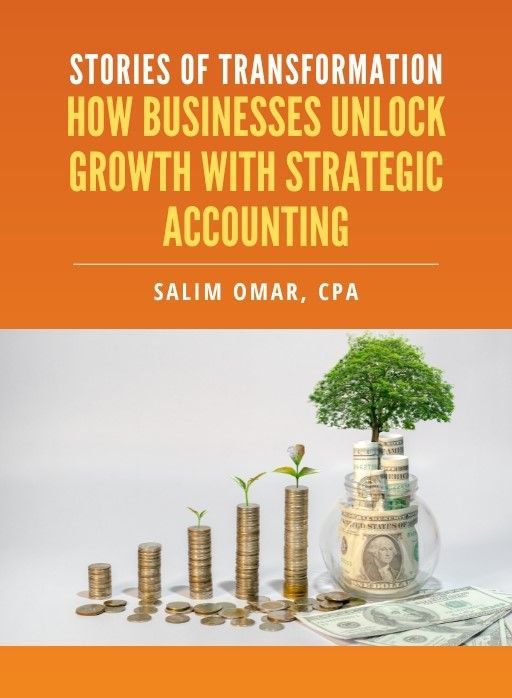
Stories of Transformation

Salim is a straight-talking CPA with 30+ years of entrepreneurial and accounting experience. His professional background includes experience as a former Chief Financial Officer and, for the last twenty-five years, as a serial 7-Figure entrepreneur.
Recent Posts