
From Messy Books to Strategic Clarity: A January Reset With Your CPA

At Straight Talk CPAs, January isn’t treated as just another month on the calendar. It’s treated as a reset point—the one moment in the year where businesses can correct course before momentum, pressure, and decisions start compounding.
Most businesses enter January with good intentions.
New goals. New plans. New energy.
But they also bring something else with them—last year’s financial baggage.
Messy books. Unresolved discrepancies. Blurred categories. Reports that technically exist but aren’t trusted.
And while that may feel manageable in January, it becomes costly by March.
The Problem Isn’t Messy Books—It’s What They Block
Messy books aren’t rare. They’re normal.
What’s not normal is building a strategy on top of them.
When bookkeeping isn’t accurate or structured, it quietly blocks clarity:
- Growth plans lack financial grounding
- Hiring decisions rely on gut feel
- Cash flow feels unpredictable
- Tax estimates fluctuate without explanation
- Leadership discussions circle the same questions
The issue isn’t that the books are imperfect.
It’s that they aren’t
decision-ready.
January is the only time of year when businesses can fix that before it impacts outcomes.
Why January Is Different From Every Other Month
January has a strategic advantage most businesses underuse.
The prior year is closed.
Patterns are visible.
There’s still time to adjust before commitments stack up.
By contrast, clean-ups done mid-year are reactive. They happen after hiring, expansion, or tax pressure has already created consequences.
January clean-up is proactive.
It’s upstream.
It’s cheaper, cleaner, and more effective.
This is why a January reset isn’t about catching up—it’s about repositioning.
What a January Reset Really Means
A January reset is not a
bookkeeping
exercise.
It’s a
clarity exercise.
It’s the difference between asking, “Are the books done?” and asking, “Can we rely on them?”
A proper reset answers questions like:
- Do these numbers reflect how the business actually operates?
- Are revenue and expenses timed correctly—or estimated?
- Are margins real—or distorted by misclassification?
- Can these reports support planning conversations?
Until those answers are yes, strategy is built on uncertainty.
How Messy Books Quietly Undermine Strategy
Messy books don’t usually cause obvious errors.
They cause
subtle misalignment.
Here’s how that plays out:
- Revenue looks strong, but cash feels tight
- Profit appears healthy, but taxes surprise
- Hiring feels necessary, but risky
- Expansion sounds exciting, but stressful
Leadership senses something is off—but can’t pinpoint why.
That tension isn’t operational.
It’s financial clarity breaking down.
The CPA’s Role in a January Reset
This is where the role of a CPA shifts.
A CPA isn’t just there to clean up transactions.
They’re there to
translate financial history into forward clarity.
During a January reset, that means:
- Reviewing the prior year for structural issues, not just errors
- Ensuring accounts are reconciled and defensible
- Aligning financial categories with how decisions are made
- Identifying distortions that affect margins, cash, or taxes
The goal isn’t perfection.
Its reliability.
Because unreliable numbers don’t just slow decisions—they distort them.
From Historical Records to Strategic Signals
When books are cleaned and structured properly, something important changes.
Financials stop being a record of what happened.
They become signals for what should happen next.
That shift allows leaders to:
- See true operating cash flow
- Understand which parts of the business drive profit
- Separate sustainable growth from volume-driven strain
- Model decisions instead of debating them
This is the point where bookkeeping turns into infrastructure.
What Strategic Clarity Unlocks Early in the Year
The earlier clarity arrives, the more value it creates.
A January reset enables:
More Confident Hiring
Instead of asking “Can we afford this hire?”, leaders ask “What does this hire unlock—and at what cost?”
That’s a better question—and it only exists when the numbers are clean.
Smarter Growth Planning
Expansion decisions are evaluated against margin, cash, and capacity—not optimism.
This prevents growth that looks good on paper but weakens the business.
Proactive Tax Strategy
Accurate, early-year numbers allow tax planning to happen before deadlines and pressure.
Tax estimates stabilize.
Surprises disappear.
Cash planning improves.
Faster, Calmer Decisions
When the numbers are trusted, decisions don’t drag.
Trade-offs are clear.
Risks are visible.
Leadership moves with confidence.
Why Waiting Until “Later” Is So Costly
Many businesses postpone clean-up because January feels busy—or because nothing feels broken yet.
That delay is expensive.
By Q2, decisions are already in motion.
By Q3, corrections are disruptive.
By Q4, it’s damage control.
January is the only point where clarity can be established without friction.
Miss it, and the business spends the rest of the year compensating.
What a Successful January Reset Actually Delivers
A well-executed reset ensures:
- Prior-year errors are corrected, not carried forward
- Accounts are reconciled and accurate
- Reports reflect reality, not assumptions
- Financials are ready for planning conversations
More importantly, it establishes a foundation that holds under growth.
This isn’t about clean books for compliance.
It’s about
clarity for leadership.
Why This Reset Works Best With a CPA
Software can record transactions.
Templates can generate reports.
What they can’t do is interpret risk, structure clarity, or challenge assumptions.
A CPA brings:
- Context around growth stages
- Insight into tax and cash implications
- Experience spotting patterns before they become problems
- The ability to translate numbers into decisions
That’s what turns a reset into a strategic advantage—not just a fresh start.
Bottom Line
January isn’t just the beginning of the year.
It’s the beginning of every decision that follows.
Messy books don’t mean a business is failing.
They mean clarity hasn’t been prioritized yet.
At
Straight Talk CPAs, a January reset is about more than clean numbers.
It’s about giving leadership something better to work with:
confidence, control, and direction.
Because the strongest growth plans aren’t built on enthusiasm alone.
They’re built on numbers that can be trusted—before pressure sets in.
January gives you that opportunity.
What you build on top of it is up to you.
Free eBook:
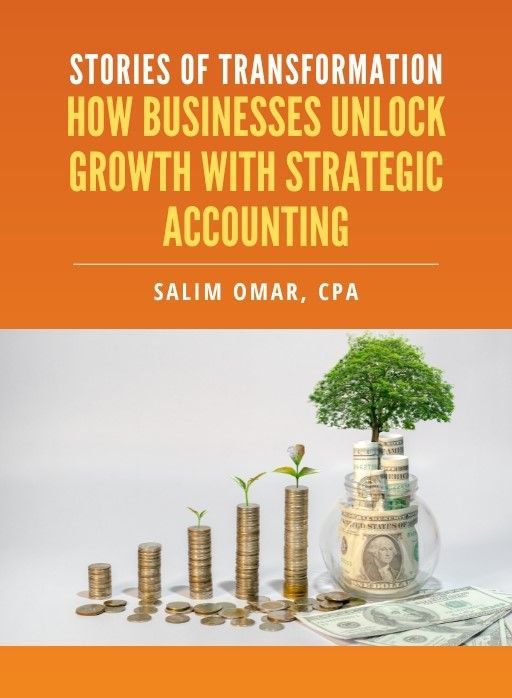
Stories of Transformation

Salim is a straight-talking CPA with 30+ years of entrepreneurial and accounting experience. His professional background includes experience as a former Chief Financial Officer and, for the last twenty-five years, as a serial 7-Figure entrepreneur.
Recent Posts