How Clean Books Reduce Tax Bills, Errors, and Filing Delays
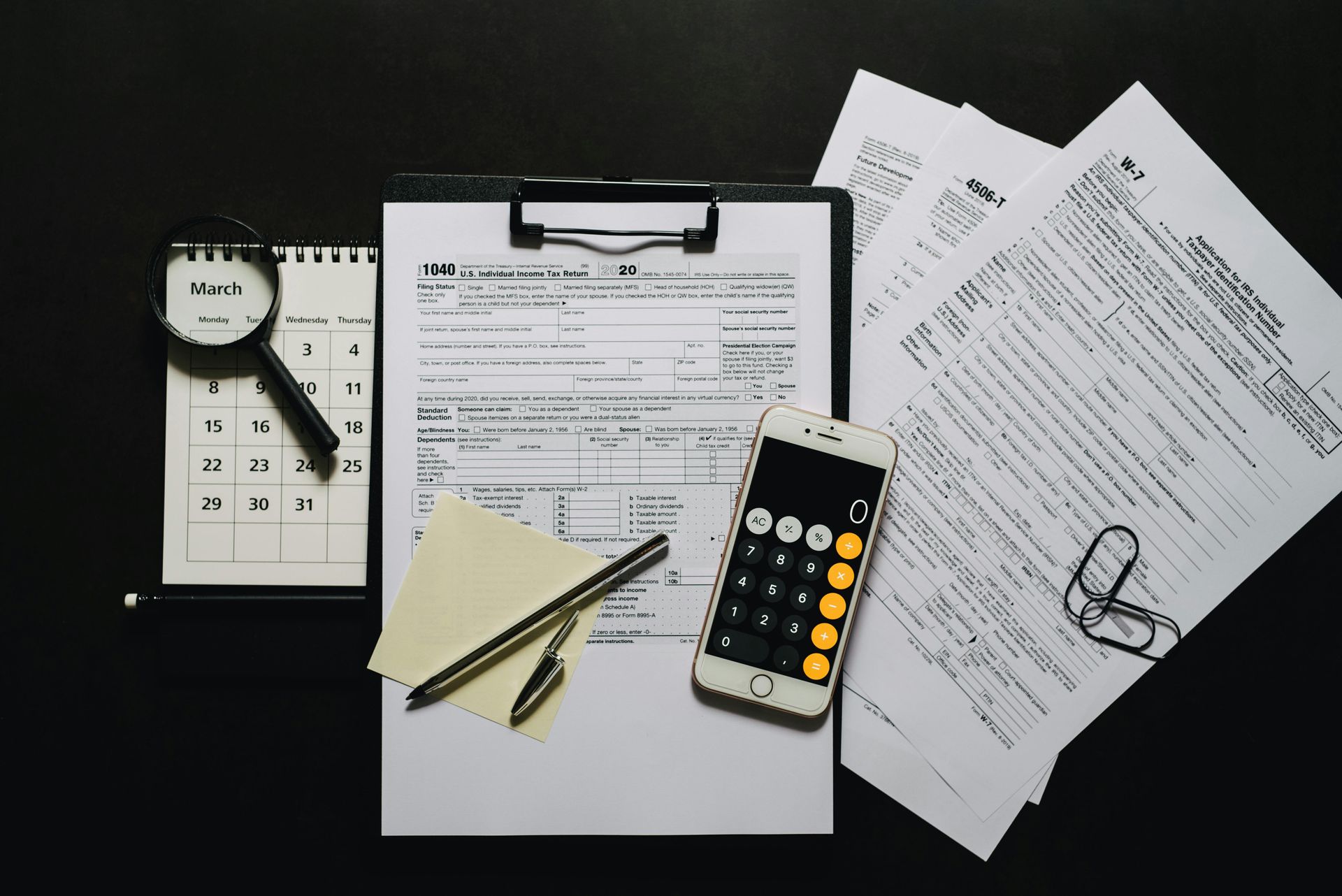
At Straight Talk CPAs, we see a hard truth play out every tax season:
Most tax problems don’t start with taxes.
They start with messy books.
Higher tax bills. Filing extensions. Amended returns. Missed deductions. IRS notices.
These outcomes are rarely caused by bad tax law interpretation. They’re caused by financial data that isn’t reliable enough to support accurate decisions.
Clean books don’t just make tax season smoother.
They materially change what’s possible during tax season.
Clean Books Are Not About Organization — They’re About Accuracy
Many businesses assume their books are “clean” because:
- Transactions are entered
- Bank balances roughly match
- Reports exist
That’s not clean. That’s populated.
Clean books mean:
- Accounts are reconciled, not estimated
- Expenses are categorized correctly, not broadly
- Revenue timing reflects reality, not convenience
- One-time events are separated from operating activity
When books lack this discipline,
tax preparation becomes an exercise in interpretation rather than execution—and interpretation is where costs, risks, and delays creep in.
How Messy Books Quietly Inflate Tax Bills
One of the biggest misconceptions in business is that taxes are purely formula-driven. In reality, tax outcomes are susceptible to how numbers are classified and timed.
When books aren’t clean:
- Deductible expenses are miscategorized or overlooked
- Capitalizable costs are expensed incorrectly (or vice versa)
- Owner compensation is misaligned with the entity structure
- Timing differences distort taxable income
The result? Businesses often pay more tax than necessary—not because deductions don’t exist, but because the data doesn’t support claiming them confidently.
Clean books create
defensible positions.
Messy books force conservative ones.
And conservative tax positions are almost always more expensive.
Why Errors Multiply When Books Aren’t Clean
Tax errors rarely happen in isolation. They cascade.
Here’s how it typically unfolds:
- Incomplete reconciliations create inaccurate balances
- Inaccurate balances distort financial statements
- Distorted statements feed into tax returns
- Assumptions replace certainty
- Errors surface months later—often via notices or amended filings
At that point, fixing the problem means reopening closed periods, reworking filings, and explaining inconsistencies that shouldn’t exist in the first place.
Clean books prevent this chain reaction by eliminating ambiguity at the source.
Filing Delays Are a Symptom, Not the Problem
When tax returns are delayed, most businesses blame:
- Their CPA’s workload
- IRS backlogs
- Missing documents
In reality, delays almost always trace back to unresolved bookkeeping issues.
Common blockers include:
- Unreconciled accounts that can’t be trusted
- Expense categories that require cleanup before deductions can be calculated
- Inconsistent revenue recognition
- Balance sheets that don’t tie out
A tax return can’t move forward until the numbers are final. And numbers can’t be final if the books are still being debated.
Clean books turn tax filing into a
process.
Messy books turn it into a
project.
Projects take longer.
Clean Books Enable Tax Strategy — Not Just Compliance
There’s a massive difference between filing a return and using tax law strategically.
Strategic tax planning requires:
- Confidence in year-end results
- Visibility into trends, not just totals
- Clear separation between operating and non-operating activity
Without clean books, CPAs are forced to focus on accuracy over optimization. Elections, timing strategies, credits, and planning opportunities get sidelined—not because they aren’t valuable, but because the data can’t support them safely.
Clean books give your
CPA room to think ahead instead of just closing the loop.
The Risk Profile Nobody Talks About
Messy books don’t just increase taxes and delays.
They increase
audit and compliance risk.
Why?
- Inconsistencies raise flags
- Reclassifications after filing weaken credibility
- Poor documentation undermines positions
Even when nothing is technically wrong, unclear records make everything harder to defend.
Clean books reduce risk by making your financial story coherent, consistent, and provable.
What “Clean” Actually Looks Like in Practice
Clean books are not about perfection. They’re about decision-grade accuracy.
That means:
- Monthly reconciliations completed on time
- Clear expense categorization aligned with tax treatment
- Proper handling of payroll, owner draws, and benefits
- Separation of personal and business activity
- Consistent accounting methods
When this foundation exists, tax preparation becomes faster, cheaper, and far more effective.
The Hidden ROI of Clean Books
Most businesses view bookkeeping as overhead. That’s a mistake.
Clean books deliver measurable returns:
- Lower tax exposure
- Fewer professional hours spent fixing issues
- Reduced risk of notices and amendments
- Faster filings and earlier certainty
- Better planning conversations
The cost of clean books is visible.
The cost of messy books shows up later—quietly, repeatedly, and expensively.
Why This Matters More as Businesses Scale
As revenue grows, complexity compounds:
- More transactions
- More
payroll
- More vendors
- More strategic decisions
At a certain point, informal bookkeeping stops working. The business doesn’t just need records—it needs infrastructure.
Scaling businesses don’t outgrow bookkeeping.
They outgrow
unreliable bookkeeping.
Straight Talk: Where Clean Books Become a Competitive Advantage
At Straight Talk CPAs, we don’t treat clean books as an admin task. We treat them as growth infrastructure.
Because when your books are clean:
- Tax bills are optimized, not guessed
- Errors are prevented, not corrected
- Filing timelines are controlled, not reactive
Most importantly, leadership operates with clarity instead of uncertainty.
The real benefit of clean books isn’t compliance.
It’s control.
And that’s what turns tax season from a recurring problem into a predictable, manageable process—year after year.
Free eBook:
Stories of Transformation

Salim is a straight-talking CPA with 30+ years of entrepreneurial and accounting experience. His professional background includes experience as a former Chief Financial Officer and, for the last twenty-five years, as a serial 7-Figure entrepreneur.
Recent Posts