
Tax Season Starts in January: What Your CPA Needs From You Now

At Straight Talk CPAs, we see the same misconception play out every year.
Tax season is treated like a deadline problem.
In reality, it’s a decision problem—and January is where it’s won or lost.
By the time April rolls around, most of the damage is already done. Opportunities missed. Risks locked in. Options narrowed. The businesses that feel “behind” aren’t disorganized—they simply waited too long to engage with their numbers in a meaningful way.
If you want tax season to feel controlled instead of chaotic, January isn’t early.
It’s the starting line.
Why January Quietly Determines Your Tax Outcome
Tax returns don’t fail because of filing errors.
They fail because the underlying financial picture is incomplete, delayed, or misaligned with reality.
By January:
- Transactions are closed.
- Payroll decisions are set.
- Expenses have already shaped margins.
- Cash behavior has already told its story.
Your CPA can’t change the past—but they can influence how clearly that past is understood and how effectively it’s used.
January is when tax strategy still has leverage.
After that, it becomes damage control.
What Your CPA Actually Needs (And Why It Matters)
This isn’t about dumping documents into a shared folder and hoping for the best. What your CPA needs in January isn’t volume—it’s clarity.
1. Clean, Finalized Books — Not “Mostly Done.”
Unreconciled accounts, miscategorized expenses, or placeholder entries distort everything downstream.
When books aren’t clean:
- Tax projections are unreliable
- Estimated payments are guesswork
- Planning conversations stall
Clean books don’t just speed up filing—they unlock better decisions.
2. Context Behind the Numbers
Numbers without context create false conclusions.
Your CPA needs to understand:
- One-time expenses vs. recurring costs
- Temporary revenue spikes vs. sustainable growth
- Strategic investments vs. operational inefficiencies
This context transforms reporting into insight—and insight into strategy.
3. Visibility Into Cash Behavior
Profit and cash are not the same conversation.
January is when your CPA needs clarity on:
- Timing gaps between revenue and cash collection
- Debt service pressure
- Owner draws vs. business reinvestment
Without this, tax planning can unintentionally create liquidity strain later in the year.
4. Structural Changes That Impact Tax Exposure
Hiring, compensation changes, new vendors, financing, entity adjustments—these aren’t “admin updates.” They materially alter tax outcomes.
If your CPA finds out late, options shrink fast.
Early visibility creates room to:
- Optimize deductions
- Adjust strategy
- Reduce unnecessary exposure
Late visibility forces acceptance.
Why “We’ll Handle It Later” Is the Most Expensive Assumption
Businesses that delay tax prep aren’t lazy. They’re busy. Growing. Executing.
But delay creates a specific kind of risk:
- Elections expire
- Credits become unavailable
- Planning turns reactive
By the time urgency kicks in, flexibility is gone.
The cost isn’t penalties or fees.
It’s
lost control.
January Is Not About Filing—It’s About Positioning
High-performing businesses don’t approach tax season as a compliance event. They treat it as a strategic checkpoint.
January is when:
- Forecasts get validated
- Assumptions get challenged
- Risk gets quantified
- Opportunities get prioritized
This is where
tax planning intersects with growth planning—and where the right CPA shifts from technician to advisor.
What Happens When You Get This Right
When your CPA has what they need in January, tax season changes shape entirely.
You gain:
- Predictability instead of surprises
- Proactive decisions instead of last-minute reactions
- Confidence instead of second-guessing
Taxes stop being a stressor and start becoming an input—one that informs smarter hiring, spending, and expansion decisions throughout the year.
Why This Is About More Than Taxes
Tax preparation is downstream from financial clarity.
If the numbers are unreliable, the tax strategy is limited.
If the numbers are late, the strategy disappears.
If the numbers are structured properly, decisions accelerate.
That’s why the businesses that felt “ahead” in April didn’t rush in March.
They engaged in January.
The Straight Talk Difference
At Straight Talk CPAs, we don’t treat tax season as an annual scramble. We treat it as a strategic inflection point.
Our role isn’t just to file accurately—it’s to ensure:
- Your financials are decision-ready
- Your tax position aligns with your growth goals
- Your leadership team operates with clarity, not pressure
Because the real advantage isn’t filing early or late.
It’s knowing where you stand—before urgency makes decisions for you.
Bottom Line
Tax season doesn’t start in April.
It starts when the numbers become clear enough to act on.
January is when that clarity still has leverage.
And that’s exactly where Straight Talk CPAs steps in—turning tax preparation into strategic control, and uncertainty into confident, deliberate decisions.
If you want tax season to feel predictable, intentional, and aligned with where your business is going—not just where it’s been—January is the moment that matters most.
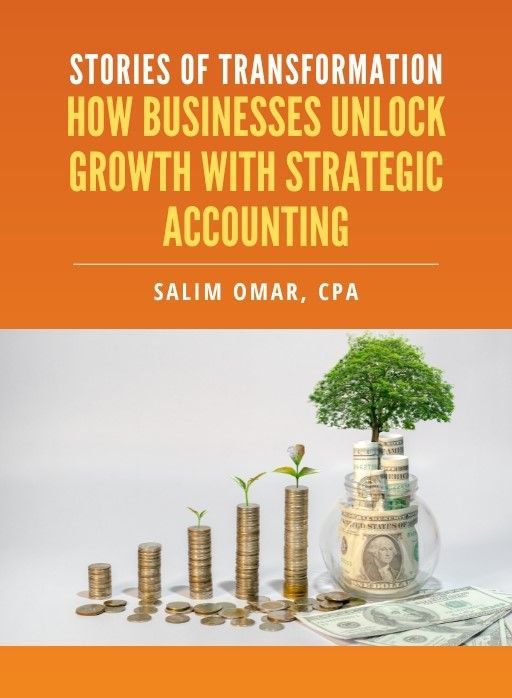
Free eBook:
Stories of Transformation

Salim is a straight-talking CPA with 30+ years of entrepreneurial and accounting experience. His professional background includes experience as a former Chief Financial Officer and, for the last twenty-five years, as a serial 7-Figure entrepreneur.
Recent Posts