
Rental Property Tax Deductions Explained

Owning rental properties can be a fantastic way to build wealth and generate income. However, navigating the tax landscape can sometimes feel like walking through a maze. Understanding rental property tax deductions is crucial for landlords looking to maximize their profits and minimize their tax burden. This guide breaks down the various deductible expenses you can claim on your taxes, including mortgage interest, repairs, and property management fees, along with advanced strategies to further enhance your tax efficiency.
Understanding Rental Property Tax Deductions
The IRS allows landlords to deduct many expenses associated with managing and maintaining rental properties. These deductions can significantly reduce taxable income, making it essential to know what you can and cannot write off.
What You Can Deduct
1. Mortgage Interest
The interest paid on a mortgage for your rental property is fully deductible, reducing taxable rental income.
Example: On a $400,000 mortgage with $20,000 paid in interest annually, the full $20,000 can be deducted.
Advanced Tip: Consider leveraging a refinancing strategy to reduce mortgage interest rates and deduct the interest on the new loan. This can increase cash flow and enhance deductions.
2. Repairs and Maintenance
Expenses for repairing and maintaining your property are fully deductible in the year they occur.
Example: Spending $1,500 on plumbing repairs after a tenant reports an issue.
Advanced Tip: Combine regular maintenance tasks to optimize efficiency and timing. For major repairs, explore whether they qualify for the Qualified Improvement Property (QIP) deduction, which allows accelerated depreciation.
3. Property Management Fees
Fees paid to a property management company for services like tenant screening and maintenance coordination are deductible.
Example: Paying $3,000 annually for property management services.
4. Property Taxes
Property taxes paid on your rental property are deductible and directly reduce your taxable income.
Example: Deducting $5,000 annually in property taxes.
Advanced Tip: If operating in a high-tax state, explore Pass-Through Entity Tax (PTET) elections to bypass the $10,000 state and local tax deduction cap.
5. Insurance Premiums
Premiums for landlord insurance that cover property damage and liability claims are deductible.
Example: Deducting $1,200 annually for insurance coverage.
6. Utilities
If you cover utilities like water, electricity, or gas, these costs are deductible.
Example: Deducting $600 for utilities provided during the year.
7. Depreciation
Depreciation allows landlords to recover the cost of their property over time, significantly reducing taxable income.
Example: For a property purchased at $275,000 (excluding land value), landlords can deduct about $10,000 annually using the 27.5-year straight-line depreciation method.
Advanced Tip: Use a
cost segregation study to accelerate depreciation on certain components of the property, such as appliances, fixtures, and landscaping, potentially increasing deductions in the early years of ownership.
What You Can’t Deduct
1. Personal Expenses
Expenses related to personal use of the rental property are not deductible.
Example: Staying at the property while it’s unoccupied and incurring personal utility costs.
2. Capital Improvements
Expenses that improve the property’s value must be capitalized and depreciated over time, rather than deducted immediately.
Example: Adding a new roof or remodeling a kitchen.
3. Fines and Penalties
Fines for violating laws or regulations cannot be deducted.
4. Losses from Selling Property
Losses from selling rental properties do not qualify as ordinary losses and have different tax implications.
Real-Life Example
Let’s say you rent out a single-family home for $2,500 per month. Here’s a breakdown of annual deductions:
- Mortgage Interest: $20,000
- Repairs: $1,500
- Property Management Fees: $3,000
- Property Taxes: $5,000
- Insurance: $1,200
- Utilities: $600
- Depreciation: $10,000
Calculations:
- Total Income: $2,500 × 12 = $30,000
- Total Deductions: $20,000 + $1,500 + $3,000 + $5,000 + $1,200 + $600 + $10,000 = $41,300
- Taxable Income: $30,000 - $41,300 = -$11,300
In this scenario, you could report a loss, which could offset other taxable income.
Conclusion
Navigating rental property tax deductions doesn’t have to be daunting. By understanding what expenses are deductible—such as mortgage interest, repairs, and property taxes—and incorporating advanced strategies like cost segregation and PTET elections, landlords can significantly reduce taxable income and increase profitability.
To maximize your deductions and ensure compliance with IRS regulations, maintain meticulous records of all expenses and consult with a tax professional specializing in real estate. At
Straight Talk CPAs, we’re here to guide you every step of the way, helping you make informed financial decisions and optimize your tax benefits.
Free eBook:
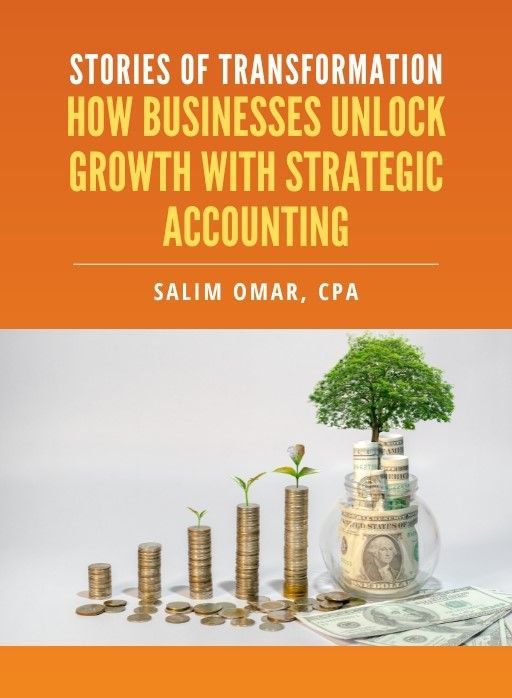
Stories of Transformation

Salim is a straight-talking CPA with 30+ years of entrepreneurial and accounting experience. His professional background includes experience as a former Chief Financial Officer and, for the last twenty-five years, as a serial 7-Figure entrepreneur.
Recent Posts