Scenario Planning for Year-End Taxes: Stress-Test Your Numbers Now

Most business owners look at taxes as a once-a-year event—numbers get tallied, deductions get discussed, and the final bill is whatever the IRS says it is. But if that’s the only moment you evaluate your position, you’re operating blind.
The smartest operators treat year-end taxes like a strategic forecast. They build scenarios, test their assumptions, and run numbers forward before December 31. Why? Because small decisions now can dramatically influence your tax bill, cash flow, and margin health in the months ahead.
Scenario planning isn’t just about minimizing taxes. It’s about understanding how your choices today reshape your financial picture tomorrow.
If you want to go into the year-end with clarity instead of anxiety, it’s time to stress-test your numbers.
Why Scenario Planning Is a Game-Changer
Most tax surprises come from one problem: lack of visibility.
When you don’t evaluate different financial outcomes, you’re stuck guessing:
- “Will this bonus increase my tax bracket?”
- “Should I buy equipment now or next year?”
- “What happens if revenue spikes in December?”
- “How will estimated taxes change?”
A scenario-driven approach turns uncertainty into strategy.
You’re no longer reacting—you’re forecasting.
Scenario planning helps you:
- anticipate tax liabilities
- optimize income timing
- evaluate expense acceleration
- adjust owner compensation
- project cash impact
- avoid costly last-minute decisions
You get ahead of the problems most business owners only notice when it’s too late.
Start with Your Baseline: The “If You Do Nothing” Scenario
Every smart strategy begins with a baseline. This is your current trajectory with zero changes.
Calculate:
- YTD profit
- projected profit for the last quarter
- estimated tax liabilities
- payroll and owner draws
- loans and interest
- outstanding receivables
- expected payables
Your baseline isn’t a prediction—it’s your default future.
And seeing that number clearly often creates the urgency owners need:
“Okay… if I do nothing, this is what I’ll owe, this is my cash position, and this is what January will look like.”
That clarity alone is powerful.
Build Scenario A: High-Income Year Close-Out
This scenario assumes a stronger-than-expected finish to the year.
Maybe a few big invoices get paid early… or a large deal closes in Q4.
Run the numbers:
- higher revenue
- increased taxable profit
- tax bracket shifts
- payroll implications
- potential underpayment penalties
This scenario tells you:
- whether to accelerate contributions
- whether you need to prepay estimated taxes
- whether income should be shifted into next year
- whether to adjust owner compensation
If you wait until tax season, your options disappear.
If you model it now, you stay fully in control.
Build Scenario B: Lower-Income or Cash-Tight Year
Sometimes the market slows.
Sometimes collections lag.
Sometimes expenses land at the wrong time.
Scenario B helps you plan for a softer year-end:
Model:
- reduced revenue
- slower receivables
- higher-than-expected expenses
This scenario tells you if you need to:
- delay large purchases
- adjust hiring plans
- free up working capital
- renegotiate vendor terms
- slow owner draws
The goal is simple: protect liquidity while still optimizing taxes.
Build Scenario C: Investment or Expansion Mode
If you’re planning an expansion, hiring push, new equipment, or a major investment, the tax impact can be significant.
Model scenarios for:
- equipment purchases
- Section 179 or bonus depreciation
- new employees or contractors
- lease commitments
- new product lines
- software or infrastructure investments
This scenario clarifies:
- whether to buy now or wait
- which investments reduce this year’s tax bill
- how cash flow will behave in Q1
- whether debt or cash is the smarter choice
Strategic businesses don’t spend blindly—they model the future first.
Compare All Scenarios Side-by-Side
Once you’ve built multiple scenarios, evaluate them like a decision-maker:
Look for:
- total estimated taxes in each scenario
- year-end cash position
- Q1 cash impact
- payroll and owner compensation implications
- entity structure advantages
- the ideal timing for big expenses
- the most tax-efficient income distribution
This is where the real magic happens.
Patterns emerge. Better decisions surface. Risk becomes visible.
You start seeing your business not as a static spreadsheet—but as a series of financial paths you can choose from.
Convert Scenarios Into a Clear Action Plan
Scenario planning only works when it drives action.
Turn your insights into a short, precise checklist:
- Adjust revenue timing if needed
- Confirm year-end payroll strategy
- Lock in retirement contributions
- Decide on purchases or deferrals
- Prepay or schedule taxes
- Review entity structure alignment
- Update cash flow projections
- Set a Q1 financial cadence
Now you’re not guessing your way into January.
You’re operating with a strategic blueprint.
Conclusion: Stress-Test Now, Stay in Control Later
Scenario planning isn’t busywork—it’s your best line of defense against uncertainty. When you stress-test your numbers before December 31, you get ahead of taxes, protect cash flow, and step into the new year with clarity instead of pressure.
The businesses that win aren’t the ones with perfect spreadsheets.
They’re the ones that forecast, adapt, and move proactively—while others react.
If you want that level of control, now is the time to stress-test your year-end numbers and build the strategy that puts you in the driver’s seat heading into next year.
👉 Ready to streamline decisions before December 31?
Let’s map your scenarios and build your plan.
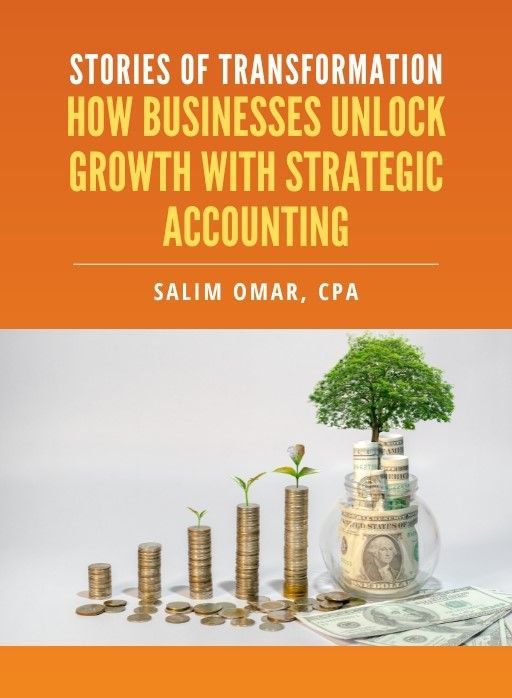
Free eBook:
Stories of Transformation

Salim is a straight-talking CPA with 30+ years of entrepreneurial and accounting experience. His professional background includes experience as a former Chief Financial Officer and, for the last twenty-five years, as a serial 7-Figure entrepreneur.
Recent Posts