
Filing Tips and Tricks to Keep Your Year-End Smooth
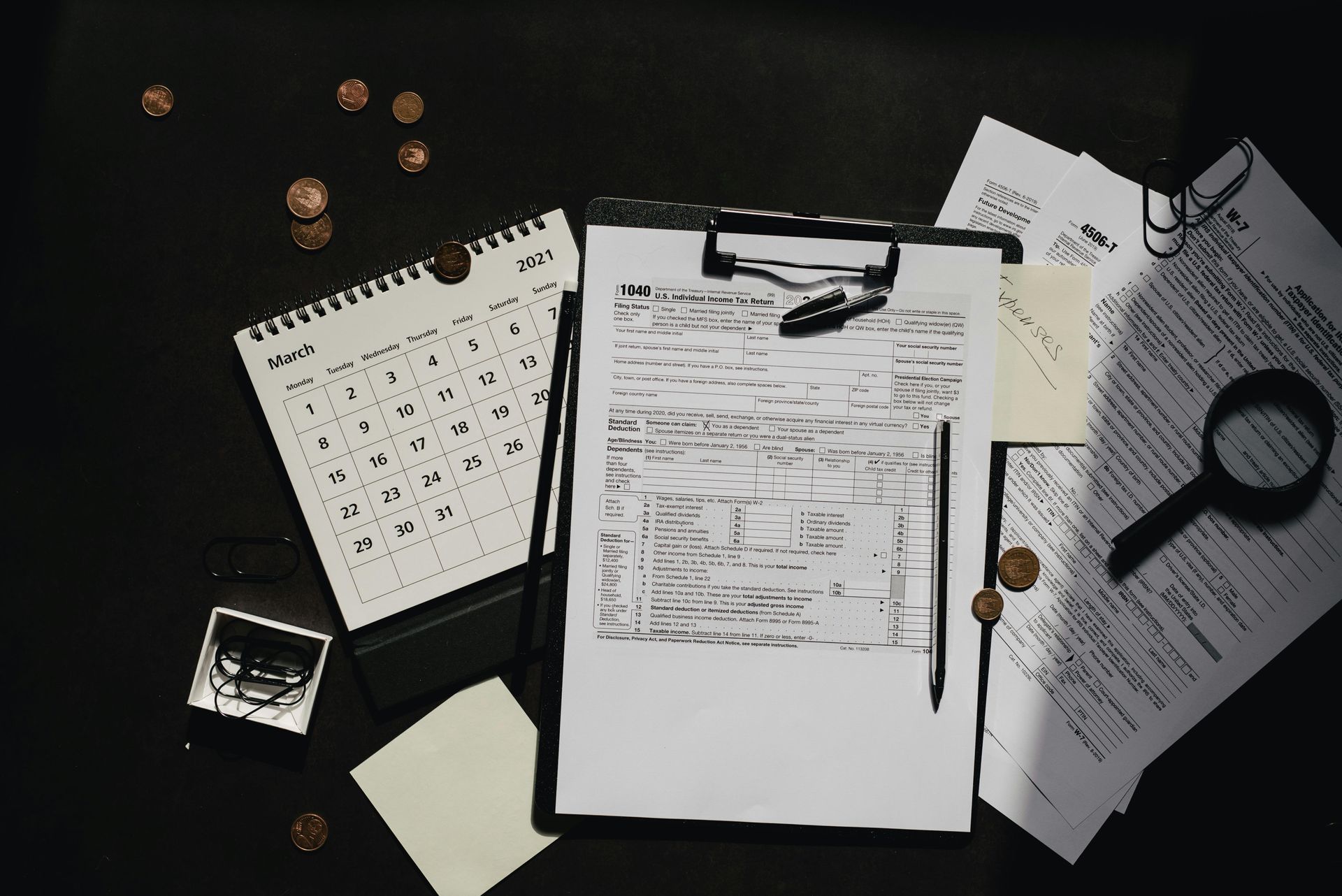
Year-end shouldn’t feel like a fire drill — but for most business owners, it does. Not because the work is complicated, but because the systems supporting it aren’t built for accuracy, timing, or clarity.
A smooth year-end isn’t about rushing paperwork. It’s about planning, structuring, and filing with intention. When you handle the foundational pieces correctly, your filings become a byproduct — not a scramble.
At Straight Talk CPAs, we see the same filing mistakes clog up year-end every single year. Here’s how to get ahead of them and keep your year-end clean, predictable, and stress-free.
1. Centralize Every Document Before You Even Think About Filing
Year-end chaos starts with scattered records. A smooth filing process starts with consolidation.
Centralize:
- Bank statements and reconciliations
- Expense documentation
- Payroll records and W-2/1099 prep
- Loan statements and interest summaries
- Receipts, reimbursements, and mileage logs
Insight: Filing issues aren’t caused by missing forms — they’re caused by missing proof. Centralization is your first line of defense.
2. Reconcile Every Account — Not Just Your Bank
Bank reconciliation is only step one. A CFO-minded year-end means reconciling everything.
Review:
- Credit cards
- Merchant processors
- Loans and credit lines
- Inventory valuation
- Prepaid expenses and accruals
- Payroll liabilities
Example: One client uncovered $12,800 in overstated expenses simply because a credit card account hadn't been reconciled all year.
Clean reconciliations create clean filings — period.
3. Clean Up Your Chart of Accounts Before It Becomes a Liability
Your chart of accounts is the backbone of your financial reporting. If it’s messy, everything built on top of it will be messy too.
Fix:
- Duplicate categories
- Miscellaneous expense dumps
- Incorrect classifications
- Accounts no longer relevant to operations
Pro tip: Trim the chart of accounts annually. Simplicity creates accuracy.
4. Verify Contractor Status Early to Avoid 1099 Nightmares
Most 1099 problems start because no one checked contractor eligibility early enough.
Confirm:
- W-9s on file
- Payment thresholds
- Proper classifications (contractor vs employee)
- Any vendors requiring 1099-NEC vs 1099-MISC
Insight: Misclassification isn’t just an annoyance — it’s a compliance risk that can cost you thousands if ignored.
5. Review Major Transactions for Tax Impact Before December 31
Big decisions need tax visibility before they hit your books.
Flag:
- Equipment purchases
- Vehicle changes
- Owner draws/distributions
- Large inventory movements
- One-time income or bonuses
A mid-December review can be the difference between a controlled tax bill and an inflated one.
6. Update Depreciation and Asset Schedules — Don’t Wait for Your CPA
Depreciation is one of the most mismanaged areas in small business filings.
Check:
- New assets purchased
- Retired assets are missing from the schedules
- Section 179 or bonus depreciation opportunities
- Correct service dates and useful life assumptions
When asset schedules are clean, tax filings flow.
7. Prepare for Payroll Filings Before the Calendar Turns
Payroll mistakes create some of the costliest filing issues.
Verify:
- Wages
- Benefits
- Retirement contributions
- Reimbursements
- Tax withholdings
- Bonus structures
A quick review now keeps January filings smooth and avoids expensive amendments.
8. Conduct a Final Compliance Sweep
Before filing, run a compliance check on:
- State and local registrations
- Sales tax obligations
- Industry-specific filings
- Licenses and renewals
- Outstanding government notices
Insight: Smooth year-end filing isn’t just a financial task — it’s a compliance strategy.
Common Misconceptions
- “I’ll clean everything up when tax season starts.”
That’s how errors multiply — and deductions disappear.
- “My software will catch mistakes.”
Software organizes. You interpret. There’s a difference.
- “I don’t need to reconcile everything — only bank accounts.”
Reconciliation gaps lead directly to filing inaccuracies.
How a CPA Keeps Your Year-End Filing Stress-Free
A CPA doesn’t just submit forms — they ensure your records are audit-ready and fully aligned with tax law.
With the right guidance, you can:
- File accurately and confidently
- Capture every allowable deduction
- Prepare for upcoming tax deadlines
- Prevent costly errors or amendments
- Enter the new year with a clean financial foundation
At Straight Talk CPAs, we help you streamline the entire filing cycle — so year-end isn’t an event, it’s a process you control.
Bottom Line
Smooth year-end filing isn’t luck — it’s structure.
When your records are clean, reconciled, and verified, your filings become simple, predictable, and painless.
If you want a year-end that feels controlled instead of chaotic, start preparing now.
And when you’re ready, we’ll help you streamline your finances and file with clarity, precision, and confidence.
Free eBook:
Stories of Transformation

Salim is a straight-talking CPA with 30+ years of entrepreneurial and accounting experience. His professional background includes experience as a former Chief Financial Officer and, for the last twenty-five years, as a serial 7-Figure entrepreneur.
Recent Posts