
How Better Bookkeeping Improves Financial Clarity Year-Round

After working with business owners for decades, I’ve found that most bookkeeping problems don’t begin with obvious financial chaos. More often, they begin when the numbers stop giving owners the clarity they need to make confident decisions.
At first, everything appears manageable. Revenue is coming in, expenses are being tracked, and financial reports are being generated consistently. From the outside, the business looks financially organized.
But eventually, the business reaches a point where decisions start carrying more weight — hiring another employee, expanding operations, managing cash flow pressure, applying for financing, or trying to understand why sales are growing while cash still feels tight.
That’s usually when business owners realize the issue may not be the business itself. The real issue is that the financial structure underneath the business no longer provides the visibility needed to lead confidently.
As the founder of Straight Talk CPAs, I’ve seen this happen across businesses of all sizes and industries. And in most cases, the problem is not a lack of financial information. It’s a lack of confidence in the information the owner is relying on.
One thing I often tell clients is that bookkeeping is not valuable simply because it records transactions. Its real value comes from creating visibility into how the business is actually operating financially.
When the numbers are clear, decision-making becomes clearer. When the numbers are unclear, uncertainty starts spreading into every part of the business.
Financial Problems Usually Start Quietly
One of the biggest misconceptions business owners have about bookkeeping is believing there’s only a problem when the books are obviously disorganized.
In my experience, most financial issues develop quietly over time.
The reports still run. The software still works. The numbers appear mostly accurate on the surface.
But underneath, small disconnects begin to build.
Expense categories stop reflecting how the business actually operates. Cash flow becomes harder to interpret. Profitability may look healthy on paper, but operationally the business still feels financially tight.
What I’ve seen repeatedly is that owners begin compensating for unclear visibility without realizing it. They rely more on instinct, hesitate longer before making decisions, and react more emotionally to financial uncertainty because they no longer fully trust the numbers.
Over time, that uncertainty starts sounding familiar:
“We’re generating revenue, so why does cash still feel tight?”
“The reports say we’re profitable, but it doesn’t feel that way operationally.”
“Why does every major financial decision still feel stressful?”
A mistake many business owners make is assuming something is fundamentally wrong with the business itself.
But often, the real issue is that the financial structure underneath the business stopped evolving as the company became more complex.
I’ve seen this happen frequently in growing companies. Systems that once worked eventually stop providing the visibility leadership actually needs, and financial confidence slowly begins to erode in the background.
Better Bookkeeping Changes How Decisions Get Made
A lot of businesses still view bookkeeping primarily as a compliance function — something necessary for taxes and keeping records organized.
But what I often explain to business owners is that strong bookkeeping should do far more than keep the business compliant. It should help leadership make better decisions throughout the year.
When bookkeeping and reporting are structured properly, owners gain clearer visibility into cash flow, profitability, tax planning, and overall business performance. Just as importantly, they stop spending so much time questioning the numbers themselves.
Because the goal is not simply producing clean reports. The real goal is creating financial clarity that supports better operational decisions.
I often tell clients that financial clarity happens when owners stop wondering whether the reports actually reflect reality. That’s when bookkeeping stops being administrative and starts becoming strategic.
“We Had Reports, But We Still Didn’t Feel Confident”
I remember working with a business owner whose company had been growing steadily for years. The bookkeeping was consistent, reports were delivered on time, and from the outside the business appeared financially organized.
But internally, the owner still felt uncertain whenever major decisions needed to be made.
Hiring felt risky. Expansion felt unclear. Cash flow reports looked stable historically, but operationally the business still felt tighter than expected month to month.
At one point, the owner told me:
“Even with reports in front of me, I still felt like I was guessing financially.”
That comment identified the real issue immediately.
The books themselves were not broken. The problem was that the financial structure underneath the business had quietly stopped keeping pace with how the company actually operated.
I’ve seen this happen many times in growing businesses. Operations become more complex, leadership responsibilities expand, but the reporting structure remains largely unchanged.
In this case, several expense categories no longer reflected operational activity accurately, and the reports lacked the visibility needed for confident decision-making.
The business had simply outgrown its financial structure.
So instead of just cleaning up transactions, our team rebuilt the reporting system around operational clarity and decision-making by improving categorization, strengthening cash flow visibility, simplifying reporting, and creating better alignment between profitability reporting and operational performance.
The changes were not dramatic overnight. But over the following months, the owner began making decisions with far less hesitation and much greater confidence.
Later, they told me:
“For the first time in years, I felt like the numbers finally matched what was actually happening inside the business.”
That’s the real value of strong bookkeeping. It reduces uncertainty and gives business owners confidence in the financial side of the company.
Weak Financial Visibility Creates Decision Fatigue
One thing I don’t think gets talked about enough is the mental pressure weak financial visibility creates for business owners.
Most people think poor bookkeeping only creates compliance risk or tax problems.
But in reality, the bigger issue is often decision fatigue.
When owners don’t fully trust the numbers, every decision becomes heavier than it needs to be. They delay growth decisions. Hold onto cash more conservatively than necessary. Second-guess profitability. Overanalyze routine financial choices. React emotionally to normal fluctuations because they lack confidence in the underlying visibility.
I’ve worked with profitable business owners who still felt financially anxious on a regular basis simply because the reporting wasn’t giving them enough clarity.
That’s because growth without visibility rarely feels sustainable.
Business owners don’t just need accurate books. They need financial systems that help explain what’s happening operationally in real time. They need reporting that creates understanding, not just documentation.
And in my experience, when clarity improves, decision-making improves with it.
Businesses That Scale Smoothly Treat Bookkeeping Differently
Over the years, I’ve noticed that businesses that scale effectively tend to approach bookkeeping very differently.
At a certain point, they stop viewing it as simple back-office maintenance and start treating it as part of the company’s operational infrastructure.
That shift changes more than most owners expect.
Because once bookkeeping becomes integrated into decision-making, leadership starts focusing differently. The conversation moves beyond whether the books are simply up to date. Owners begin paying closer attention to visibility, consistency, operational alignment, forecasting, and proactive planning.
The numbers become a management tool instead of a historical record.
And I’ve seen that shift completely change how businesses operate financially. Growth becomes more strategic. Decision-making becomes less reactive. Leadership gains more confidence because the financial side of the business finally starts supporting the direction the company is trying to go.
Before Another Year Passes on Unclear Numbers
If your reports technically exist, but major financial decisions still feel harder than they should, the issue may not be the business itself.
It may simply be that the financial structure underneath the business no longer reflects how the company operates today.
At Straight Talk CPAs, we help business owners build bookkeeping systems that create meaningful financial clarity year-round, not just reports prepared for tax season.
Because when the numbers are structured properly, owners stop guessing financially. They lead with greater confidence, stronger visibility, and a much clearer understanding of how the business is actually performing.
👉 Schedule a conversation to identify where your reporting may be creating financial blind spots.
Free eBook:
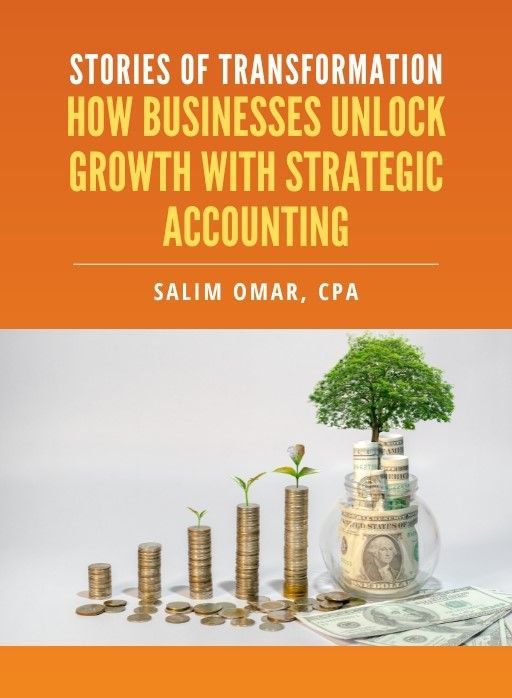
Stories of Transformation

Salim is a straight-talking CPA with 30+ years of entrepreneurial and accounting experience. His professional background includes experience as a former Chief Financial Officer and, for the last twenty-five years, as a serial 7-Figure entrepreneur.
Recent Posts