
Why Waiting Until Next Tax Season Is a Costly Mistake

Most tax problems don’t begin during tax season.
They begin after it’s over.
Once the return is filed, the immediate pressure disappears. Business owners shift their attention back to running operations, managing employees, serving customers, and keeping growth moving forward. That shift is completely understandable. The problem is that financial decisions continue happening every week, even when tax planning is no longer part of the conversation.
That’s usually when future tax issues begin developing quietly in the background.
Not because business owners are being careless. Most are working incredibly hard to grow healthy companies. But tax planning often gets pushed into the category of “we’ll deal with it later,” and later has a way of arriving faster than expected.
As Salim Omar often explains:
“Most tax problems aren’t created during filing season. They come from months of financial decisions happening without enough visibility.”
Tax Season Creates Visibility — But Only Temporarily
One of the biggest misconceptions business owners have is treating tax season like a finish line. In reality, it’s more of a financial checkpoint.
For many businesses, it’s one of the only times during the year they fully step back and evaluate profitability, cash flow, owner distributions, entity structure, tax exposure, and spending decisions. For a brief period, the numbers become clear.
Then the return gets filed, operations speed back up, and that visibility fades again.
That’s usually where problems begin.
Hiring decisions get made before cash flow is evaluated properly. Owner draws increase without updating quarterly estimates. Expansion plans move forward before the tax impact is considered.
Individually, none of these decisions seem major. But collectively, they shape next year’s tax outcome long before filing season arrives.
One thing I consistently tell business owners is this:
tax problems are rarely caused by one dramatic mistake. More often, they come from disconnected financial decisions made without a coordinated strategy behind them.
The Real Cost of Waiting Rarely Shows Up Immediately
What makes delayed tax planning so dangerous is that the consequences usually build slowly, not all at once.
Most businesses don’t experience an immediate crisis because they waited too long to plan. Revenue may still be growing. Cash may still be coming in consistently. On the surface, everything can look healthy.
But underneath, financial pressure often starts building quietly.
Quarterly tax payments stop matching profitability. Cash reserves tighten during growth. Reporting becomes less reliable as operations become more complex. Decisions get made without fully understanding their tax impact.
None of this feels urgent at first, which is why many businesses stay reactive longer than they should.
Then filing season returns, and business owners realize many of the adjustments that could have reduced pressure earlier are no longer available because the tax year has already closed.
As Salim Omar often says:
“Business owners think they’re postponing tax planning. What they’re really postponing is visibility.”
And visibility changes decision-making. When business owners understand how taxes, cash flow, and growth affect each other in real time, they make stronger financial decisions throughout the year, not just during filing season.
“We Thought We’d Deal With It Later”
We worked with a business owner whose company had nearly doubled revenue in under two years. From the outside, the business looked successful. Revenue was growing, operations were expanding, and the company was moving fast.
But behind the scenes, the financial systems hadn’t evolved alongside the growth.
During tax season, there had been conversations about improving quarterly planning, tightening cash flow management, and creating better forecasting. The opportunities were clear. But once filing season ended, operations became the priority again.
The mindset was simple:
“We’ll revisit it once things calm down.”
The problem was that things never slowed down.
Over the next year, payroll expanded, spending accelerated, and owner draws became less structured. The business kept growing, but the financial planning process stayed reactive.
By the following tax season, the issue wasn’t one major mistake. It was the accumulation of disconnected decisions made without enough coordination.
Despite stronger profitability, cash flow pressure had increased. Quarterly estimates no longer reflected actual income patterns, and several tax-saving opportunities were already locked into a closed tax year.
The business wasn’t failing. It had simply outgrown the financial visibility systems supporting it.
So instead of repeating the same cycle, we rebuilt the planning process to stay active year-round through regular financial reviews, proactive estimate adjustments, stronger forecasting, and operational decisions evaluated alongside their tax implications in real time.
The following year felt entirely different.
“The numbers stopped surprising us,” the owner later said. “That changed how we ran the business.”
That’s what strong tax planning should create: not just lower taxes, but better visibility and stronger decision-making throughout the year.
Why Tax Planning Is Really About Timing
Most business owners naturally associate tax planning with deductions, credits, and reducing liability.
Those strategies absolutely matter.
But in my experience, timing is often the factor that creates the biggest long-term difference.
Once the year closes, many of the most valuable planning opportunities disappear. Income timing becomes fixed. Compensation decisions become fixed. Distributions become fixed. Reinvestment decisions become fixed.
At that point, strategy becomes far more limited because the window to influence the outcome has already closed.
This is why strong businesses do not treat tax planning as a once-a-year compliance exercise. They treat it as an ongoing operational discipline connected directly to business growth, cash flow management, and long-term financial stability.
The businesses that consistently stay ahead financially usually understand one important principle early:
Tax strategy works best when it operates alongside decision-making—not after the decisions have already been made.
The Businesses That Stay Ahead Think Differently
Over the years, we’ve noticed that businesses which consistently avoid recurring tax stress tend to approach financial management differently.
They do not separate operational decisions from tax consequences.
They understand that growth changes tax exposure. Cash flow affects planning flexibility. Hiring decisions affect profitability. Expansion impacts entity structure. As businesses become more sophisticated, the financial systems supporting them need to become more sophisticated as well.
That level of visibility does not happen accidentally.
It requires proactive planning, regular review, and financial coordination throughout the year.
As Omar explains:
“The goal isn’t just reducing taxes. It’s making sure growth itself doesn’t create unnecessary financial pressure.”
That mindset shift is where many businesses begin operating with far more confidence and control.
Before “Later” Turns Into Another Filing Season
Waiting until the next tax season rarely feels dangerous at the moment because the consequences tend to build gradually.
But by the time the pressure becomes visible, many of the most important financial decisions have already been made.
At Straight Talk CPAs, we help business owners turn tax planning into an ongoing visibility process instead of a once-a-year reaction. The goal is not simply to prepare returns. The goal is to help businesses make stronger financial decisions throughout the year with greater clarity, coordination, and confidence.
If your business is growing, hiring, expanding, or making larger financial decisions this year, now is the time to make sure your tax strategy is evolving alongside it.
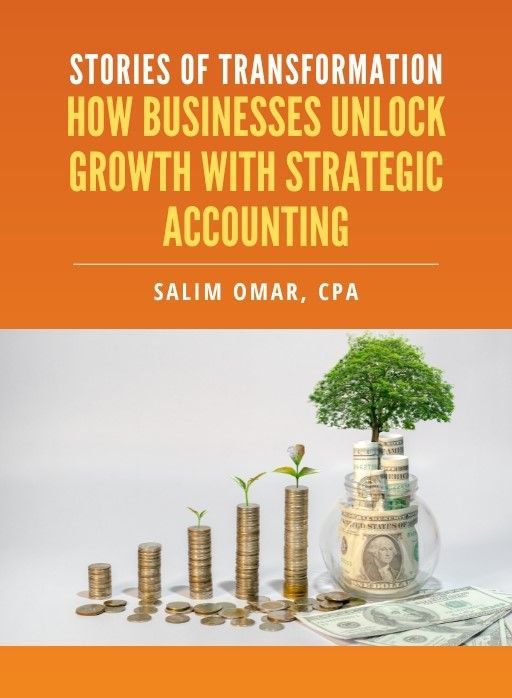
Free eBook:
Stories of Transformation

Salim is a straight-talking CPA with 30+ years of entrepreneurial and accounting experience. His professional background includes experience as a former Chief Financial Officer and, for the last twenty-five years, as a serial 7-Figure entrepreneur.
Recent Posts