
How to Time Income in December to Lower Your Tax Bill

December is the month where timing becomes a strategy. Revenue, expenses, receivables, bonuses—every movement hits your books differently depending on when you record it. And that timing directly influences how much tax you actually owe.
Most businesses rush through the year-end without realizing how much control they still have over the calendar. Smart timing—done correctly and defensibly—can lower taxable income, smooth cash flow, and position you for a stronger Q1.
This is exactly where Straight Talk CPAs stand out. We don’t just tell you what’s deductible—we help you manage when revenue hits the books so your
tax strategy aligns with reality, not pressure.
Why Income Timing Matters More in December
Your tax bill is based on when income is recognized, not when the cash moves.
For both cash- and accrual-based businesses, December offers powerful opportunities to shift the tax impact of revenue without delaying growth or harming cash flow.
The key is aligning timing with your business model, margins, and next-year plans.
Smart timing helps you:
- Reduce your current-year taxable income
- Avoid tax bracket spikes
- Improve liquidity during the heaviest expense season
- Smooth revenue recognition for investor or lender reporting
- Position Q1 for controlled, predictable growth
Done well, the calendar becomes a tax tool—one that too many business owners overlook.
1. If You're Cash Basis: Delay Income You Don't Need This Year
Cash-basis businesses recognize income when it's received, not when it's earned.
That gives you control over December’s inflows.
Tactical opportunities:
- Push late-December invoicing into early January
- Request clients to remit payment after the new year
- Pause automated payment reminders for high-value invoices
- Delay deposits of checks received very late in December
These moves don’t change the cash you will receive—just the year it shows up as taxable income.
Straight Talk CPAs models your tax bracket first, so you know exactly how much income to defer for maximum impact.
2. If You're Accrual Basis: Adjust When You Invoice or Deliver
Accrual-basis businesses recognize income when it’s earned—not paid.
But accruals don’t eliminate timing flexibility.
You can still influence recognition:
- Shift project start dates into January
- Delay the delivery of goods until next year
- Reschedule performance obligations
- Invoice after December 31 when allowed
This is especially valuable if:
- You had unusually strong revenue this year
- Margins tightened, and you want to offset income with January expenses
- You're planning major Q1 investments
- You’re close to entering a higher tax bracket
Small shifts in service delivery can create large tax advantages.
3. Use Bonuses and Owner Distributions Strategically
December cash movements to employees or owners influence taxable income differently depending on the structure.
For employees:
Bonus payouts in December reduce this year’s taxable income.
Bonus payouts in January push deductions into next year.
For owners (S-corp/LLC):
Owner distributions
are not deductions—timing doesn’t reduce taxes.
But timing
does affect cash availability for deductible spending.
Straight Talk CPAs helps you model which month gives the bigger advantage.
4. Accelerate Expenses to Offset Income You Can’t Defer
If you must recognize income in December, pair it with strategic deductions.
Smart accelerations include:
- Prepaying rent or insurance
- Paying vendor invoices early
- Purchasing deductible supplies
- Completing year-end maintenance
- Completing deductible professional services
For cash-basis taxpayers, these become immediate deductions.
For accrual, timing rules still allow strategic expense recognition when properly documented.
5. Review AR Aging and Identify Income That Should Be Written Off
If a customer hasn’t paid and likely won’t, you shouldn’t get taxed on income you'll never see.
Write-offs benefit you by:
- Reducing taxable income
- Cleaning up your AR ledger
- Improving next year’s cash forecasting
Bad debt deductions require clean, supportable books—something Straight Talk CPAs ensures before year-end.
6. Use Revenue Timing to Strengthen Your Q1 Story
Income timing isn't only a tax strategy—it’s a positioning strategy.
Shifting income into Q1 can:
- Show stronger early-year momentum
- Stabilize uneven cash flow cycles
- Improve borrowing capacity in the new year
- Better match revenue with corresponding expenses
When
tax planning and financial storytelling line up, you influence more than your tax bill—you influence decision-makers.
Bottom Line
You can’t control the tax code, but you can control the calendar.
And when you use December strategically, the payoff is immediate: lower taxes, better liquidity, and a cleaner runway into Q1.
Straight Talk CPAs excels in this space because we don’t treat timing as a loophole—we treat it as a strategic lever. We help you decide when income should hit, which deductions should pair with it, and how to execute all of it without audit risk.
When your timing is intentional, year-end becomes less about pressure and more about precision.
That’s how you enter the new year with momentum—and a lower tax bill.
Free eBook:
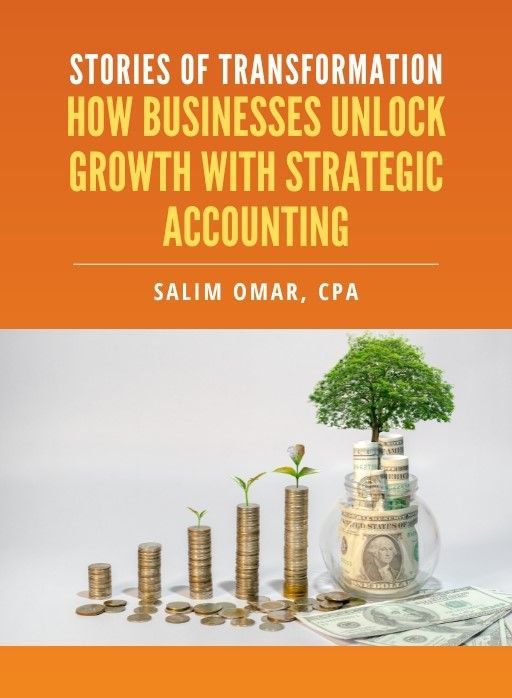
Stories of Transformation

Salim is a straight-talking CPA with 30+ years of entrepreneurial and accounting experience. His professional background includes experience as a former Chief Financial Officer and, for the last twenty-five years, as a serial 7-Figure entrepreneur.
Recent Posts