
Smart Deduction Strategies That Still Work Before Year-End

By Q4, every financial decision carries more weight. The window for smart tax moves narrows, cash flow gets tighter, and leadership expects clarity—not guesswork. This is exactly where Straight Talk CPAs stand out. We don’t just flag deductions; we show you how to deploy them strategically so year-end becomes a competitive advantage, not a compliance scramble.
Most businesses leave money on the table in December because they either move too late or take a scattershot approach. Smart deduction planning isn’t about rushing spend—it’s about directing it with intention.
Why Strategic Deductions Matter More Now
The final 30–45 days of the year influence three core levers:
- Taxable income
- Cash flow
- Next-year positioning
Strong deductions reduce tax liability, but strategic deductions shape how you allocate capital, signal financial discipline, and enter the new year with momentum. Straight Talk CPAs helps clients leverage deductions in a way that balances immediate benefit with long-term strategy.
1. Maximize Section 179 and Bonus Depreciation—While They Still Count
If you’re planning equipment or technology upgrades, the clock is ticking.
Year-end remains the best time to accelerate purchases that qualify for:
Section 179 Expensing
Deduct the full cost of qualifying equipment placed in service before December 31.
This includes:
- Machinery
- Vehicles
- Software
- Office equipment
Bonus Depreciation
Still available for many assets but phasing down—so timing matters.
The smart move?
Align purchases with your CapEx roadmap, not a last-minute shopping spree. Straight Talk CPAs reviews your asset strategy and models the tax impact before you commit.
2. Clean Up Misclassified Expenses That Are Blocking Deductions
Misclassification is one of the most common (and costly) year-end issues.
Expenses that should be deductible often get buried under vague categories or mistakenly booked as assets.
A targeted cleanup can unlock deductions you already earned but haven’t captured.
Look for:
- Software subscriptions are incorrectly capitalized
- Repairs booked as improvements
- Employee reimbursements not recorded
- Small tools and supplies are placed in the wrong bucket
A precise P&L review—something we execute with a strict checklist—often reveals thousands in missed deductions.
3. Prepay Expenses That Benefit Early Q1
Certain expenses qualify for deductions this year, even if they cover next year’s operations.
This includes:
- Rent
- Insurance
- Professional services
- Advertising or marketing commitments
The advantage is twofold: lower current-year taxable income and smoother Q1 cash flow.
The discipline is knowing what to prepay and what to defer. Straight Talk CPAs models both scenarios so you avoid weakening liquidity in pursuit of deductions.
4. Leverage Retirement Contributions for Both Deduction and Retention Value
Business retirement contributions pull double duty—tax savings and talent retention.
High-impact options:
- SEP IRA
- SIMPLE IRA
- Solo 401(k) for owner-operators
- Profit-sharing contributions
Many contributions can be funded after year-end but still counted against this year’s taxes—as long as the plan is in place. That timing flexibility creates room for strategic planning.
5. Take Advantage of the R&D Tax Credit (Even If You Think You Don’t Qualify)
The R&D credit remains one of the most underused deductions for small and mid-sized businesses.
You don’t need lab coats or patents—just activities that involve improving products, processes, or technology.
Eligible categories often include:
- Software development
- Workflow automation
- Testing new processes
- Engineering improvements
Straight Talk CPAs help identify qualifying activities hidden in your standard operations.
6. Review Bad Debts and Dispose of Worthless Assets
If you have receivables that won’t be collected or assets that no longer deliver value, year-end is the time to address them.
Bad Debts
Write-offs reduce taxable income and create a cleaner AR aging for Q1.
Worthless Assets
Assets that no longer function or have no resale value may qualify for abandonment deductions.
Most businesses skip this step entirely—leaving deductions untouched.
7. Ensure Your Books Are Clean Enough to Support Every Deduction
This is the difference between “eligible” deductions and “defensible” deductions.
You need:
- Accurate classifications
- Up-to-date reconciliations
- Documented rationale
- Audit-ready records
This is where
Straight Talk CPAs separates itself. We build
bookkeeping systems that support the deduction strategy—not undermine it. Clean financials permit you to take the deductions you’re entitled to without risk or second-guessing.
Bottom Line
There’s still time to execute smart, high-impact deduction strategies—but only if your decisions are informed by clean data and modeled intentionally. Straight Talk CPAs help businesses move beyond reactive year-end behavior and into strategic capital deployment. We don’t just reduce your tax bill; we strengthen your financial story going into next year.
When your deductions are planned, supported, and aligned with your growth strategy, you don’t just save money—you operate with more confidence and control.
Free eBook:
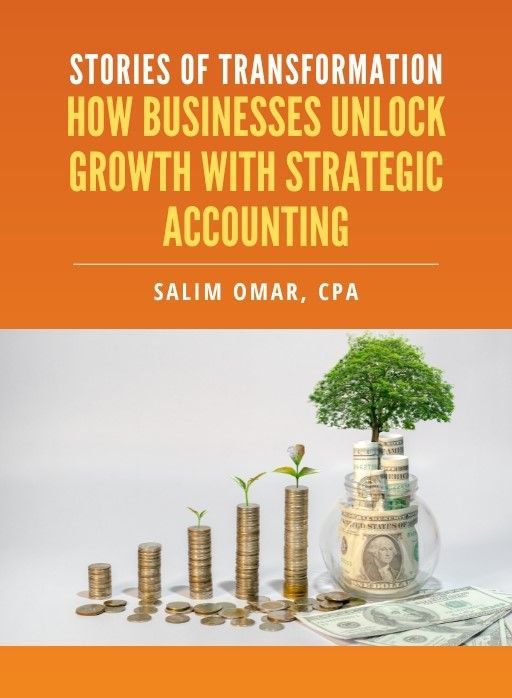
Stories of Transformation

Salim is a straight-talking CPA with 30+ years of entrepreneurial and accounting experience. His professional background includes experience as a former Chief Financial Officer and, for the last twenty-five years, as a serial 7-Figure entrepreneur.
Recent Posts