
Why a December Advisory Session Saves You More Than Any Other Month

By December, most of the year is already written.
Revenue has largely landed. Expenses are visible. Cash patterns are clear. And yet, many business owners wait until tax season to ask strategic questions—when answers are expensive, and options are limited.
That delay costs more than people realize.
December is the only month when advisory guidance can still change outcomes, not just explain them. It’s the final window where insight turns into leverage—and where a single, well-structured advisory session can save more than months of reactive clean-up later.
At
Straight Talk CPAs, December
advisory sessions aren’t about reviewing reports. They’re about making intentional decisions while the clock still works in your favor.
Why Timing Matters More Than Tactics
Most financial strategies fail not because they’re wrong, but because they are implemented too late.
By January:
- Income is already locked
- Many deductions are no longer adjustable
- Cash flow decisions are harder to reverse
- Planning turns into compliance
December is different. It’s the point where:
- You still control timing
- You still control the structure
- You still control trade-offs
Advisory insight in December influences what happens next. Advisory insight later explains what already happened.
That difference shows up directly on your tax bill and your balance sheet.
What a December Advisory Session Actually Unlocks
1. Tax Savings You Can’t Recreate Later
December is when strategic moves still count:
- Income timing decisions
- Expense acceleration (done correctly)
- Depreciation and asset elections
- Retirement and benefit optimization
Once the year closes, these become missed opportunities—not planning decisions.
2. Cash Flow Protection Into Q1
Taxes don’t hurt most businesses in April—they hurt in January and February.
A December advisory session helps:
- Forecast upcoming obligations
- Align cash reserves intentionally
- Prevent forced draws or emergency financing
This is where advisory work protects liquidity, not just tax exposure.
3. Clean Separation Between Strategy and Scramble
Businesses without December advisory guidance enter Q1 reacting:
- Chasing documents
- Questioning decisions
- Fixing classification issues
Businesses that plan in December enter Q1 executing:
- With clarity
- With documentation
- With confidence
That difference compounds quickly.
4. Better Decisions, Not Just Better Numbers
December advisory sessions shift the conversation from:
“What did we do?”
to
“What should we do next?”
This includes:
- Hiring and compensation planning
- Capital spending timing
- Vendor and subscription rationalization
- Pricing and margin adjustments
Your books already contain these signals. Advisory work decodes them before year-end pressure sets in.
The Cost of Waiting Until Tax Season
Waiting feels safe. It’s familiar. It’s common.
It’s also expensive.
When advisory work is delayed:
- Opportunities shrink
- Options disappear
- Decisions become irreversible
By tax season, most conversations revolve around damage control—not optimization. That’s not a strategy. That’s hindsight.
What High-Performing Owners Do Differently in December
They don’t wait for “final numbers.”
They:
- Review trends early
- Ask forward-looking questions
- Use clean bookkeeping as a decision tool
- Treat advisory time as an investment—not an expense
They understand that the value of advice is tied to
when it’s applied.
December Advisory Is Not About Doing More—It’s About Doing It Once, Correctly
A single December advisory session can:
- Prevent unnecessary tax exposure
- Eliminate Q1 cash stress
- Clarify next year's priorities
- Reduce back-and-forth during tax prep
That efficiency is where the real savings live.
You don’t need more meetings.
You need the
right meeting—at the
right time.
The Bottom Line
December is the only month when advisory insight can still significantly impact outcomes.
After that, the window closes.
A December advisory session doesn’t just save money—it saves momentum, focus, and optionality. It allows you to close the year with intention instead of explanation and enter the new one with clarity instead of guesswork.
If you’re going to invest in advisory guidance at any point in the year, December delivers the highest return—by far.
Once the calendar turns, strategy becomes history.
Free eBook:
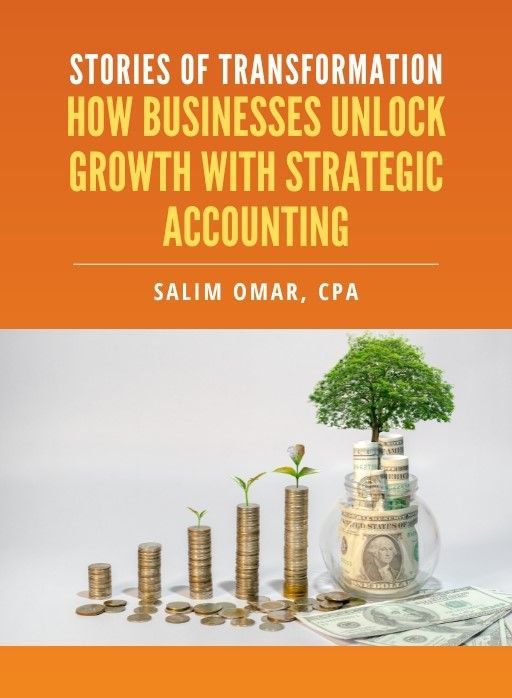
Stories of Transformation

Salim is a straight-talking CPA with 30+ years of entrepreneurial and accounting experience. His professional background includes experience as a former Chief Financial Officer and, for the last twenty-five years, as a serial 7-Figure entrepreneur.
Recent Posts