Common Tax Filing Mistakes CPAs See Every Year—and How to Avoid Them
At Straight Talk CPAs, tax season has a pattern.
Not in the tax code—that changes constantly.
The pattern shows up in
behavior.
Every year, different businesses, different industries, different revenue levels—yet the same mistakes surface again and again. Not because business owners are careless, but because tax filing is misunderstood as a paperwork exercise instead of a system and decision outcome.
The result is predictable: higher tax bills, filing delays, avoidable errors, and post-filing cleanups that should never have been necessary.
This article breaks down the most common tax filing mistakes CPAs see every year—and more importantly, why they happen and how to prevent them.
Mistake #1: Treating Tax Filing as the Start of the Process
This is the most expensive mistake of all.
Many business owners believe tax season begins when documents are requested. From a CPA’s perspective, that’s already late.
When tax prep starts at filing time:
- Planning options are gone
- Elections are missed
- Strategy turns conservative
- Decisions are made under pressure
Tax filing is the end of a process—not the beginning.
How to avoid it:
Tax preparation should follow finalized books, reviewed activity, and a clear context. If clarity doesn’t exist before filing begins, the outcome is already constrained.
Mistake #2: Filing With “Mostly Clean” Books
“Mostly clean” books are not clean.
CPAs see this constantly:
- Accounts unreconciled
- Expenses are parked in vague categories
- Revenue timing left unreviewed
- Balance sheets that don’t fully tie
These issues don’t always stop a return from being filed—but they do force CPAs to make assumptions. Assumptions reduce flexibility, increase risk, and inflate tax bills.
How to avoid it:
Books must be fully reconciled, reviewed, and closed. Not close enough. Not later. Final.
Clean books don’t just support filing—they enable better tax positions.
Mistake #3: Misclassifying Expenses and Owner Activity
Expense classification errors are one of the biggest silent tax killers.
Common examples CPAs see:
- Personal expenses run through the business
- Meals, travel, and vehicle costs were lumped incorrectly
- The owner draws a mislabeled
- Reimbursements handled inconsistently
These issues create three problems at once:
- Missed deductions
- Audit risk
- Time-consuming cleanup
How to avoid it:
Clear separation between business and personal activity, consistent categorization, and intentional handling of owner compensation. This protects both tax efficiency and credibility.
Mistake #4: Ignoring Cash Reality During Tax Decisions
A tax strategy that ignores cash flow is not a strategy—it’s a liability.
CPAs frequently see businesses approve tax positions that look good on paper but create cash strain later because:
- Payment timing wasn’t considered
- Debt service wasn’t factored in
- Owner distributions weren’t planned
This leads to panic when tax payments come due.
How to avoid it:
Tax decisions must be evaluated alongside cash behavior. Profit and liquidity are related—but not interchangeable.
Mistake #5: Discovering Payroll Issues Too Late
Payroll errors are among the most disruptive issues CPAs encounter.
Late-discovered problems include:
- Incorrect wages
- Missing payroll filings
- Misaligned benefits
- Inconsistent reporting
Once payroll data is wrong, tax filing stops until it’s fixed—and fixing it takes time.
How to avoid it:
Payroll must be finalized, reconciled, and aligned before tax prep begins. There are no shortcuts here.
Mistake #6: Surprising the CPA With Major Changes
CPAs don’t fear complexity.
They fear
late disclosure.
Common late surprises:
- Asset purchases or sales
- New debt or refinancing
- Ownership changes
- New locations or services
When these surface late, planning options shrink rapidly.
How to avoid it:
Any structural or strategic change should be communicated early. Early visibility creates options. Late visibility creates limitations.
Mistake #7: Prioritizing Speed Over Accuracy
Some business owners push to “just get it filed.”
That mindset creates:
- Errors that require amendments
- Missed opportunities
- Long-term credibility issues
Speed without clarity almost always leads to rework—and rework is far more expensive than patience.
How to avoid it:
Fast filings are a byproduct of preparation, not urgency. When inputs are clean, filing moves quickly without sacrificing quality.
The Pattern CPAs See—but Rarely Say Out Loud
Here’s the reality most business owners don’t hear clearly enough:
Tax filing problems are rarely tax problems.
They’re
financial clarity problems that surface at tax time.
When books are clean, context is clear, and decisions are intentional:
- Errors drop
- Delays disappear
- Tax outcomes improve
When those things aren’t true, even good CPAs are forced to play defense.
How to Actually Avoid These Mistakes Year After Year
Avoidance doesn’t come from better checklists.
It comes from a better structure.
That means:
- Treating
bookkeeping as infrastructure, not admin
- Finalizing numbers early
- Creating clarity before urgency
- Engaging your CPA before decisions are locked in
This shifts tax season from reactive to controlled.
The Straight Talk Perspective
At Straight Talk CPAs, we don’t believe tax season should feel rushed, uncertain, or frustrating.
The mistakes CPAs see every year aren’t caused by bad intentions. They’re caused by systems that aren’t designed to support decision-making under pressure.
When financials are structured properly:
- Tax filing becomes predictable
- Errors become rare
- Strategy becomes possible
The goal isn’t perfection.
It’s control.
And control is exactly what separates smooth tax seasons from painful ones—every single year.
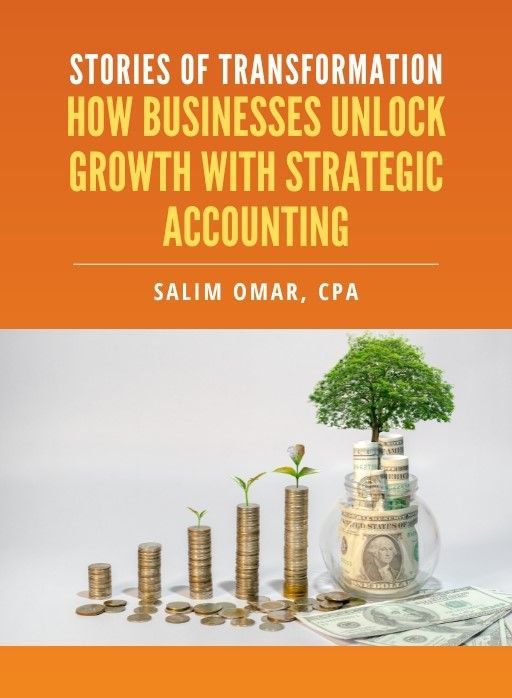
Free eBook:
Stories of Transformation

Salim is a straight-talking CPA with 30+ years of entrepreneurial and accounting experience. His professional background includes experience as a former Chief Financial Officer and, for the last twenty-five years, as a serial 7-Figure entrepreneur.
Recent Posts