
January Financial Clean-Up: Why Accurate Bookkeeping Is the Foundation of Scaling

January is when growth plans collide with reality.
New goals are set. Expansion ideas surface. Hiring conversations begin. And almost immediately, one question determines whether those plans move forward—or stall:
Can your numbers support what you want to do next?
For many businesses, the answer is unclear. Not because growth isn’t possible—but because the financial foundation isn’t ready. This is why January financial clean-up matters. Accurate bookkeeping isn’t a back-office task. It’s the operating system that determines whether scaling is controlled or chaotic.
Why Scaling Exposes Weak Books Fast
Messy books can hide for months when a business is stable. Scaling removes that cover.
As activity increases, small bookkeeping gaps turn into large operational problems:
- Cash balances don’t match expectations
- Margins look healthy, but profits don’t materialize
- Tax estimates fluctuate without explanation
- Decisions rely on instinct instead of evidence
Growth amplifies whatever already exists. If the books are unclear, scaling multiplies confusion.
By Q2, owners often realize they’re growing—but not confidently.
What “Accurate Bookkeeping” Actually Means
Accurate bookkeeping isn’t about data entry. It’s about decision reliability.
Clean books mean:
- Transactions are categorized correctly and consistently
- Revenue and expenses reflect real timing, not guesses
- Accounts are reconciled and defensible
- Reports match operational reality
When bookkeeping is accurate, numbers stop being historical artifacts. They become usable signals.
At Straight Talk CPAs, January clean-up is treated as a reset point—not a catch-up exercise. The objective is to make the book decision-ready before growth decisions begin.
January Is the Last Clean Reset Point
January offers a unique advantage: clarity without pressure.
The prior year is closed. Patterns are visible. And there’s still time to correct issues before they affect:
- Hiring plans
- Pricing decisions
- Cash commitments
- Tax estimates
Waiting until later in the year turns corrections into damage control. January allows fixes to happen upstream—where they’re cheaper, cleaner, and less disruptive.
How Clean Books Enable Scaling
1. Cash Flow Becomes Predictable
Scaling requires cash discipline. Clean books reveal:
- True operating cash flow
- Timing gaps between billing and collections
- Fixed vs variable cost behavior
Without this clarity, growth feels risky—even when revenue is increasing. With it, cash becomes a planning tool instead of a constraint.
2. Profitability Stops Being a Guess
Revenue growth doesn’t guarantee profit growth.
Accurate bookkeeping separates:
- High-margin vs low-margin clients
- Profitable services vs revenue distractions
- Sustainable growth from volume-driven strain
This allows owners to scale what works—and stop funding what doesn’t.
3. Tax Planning Starts Early, Not Late
Clean books are the prerequisite for proactive tax planning.
When records are accurate:
- Tax estimates stabilize
- Deductions are supported, not rushed
- Entity and compensation strategies can be modeled
When books are messy, tax strategy becomes reactive. January clean-up prevents that cycle before it starts.
4. Hiring and Expansion Become Intentional
Scaling decisions carry long-term costs.
Accurate books allow owners to answer:
- Can we support this hire for 12–18 months?
- What revenue level must the expansion maintain to break even?
- How does this decision affect cash and tax exposure?
Without clean books, these decisions rely on optimism. With clean books, they rely on math.
Common January Bookkeeping Issues That Block Growth
A proper January review often uncovers:
- Misclassified expenses are distorting margins
- Unreconciled accounts hiding cash issues
- Revenue timing errors overstating performance
- Personal and business transactions blurred together
None of these is fatal, but all of them compound if ignored during growth.
The danger isn’t the mistake. It’s building decisions on top of it.
Bookkeeping as Growth Infrastructure
Bookkeeping is often treated as compliance work—something done to “close the books.”
That mindset limits growth.
When bookkeeping is structured intentionally, it becomes infrastructure:
- It supports forecasting
- It feeds advisory insight
- It reduces risk as complexity increases
Scaling businesses don’t outgrow bookkeeping. They outgrow
unstructured bookkeeping.
What a January Financial Clean-Up Should Accomplish
A proper January clean-up ensures:
- All accounts are reconciled and accurate
- Prior-year errors are corrected, not carried forward
- Reports reflect reality, not assumptions
- Financial data is ready for planning conversations
This isn’t about perfection. It’s about reliability.
Bottom Line
Growth doesn’t start with strategy decks or expansion plans.
It starts with accurate numbers.
January financial clean-up gives you:
- Confidence in decisions
- Control over cash
- Predictability in taxes
- Stability as you scale
Without clean books, growth feels stressful and uncertain.
With them, scaling becomes deliberate and repeatable.
January is your opportunity to reset the foundation.
Because every smart growth decision this year will be built on the numbers you trust—or the ones you don’t.
Free eBook:
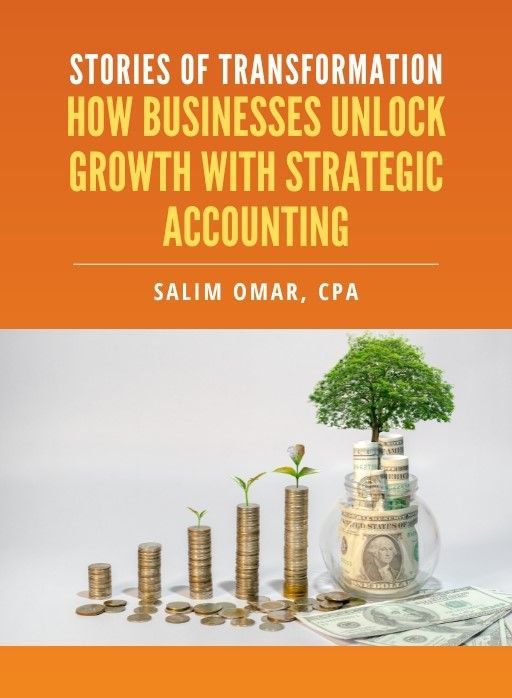
Stories of Transformation

Salim is a straight-talking CPA with 30+ years of entrepreneurial and accounting experience. His professional background includes experience as a former Chief Financial Officer and, for the last twenty-five years, as a serial 7-Figure entrepreneur.
Recent Posts