Profit Planning vs Revenue Chasing: What Smart CPAs Recommend for Growth

Revenue growth feels like progress.
More sales. More clients. More activity.
But experienced business owners learn this lesson the hard way: revenue can grow while the business gets weaker.
This is the trap of revenue chasing. It looks productive on the surface, but underneath, it quietly erodes margins, strains cash, and increases risk. Smart CPAs don’t ignore revenue—but they refuse to let it lead the growth conversation.
They lead with profit planning instead.
Why Revenue Became the Default Growth Metric
Revenue is easy to measure and easy to celebrate.
It moves quickly. It shows momentum. It reassures owners that “things are working.” But revenue became the default metric not because it’s the best one—because it’s the most visible one.
What revenue doesn’t show:
- How much cash growth actually consumes
- Whether margins improve or deteriorate as volume increases
- How exposed the business becomes to taxes, payroll, and overhead
- Whether growth creates leverage or dependency
Revenue answers how much came in.
Profit answers how strong the business actually is.
The Hidden Trade-Offs of Revenue Chasing
Revenue chasing almost always comes with trade-offs that aren’t obvious at first.
To grow faster, businesses often:
- Discount pricing to win volume
- Take on lower-margin clients to stay busy
- Hire ahead of sustainable demand
- Expand services without understanding contribution
Individually, these decisions seem reasonable. Collectively, they change the financial physics of the business.
The result?
- More work per dollar earned
- Less flexibility in cash flow
- Higher break-even points
- Greater stress when growth slows
Revenue went up—but optionality went down.
That’s not scalable growth. That’s dependency on constant motion.
What Profit Planning Changes at the Structural Level
Profit planning flips the order of operations.
Instead of asking, “How much can we grow?”, smart CPAs ask:
- “What level of profit must growth produce?”
- “How much margin does the model need to remain stable?”
- “What costs can grow—and which must stay controlled?”
Profit planning defines the rules before growth begins.
At Straight Talk CPAs, profit planning is treated as architecture—not aspiration. The goal isn’t to slow growth. It’s to ensure growth strengthens the business instead of hollowing it out.
Why Profit Planning Protects Cash Better Than Revenue Ever Will
Revenue does not equal cash.
A business can grow revenue aggressively and still experience:
- Tight operating cash
- Delayed collections
- Increased borrowing
- Forced owner contributions
Profit planning integrates cash behavior into growth decisions.
It forces clarity around:
- How fast cash is converted from sales
- How fixed costs expand as volume increases
- How taxes impact liquidity, not just earnings
This prevents the most common scaling mistake: growing into a cash squeeze.
When profit is planned correctly, cash becomes a buffer—not a bottleneck.
How Profit Planning Improves Everyday Decisions
Profit planning isn’t theoretical. It directly improves execution.
1. Pricing Stops Being Reactive
Prices are set based on margin requirements, not fear of losing deals. Low-margin work becomes visible—and optional.
Revenue chasing hides bad pricing.
Profit planning exposes it.
2. Hiring Becomes Sustainable
Roles are added when profit supports long-term cost—not when revenue creates short-term pressure.
This avoids the cycle of:
hire → cash stress → correction.
3. Expansion Becomes Rational
New services, markets, or locations are evaluated based on contribution, not excitement. Growth decisions are filtered through financial reality before capital is committed.
4. Taxes Become Predictable
Profit planning integrates tax impact early. Owner's stop being surprised by tax bills that erase growth gains.
Taxes become a known variable—not a shock.
Why Smart CPAs Lead With Profit, Not Revenue
Profit planning sits at the intersection of:
- Financial reporting
- Cost structure
- Cash flow behavior
- Tax exposure
- Owner compensation
This is why CPAs are uniquely positioned to lead growth planning.
Unlike surface-level growth advice, CPA-led profit planning is grounded in:
- Actual financial data
- Structural constraints
- Real trade-offs
It’s not motivational. It’s executable.
Smart CPAs don’t say “grow profitably” as a slogan.
They show
where profit is earned, lost, and protected.
Revenue Still Matters—But It Follows the Plan
This isn’t an argument against revenue growth.
Revenue matters because it:
- Funds reinvestment
- Creates operating leverage
- Supports scale
But revenue should follow profit design—not define it.
When profit is planned first:
- Revenue growth becomes safer
- Cash pressure decreases
- Risk becomes visible early
- Growth compounds instead of collapsing
The business gains flexibility—and flexibility is the real reward of growth.
Bottom Line
Revenue chasing feels productive.
Profit planning
is productive.
One makes the business look bigger.
The other makes it stronger.
Smart CPAs recommend growth that:
- Improves margins before volume
- Strengthens cash flow alongside revenue
- Increases resilience as complexity grows
If growth isn’t making your business more stable, more flexible, and more predictable—it isn’t working.
Profit planning ensures growth pays you back.
Not just in revenue.
In control.
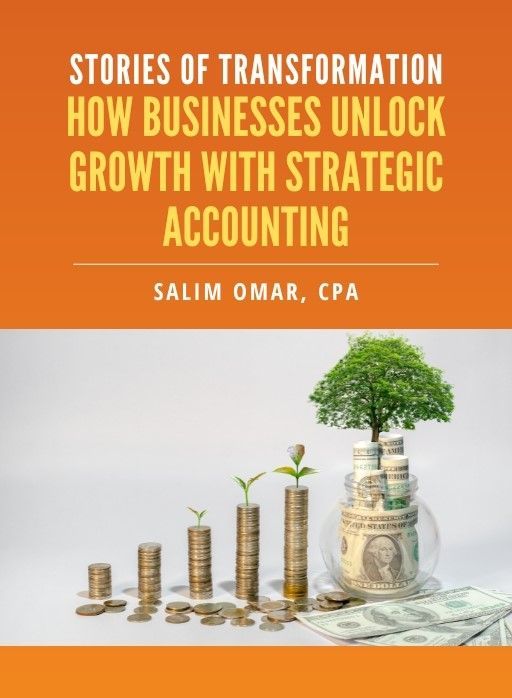
Free eBook:
Stories of Transformation

Salim is a straight-talking CPA with 30+ years of entrepreneurial and accounting experience. His professional background includes experience as a former Chief Financial Officer and, for the last twenty-five years, as a serial 7-Figure entrepreneur.
Recent Posts