
Scaling Without Financial Blind Spots: When to Bring a CPA Into the Decision

Scaling doesn’t fail at the execution stage.
It fails earlier—at the decision stage.
Most growth problems don’t come from bad intentions or lack of effort. They come from decisions made without seeing the full financial picture. Revenue looks strong. Demand feels real. Momentum is there. And yet, six months later, the business feels tighter, riskier, and harder to manage than before.
That’s what financial blind spots do.
They don’t stop growing immediately.
They quietly distort it.
This is why knowing when to bring a CPA into the decision matters more than having one after the fact.
What Financial Blind Spots Actually Look Like
Blind spots aren’t obvious. If they were, they’d be avoided.
They usually show up as:
- Growth that “should” be profitable but isn’t
- Cash pressure that doesn’t match reported performance
- Hiring decisions that feel necessary but strain liquidity
- Expansion that adds complexity faster than control
The business isn’t broken.
The visibility is.
Scaling without financial visibility is like driving faster in fog. You don’t crash immediately—but the margin for error disappears.
Why Owners Bring CPAs In Too Late
Many owners involve CPAs after decisions are already made:
- After hiring
- After expansion
- After cash tightens
- After taxes surprise
At that point, the CPA is solving for damage control.
Not because they aren’t capable—but because the leverage window has passed.
Smart scaling doesn’t ask CPAs to explain outcomes.
It asks them to
shape decisions before outcomes are locked in.
The Real Role of a CPA in Growth Decisions
A CPA’s highest value is not compliance.
It’s perspective.
When brought in at the right moment, a CPA acts as:
- A constraint identifier
- A risk translator
- A financial reality check
They don’t slow decisions down.
They prevent irreversible ones.
At Straight Talk CPAs, the role is clear: enter the conversation
before growth decisions commit cash, tax exposure, and operating capacity.
The Decision Points Where CPAs Matter Most
Not every decision requires CPA involvement.
But some absolutely do.
1. Hiring Ahead of Revenue
Hiring is usually justified by growth expectations.
A CPA evaluates:
- How long can payroll be supported if revenue lags
- How hiring changes fixed-cost pressure
- What level of performance must be maintained to stay cash-positive
This prevents the most common scaling mistake: adding permanent cost based on temporary momentum.
2. Expanding Services or Markets
Expansion often looks attractive at the revenue level.
A CPA asks different questions:
- Does this expansion improve margins or dilute them?
- How does it affect working capital?
- What new tax or compliance exposure does it create?
Growth that increases complexity without strengthening fundamentals creates fragility.
3. Raising Prices or Discounting to Scale
Pricing decisions change financial physics instantly.
CPA involvement reveals:
- Margin sensitivity
- Break-even shifts
- Volume required to offset discounts
This keeps pricing strategic—not reactive.
4. Capital Commitments and Long-Term Contracts
Leases, equipment, and long-term vendor agreements lock decisions in.
A CPA evaluates:
- Cash durability under worst-case scenarios
- Impact on flexibility if growth slows
- Tax and depreciation consequences
Once signed, these decisions limit options. CPAs help preserve them.
How CPA Involvement Eliminates Blind Spots
CPAs don’t add opinions.
They add visibility.
By modeling:
- Cash timing
- Cost behavior
- Tax impact
- Risk exposure
CPAs convert assumptions into numbers.
That’s what removes blind spots.
Instead of asking,
“Can we do this?”, owners start asking,
“What must be true for this to work?”
That shift changes outcomes.
Scaling Without Blind Spots Feels Different
When a CPA is involved at the right time:
- Decisions feel calmer
- Trade-offs are explicit
- Surprises decrease
- Confidence increases
Growth stops feeling reactive.
It becomes engineered.
Owners aren’t guessing whether they’re “okay.”
They know where they stand—and why.
Why This Matters More as Businesses Get Bigger
Complexity compounds faster than revenue.
As businesses scale:
- Small errors multiply
- Cash timing becomes critical
- Tax exposure accelerates
- Decisions become harder to reverse
Blind spots that were survivable at lower revenue become dangerous at scale.
This is why the best-run businesses don’t bring CPAs in late.
They bring them in
at the decision table.
Bottom Line
Scaling doesn’t require more courage.
It requires more visibility.
Financial blind spots don’t announce themselves.
They reveal themselves through stress, surprises, and stalled momentum.
Bringing a CPA into growth decisions early:
- Preserves flexibility
- Reduces risk
- Improves decision quality
- Protects cash and momentum
At Straight Talk CPAs, the focus isn’t just on clean numbers.
It’s a clear decision.
Because the fastest way to derail growth isn’t a lack of opportunity.
It’s making big decisions without seeing the full picture.
Free eBook:
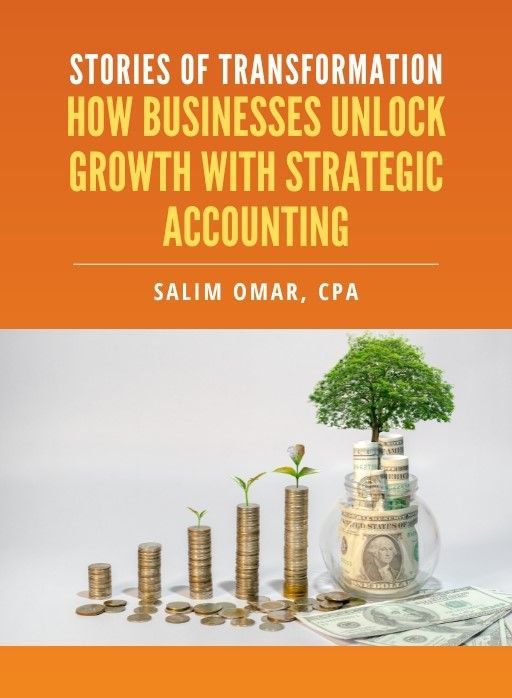
Stories of Transformation

Salim is a straight-talking CPA with 30+ years of entrepreneurial and accounting experience. His professional background includes experience as a former Chief Financial Officer and, for the last twenty-five years, as a serial 7-Figure entrepreneur.
Recent Posts